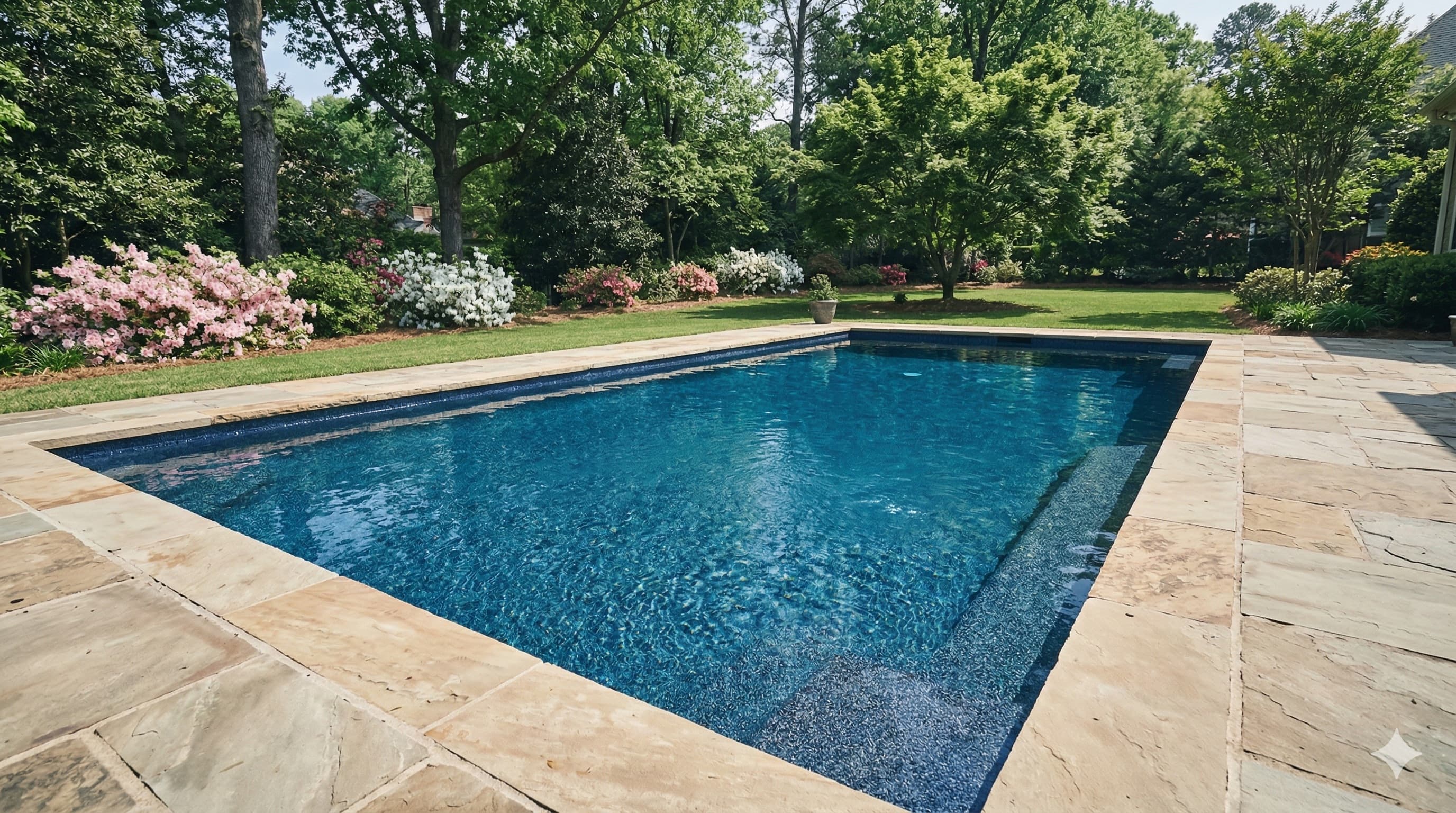
You've got the pool. Now you're wondering what it would take to add a spa — a built-in, attached hot tub that shares the same structure and equipment as your pool.
It's one of the more popular upgrades we do, and the appeal is obvious: hydrotherapy, year-round use, and a significant bump in your backyard's wow factor. But it's also one of the more complex and expensive modifications, so let's get into the real numbers and what's involved.
The Cost Range
Adding a spa to an existing pool in Atlanta typically costs $15,000 to $35,000. That's a wide range, and the final price depends on several factors we'll break down below.
For context: this is a permanent, in-ground spa built as an extension of your existing pool — not a portable hot tub you plug into an outlet. A built-in spa shares plumbing with your pool, has its own dedicated heating and jet systems, and is finished with the same materials as your pool.
What Drives the Cost
Spa Size
A small two-person spa (roughly 6x6 feet) is a different project than a six-person spa (8x10 feet or larger). More surface area means more concrete, more tile, more finish material, and more labor. Most residential spa additions in Atlanta fall in the 6x8 to 8x8-foot range.
Elevation and Design
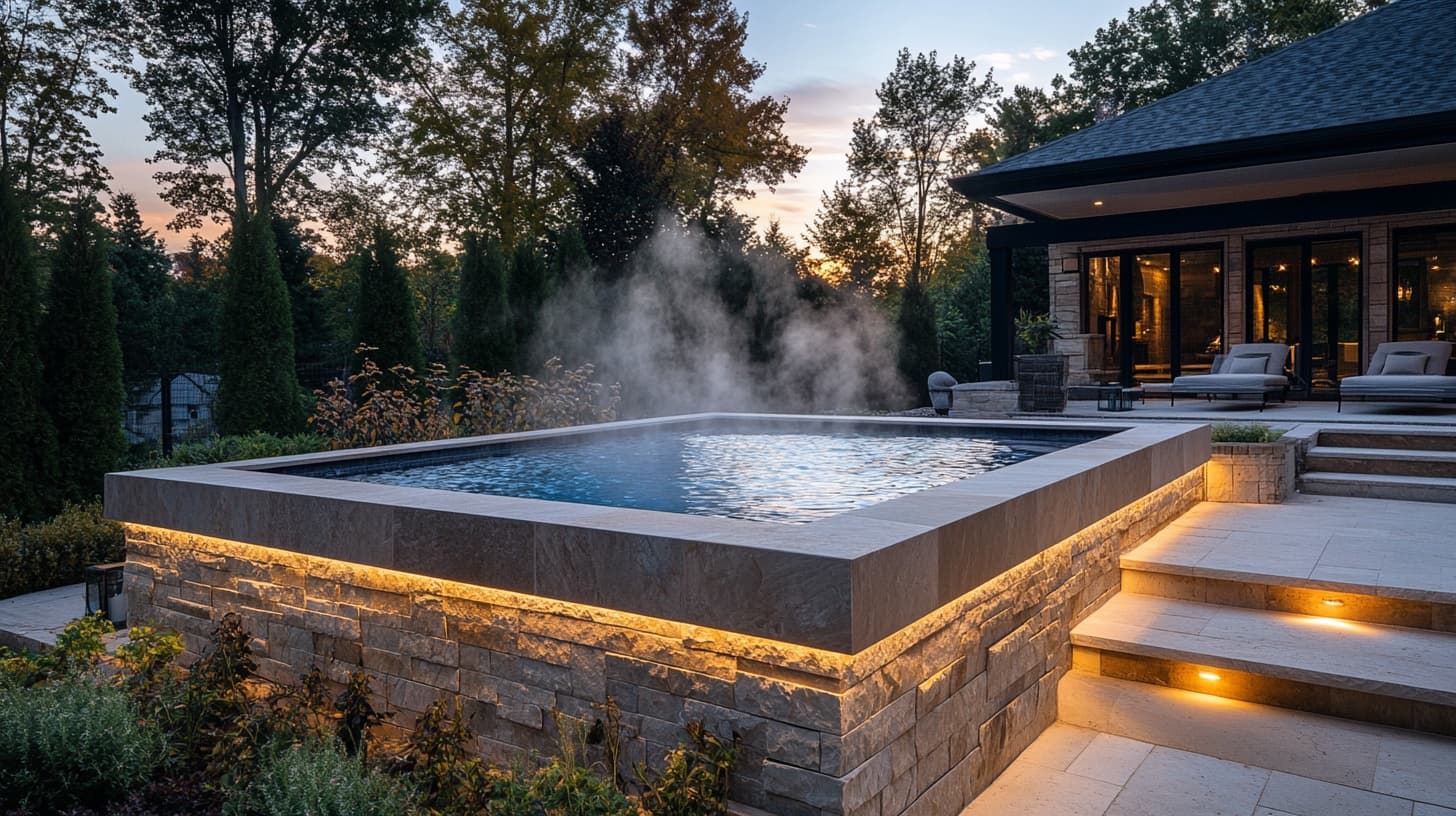
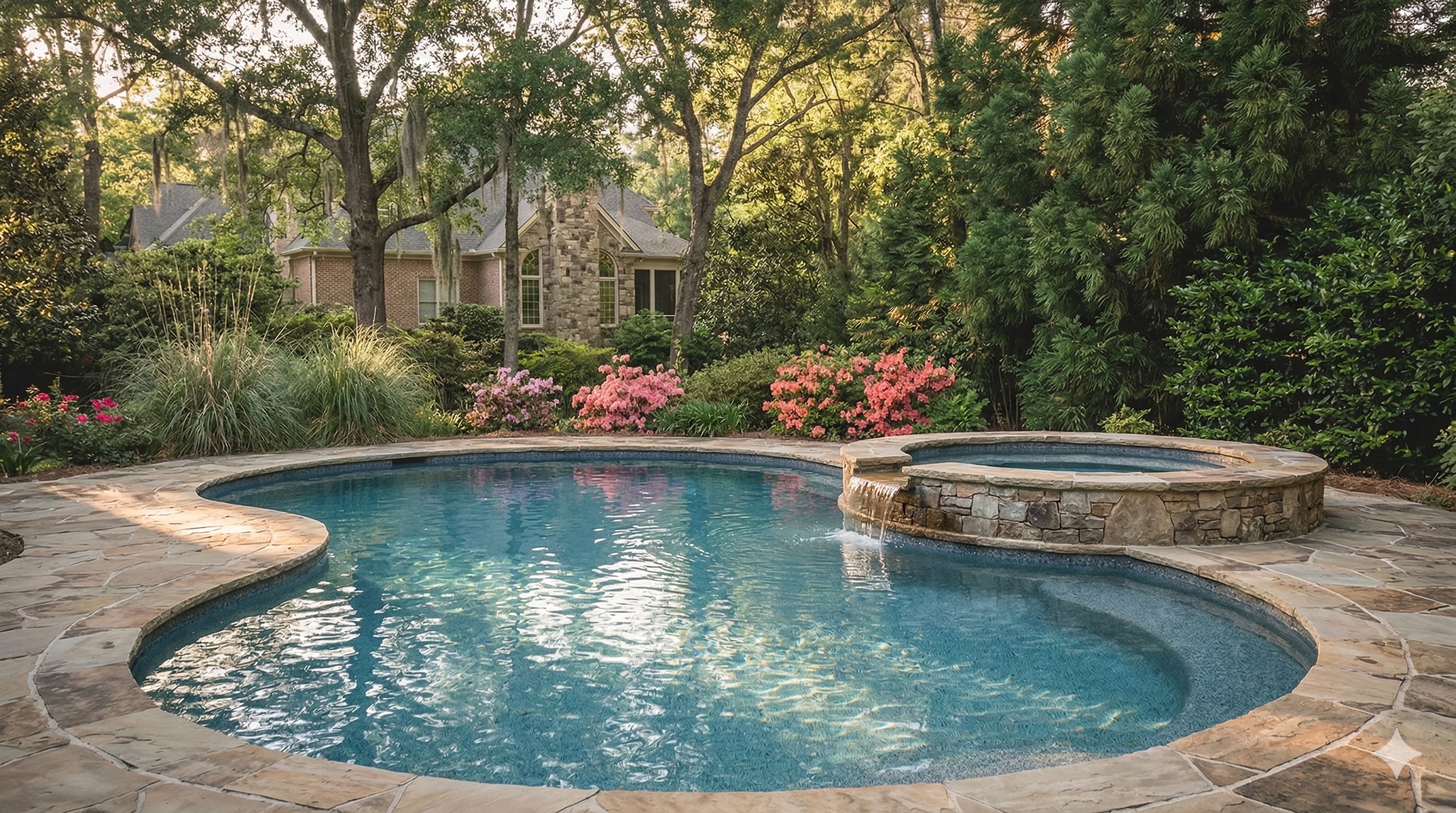
Raised spas — where the spa sits above pool level with a spillover wall — are the most popular design we install. Water spills over the edge from the spa into the pool, creating a waterfall effect. They look impressive, but the raised walls require more structural concrete and additional plumbing for the spillover.
Flush spas — built at the same level as the pool with a shared wall — are simpler structurally but less visually dramatic.
The raised-spa-with-spillover option typically adds $3,000 to $6,000 to the project versus a flush design.
Finish Materials
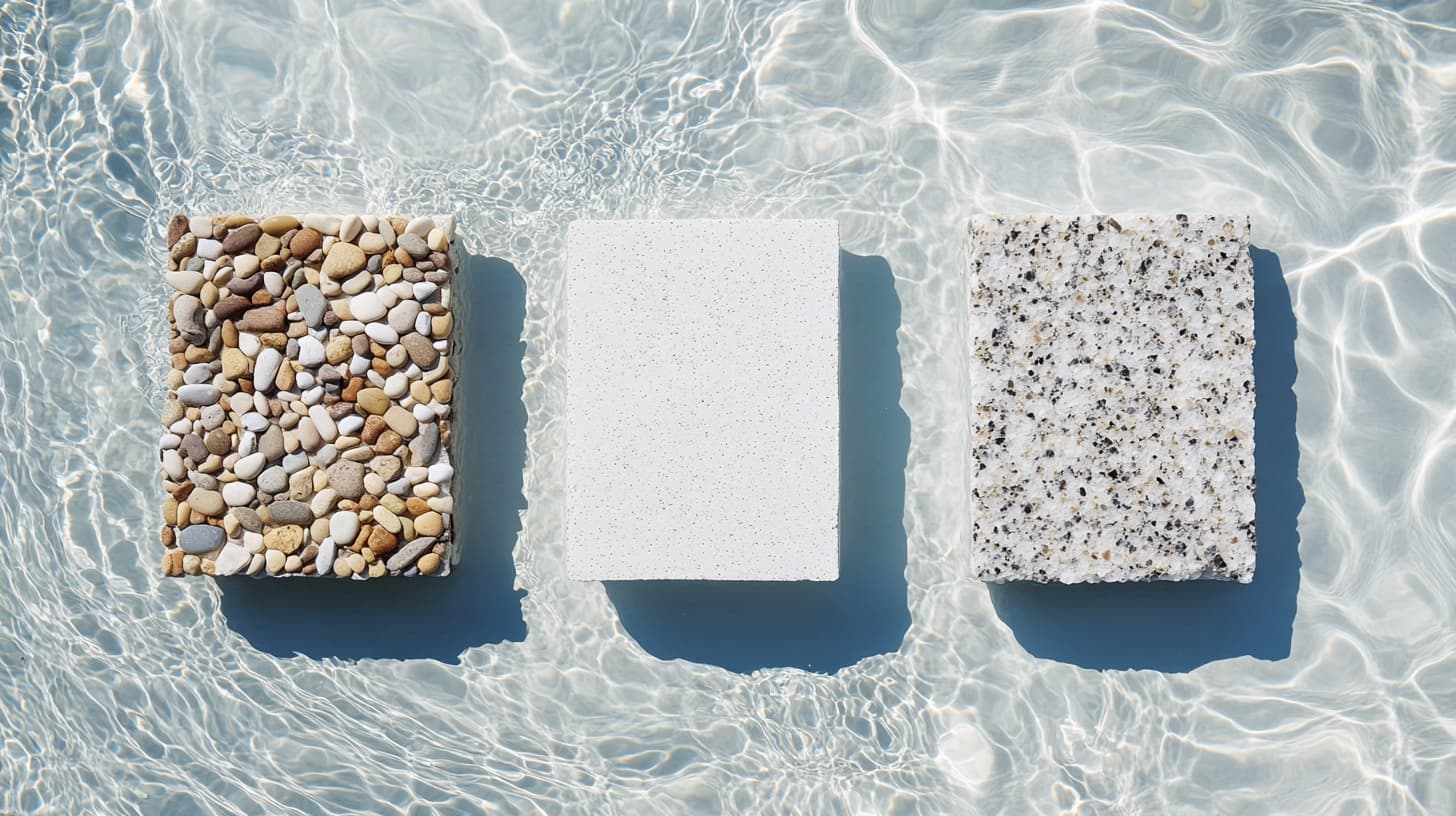
The spa interior gets the same finish treatment as your pool — pebble, quartz, or plaster. If you're adding the spa during a full pool resurfacing, the cost per square foot for the finish is the same. If you're adding the spa independently, there's a minimum crew mobilization cost that makes the per-square-foot rate slightly higher.
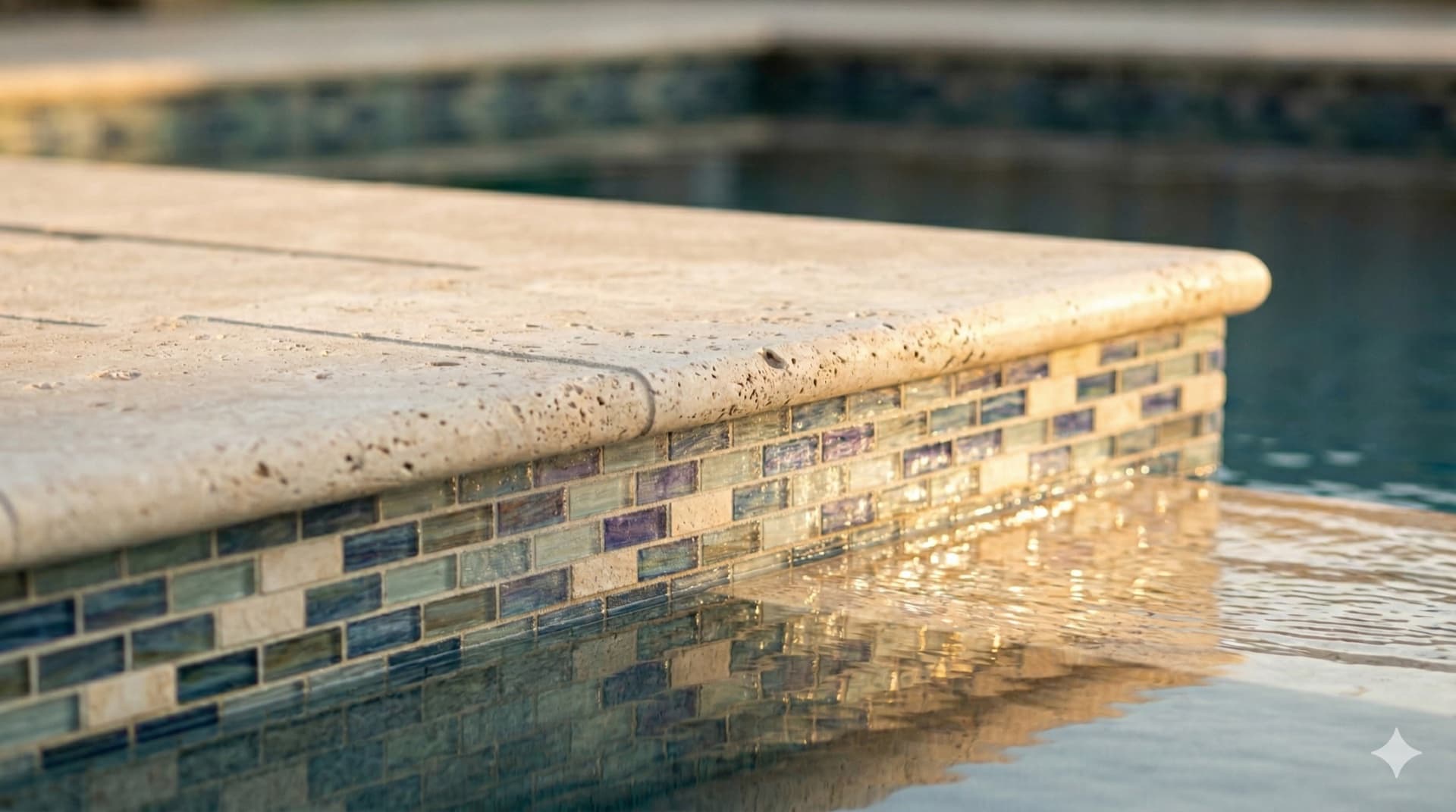
Tile work inside the spa — waterline tile, accent tile, or full interior tiling — adds to the cost but is where the spa really starts to shine aesthetically. Many homeowners choose a more detailed tile treatment in the spa than in the main pool since it's a smaller, more intimate space.
Equipment
A spa addition requires dedicated equipment beyond what your pool already has:
Spa heater. Your pool heater may or may not be sized to heat the spa efficiently. Most spa additions require either upgrading the existing heater or adding a dedicated spa heater. A gas heater for a spa runs $2,500 to $4,500 installed. Heat pumps are an alternative at $3,500 to $5,500 but heat more slowly.
Spa jets and pump. The jet system and dedicated spa pump typically run $1,500 to $3,000 depending on the number and type of jets.
Controls and automation. If you don't already have a pool automation system (like Pentair IntelliCenter or Jandy iAqualink), adding one during a spa project makes sense — it lets you control spa temperature, jet activation, and lighting from your phone. An automation system adds $2,000 to $4,000 but dramatically improves the spa experience.
LED lighting. Underwater LED lights in the spa are practically a given — they're affordable ($300 to $800 per light installed) and transform the spa at night.
Site Conditions
Where the spa goes relative to your existing pool and your yard affects the cost:
Proximity to the pool. A spa attached directly to the pool shares plumbing runs and is more efficient to build. A detached spa located away from the pool requires independent plumbing and equipment — roughly $3,000 to $5,000 more.
Access. Atlanta backyards vary wildly. If a concrete truck can get close to the build site, that's one price. If materials need to be hand-carried through a narrow side yard in Roswellor up a steep grade in Alpharetta, labor costs increase.
Existing deck. The deck area where the spa will be built usually needs to be partially demolished and rebuilt. If you're also renovating the deck, this is a non-issue — it's all part of the same project. If the spa is the only modification, the deck demolition and repair add cost.
What the Process Looks Like
Adding a spa to an existing pool is a multi-week project. Here's the typical sequence:
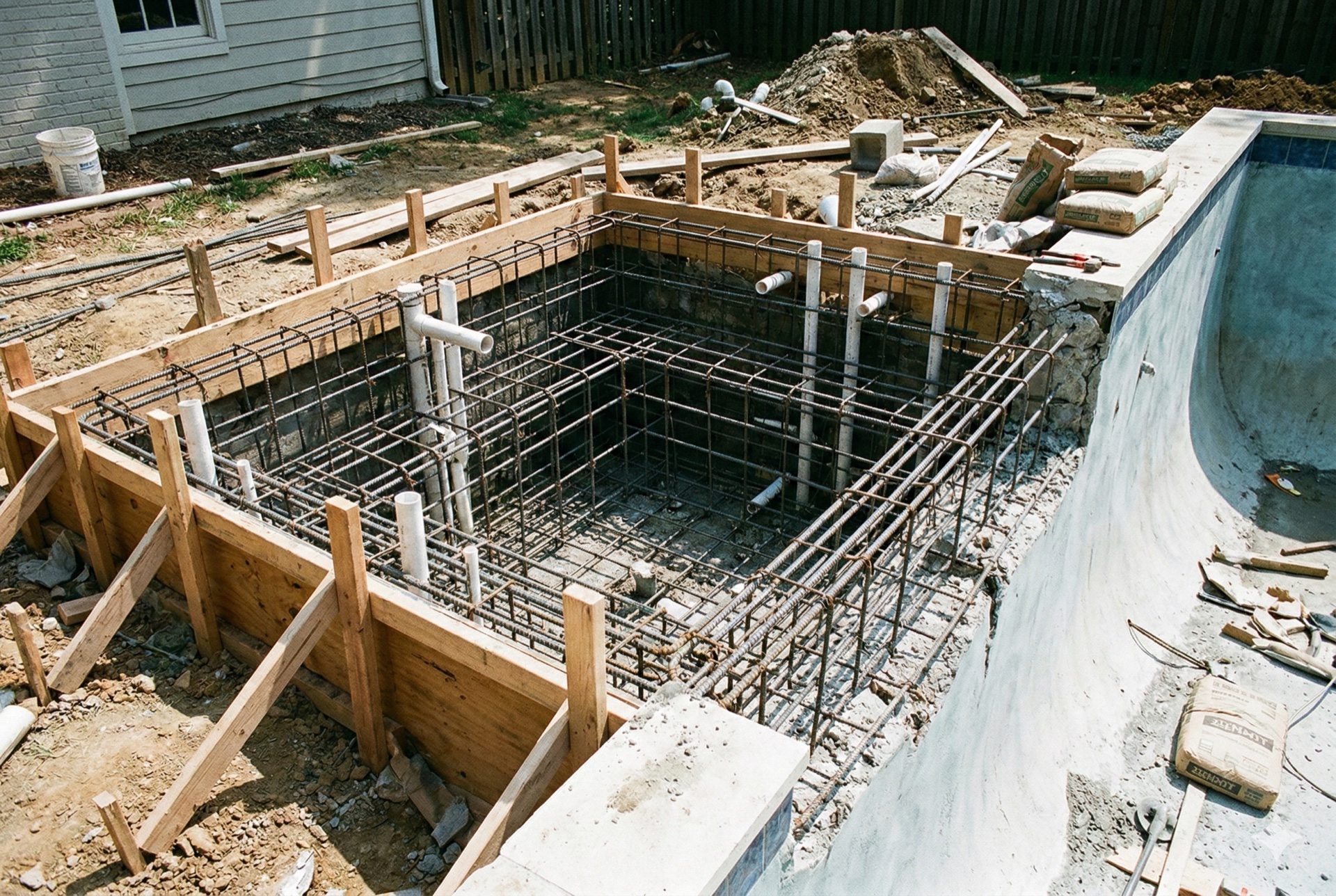
Design and permitting (2–4 weeks). We design the spa to integrate with your existing pool — structurally, aesthetically, and mechanically. Structural pool modifications require a building permit in most Metro Atlanta municipalities. We handle the permit application.
Demolition and excavation (2–3 days). The section of deck and pool structure where the spa will connect is opened up. If it's a raised spa, the foundation is excavated and prepared.
Structural work (5–7 days). Rebar is tied, forms are set, and concrete is poured. Plumbing and electrical rough-ins happen during this phase.
Finish work (3–5 days). Tile, coping, and pool/spa finish are applied. This is where having one crew matters — the spa finish needs to blend seamlessly with the pool finish, and the coping and tile need to flow naturally from the pool to the spa.
Equipment installation (1–2 days). Heater, pump, jets, lighting, and automation are installed and connected.
Fill and startup (3–5 days). The pool and spa are filled, water chemistry is balanced, and everything is tested.
Total timeline: 5 to 8 weeks from permit approval to first soak.
Why One Contractor Matters for This Project
A spa addition touches almost every trade: concrete, plumbing, electrical, tile, finish, equipment, and decking. Many pool companies in Atlanta subcontract some or all of these — which means multiple crews with different schedules, different quality standards, and nobody fully responsible for the final result.
Our crew handles the structural work, the tile, the finish, the coping, and the equipment installation. We coordinate with licensed electricians for the electrical work, but everything else stays in-house. For a project this complex, that continuity shows in the finished product.
Is It Worth the Investment?
A well-built spa addition typically adds significant value to your home — both in appraisal value and in how much use you get from your outdoor space. A pool is a summer amenity. A pool with a heated spa is a year-round amenity.
The practical benefits are real: hydrotherapy for sore muscles and joints, a warm-water option when the pool is too cold for swimming (October through April in Georgia), and a gathering spot that adults genuinely prefer to the main pool.
If a full spa isn't in the budget or doesn't fit your pool layout, a tanning ledge is a lower-cost alternative that still adds a dedicated relaxation zone — though without the heated hydrotherapy.
If you're already planning a pool renovation — resurfacing, coping, deck work — adding a spa during the same project is the most cost-effective time to do it. You save on mobilization, the pool is already down, and the finishes and materials are applied together.
What a Spa Addition Actually Looks Like
A homeowner in Alpharetta had a 20-year-old rectangular pool with no spa and an aging concrete deck. During a full renovation — resurfacing with StoneScapes, travertine coping, and new deck pavers — a raised 7x7-foot spa with a spillover wall was added at one end. The spa included six jets, a dedicated gas heater, color-changing LED lighting, and Pentair IntelliCenter automation so they could heat the spa from their phone before heading outside.
The spa portion of the project came in at $22,000, which included the structural work, plumbing, equipment, and finish to match the pool. Because the spa was part of the larger renovation, they saved roughly $3,000 to $4,000 compared to adding it as a standalone project later — no separate mobilization, no re-matching of finishes.
The homeowner reported the spa gets used more than the pool from October through April. That tracks with what the Pool & Hot Tub Alliance reports: homes with heated spas use their outdoor water features roughly 40 percent more months per year than pool-only homes.
Get a Real Number for Your Pool
Every spa addition is custom — the cost depends on your specific pool, yard, and goals. The ranges above give you a realistic starting point, but the only way to get an accurate quote is an on-site visit.
We offer free consultations across Metro Atlanta. We'll look at your pool, discuss the design options, and give you a detailed quote with no hidden costs.
Call or fill out the contact form to schedule a visit.
Ready to Talk About Your Pool?
Get a free, no-obligation consultation from Cornerstone Pool & Remodel.
Request a Free Quote