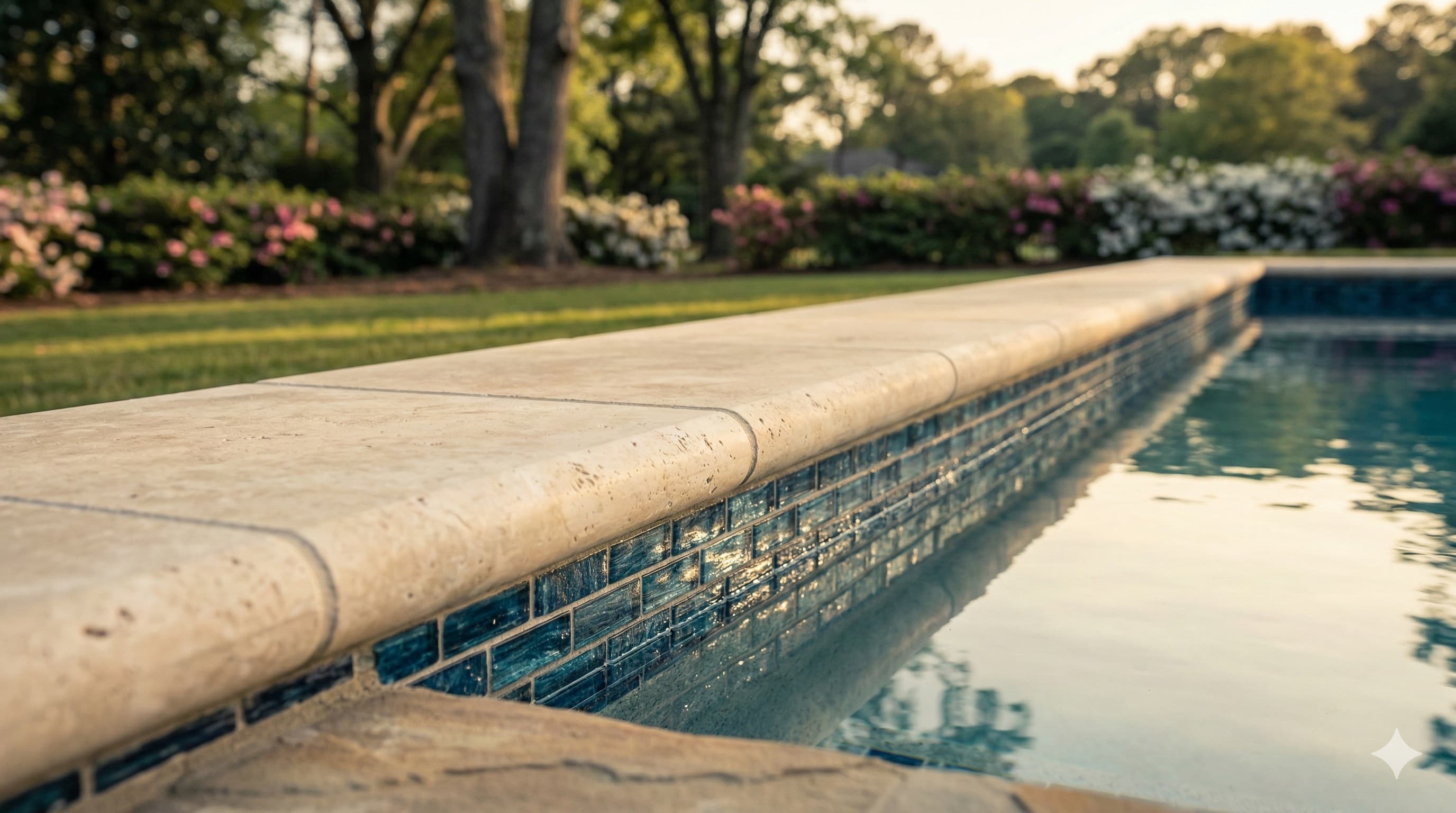
The Edge That Defines Everything
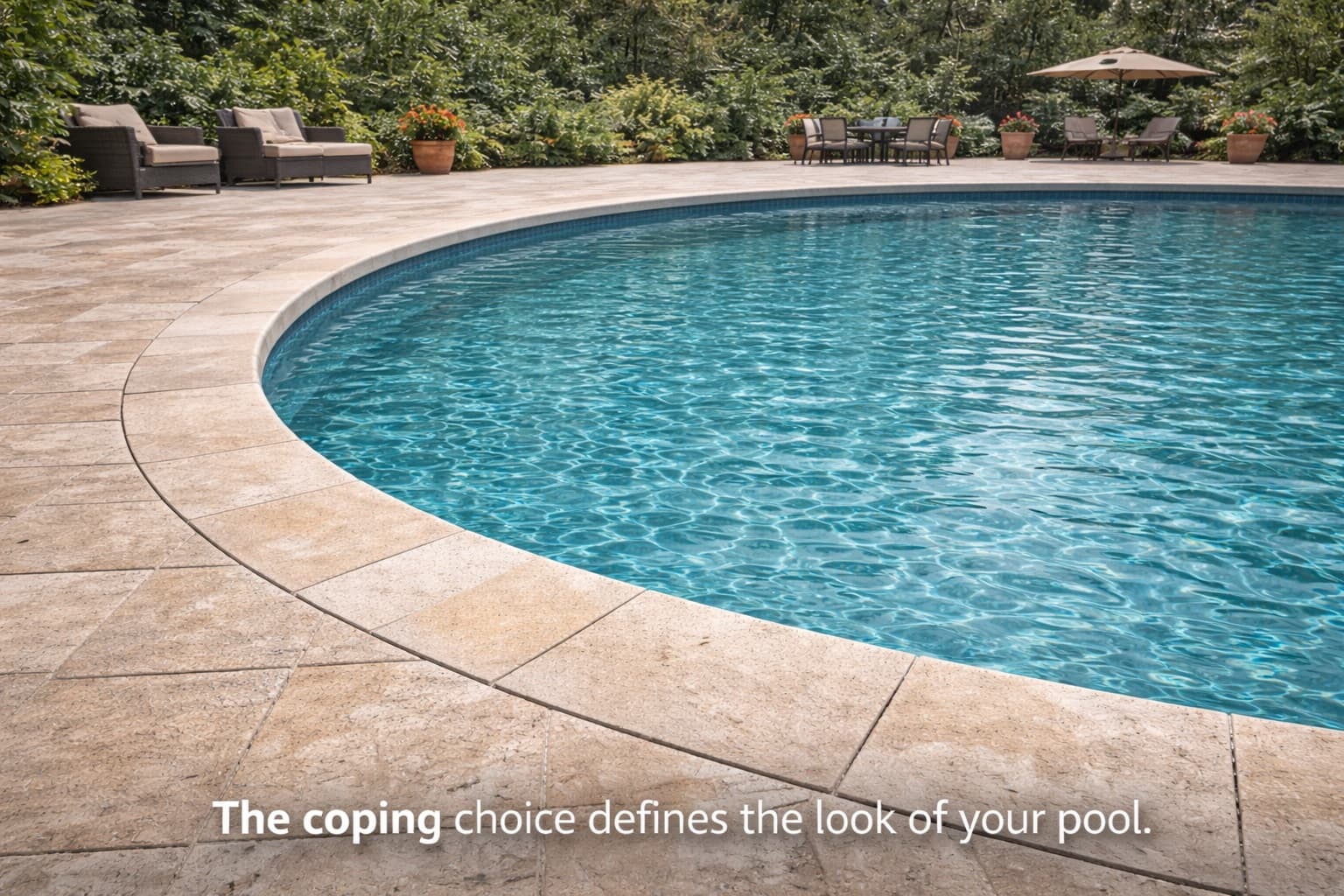
Coping is the cap that sits along the top edge of your pool wall — the transition between water and deck, the line your eye follows from every angle of the backyard.
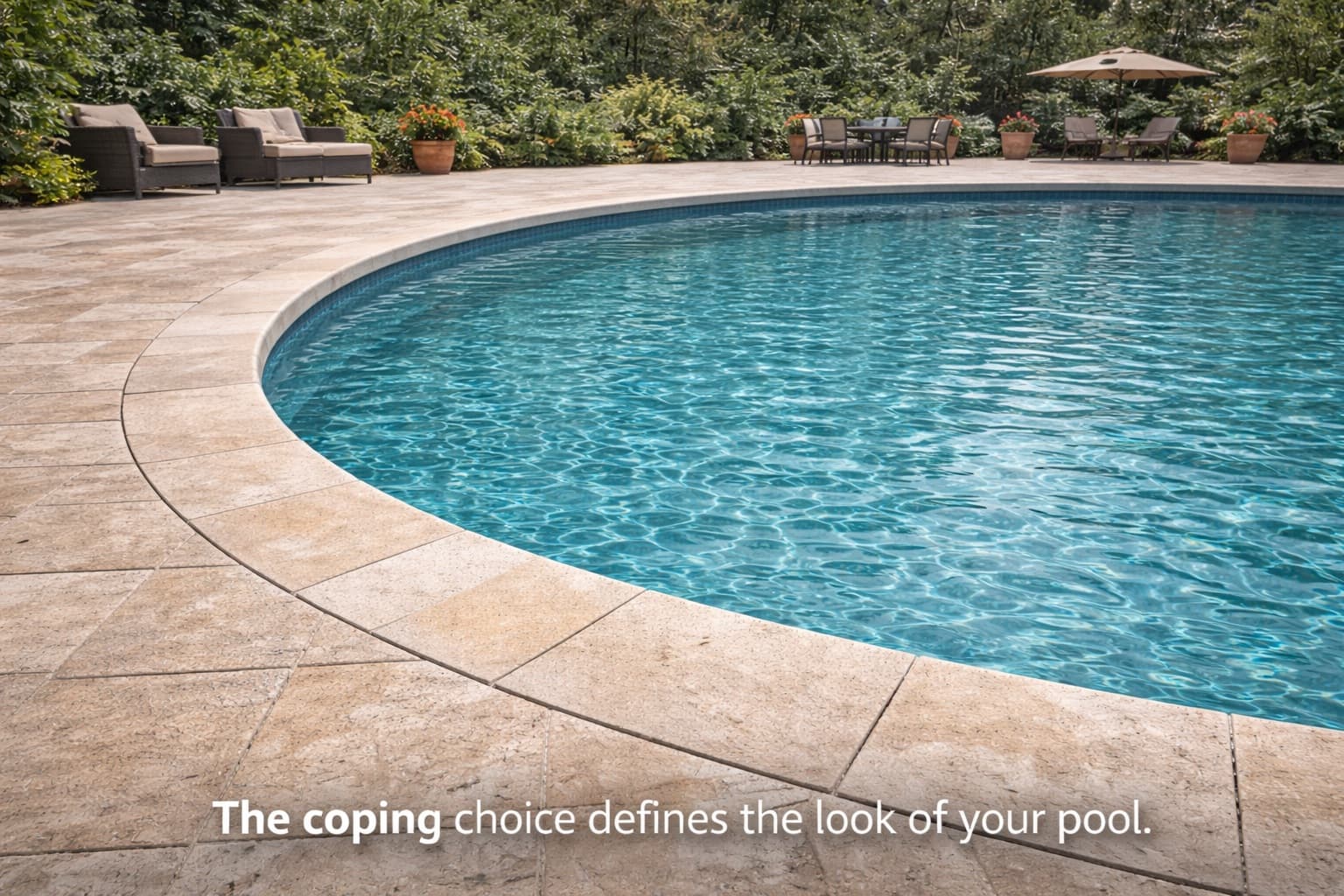
When it's done well, it frames the entire pool and ties the hardscape together. When it's cracked, lifting, or mismatched, it's the first thing you notice. We replace and install pool coping across metro Atlanta using travertine, natural stone, brick, pavers, and poured concrete — cut and set by hand by our own crew. No subcontractors, no middlemen, no shortcuts on the details that define your pool's finished look.
More Than a Finishing Touch
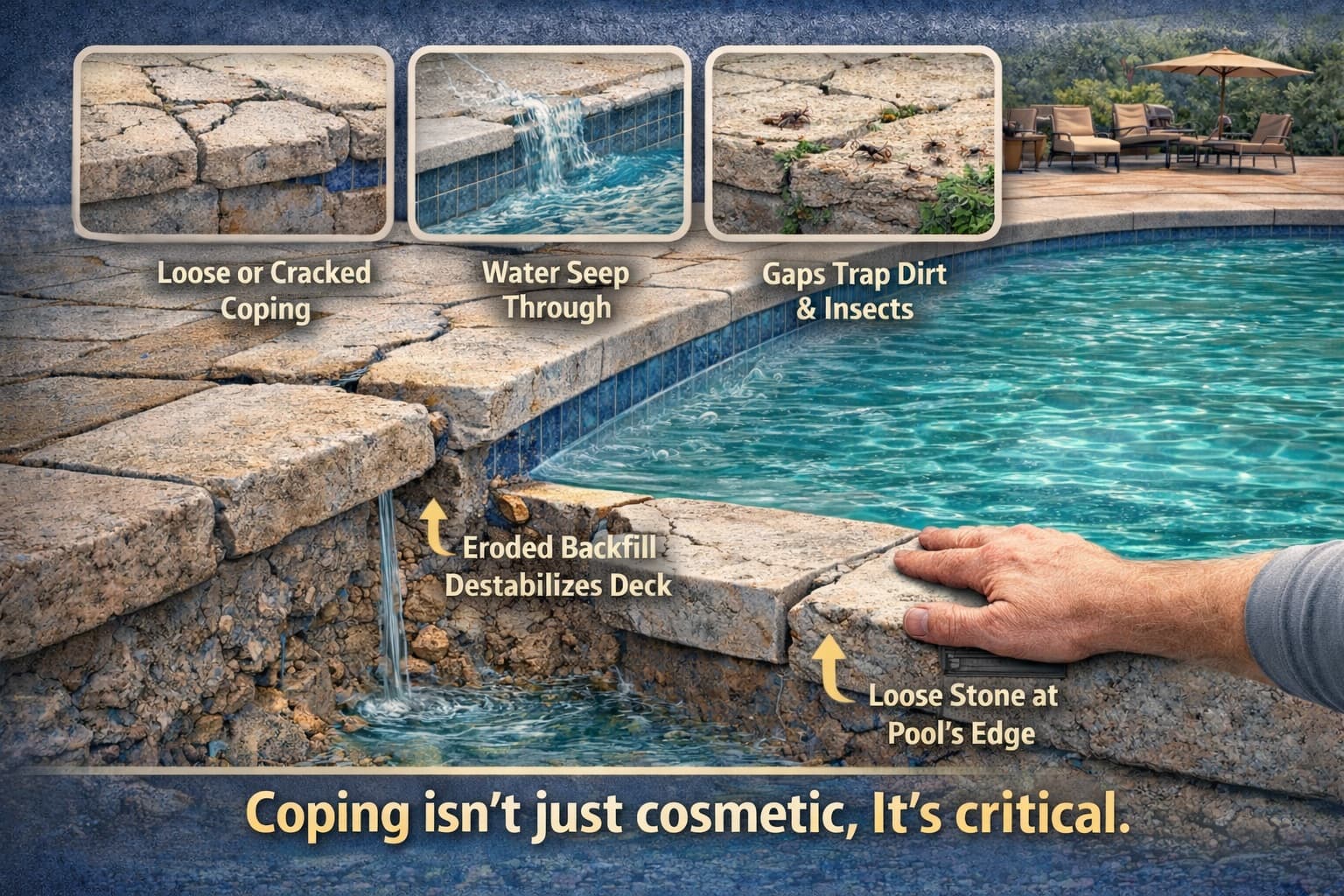
Most homeowners think of coping as decorative — and it is. But it's also one of the most functional elements of your pool's structure. Coping caps the bond beam, which is the top of the concrete shell that holds your pool together. It seals that edge from water intrusion, directs splash water away from the pool and toward the deck drains, and provides a safe, comfortable grip edge for swimmers.
When coping fails, the problems go deeper than appearance. Cracked or lifted coping lets water seep behind the pool shell, which can erode the backfill and destabilize the deck over time. Gaps between coping stones become traps for dirt, mold, and insects. And coping that's come loose is a genuine safety concern — a shifting stone under someone's hand at the pool's edge is an accident waiting to happen.
Whether your coping is original to a decades-old pool or was installed poorly during a previous renovation, replacement is one of the highest-impact upgrades you can make. It changes the entire visual frame of the pool and solves structural vulnerabilities at the same time.
Choosing Your Material
The right coping material depends on your deck, your aesthetic, your climate exposure, and how you use the pool. Here's a straightforward look at the options we work with most and what each brings to the table.
Travertine
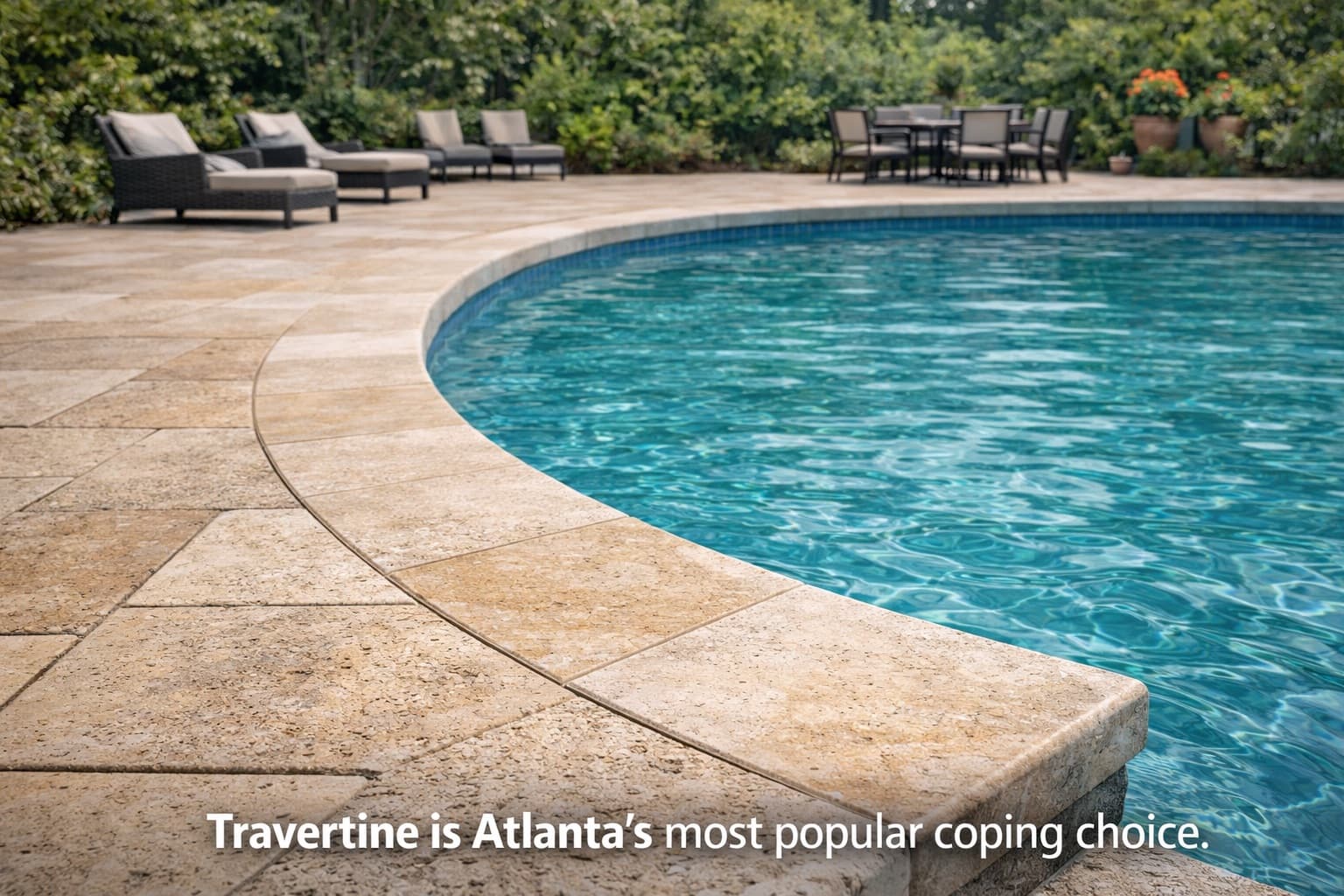
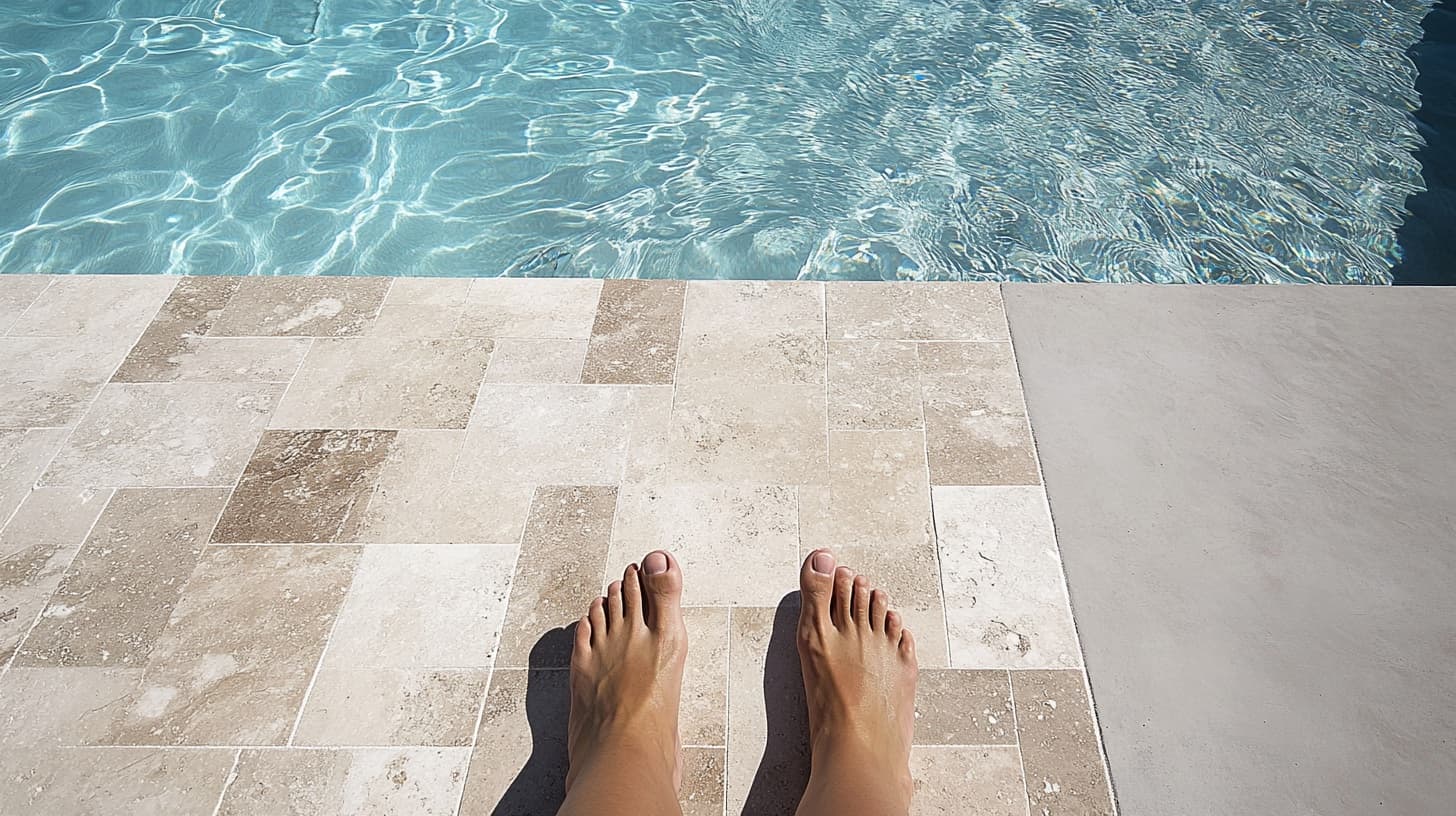
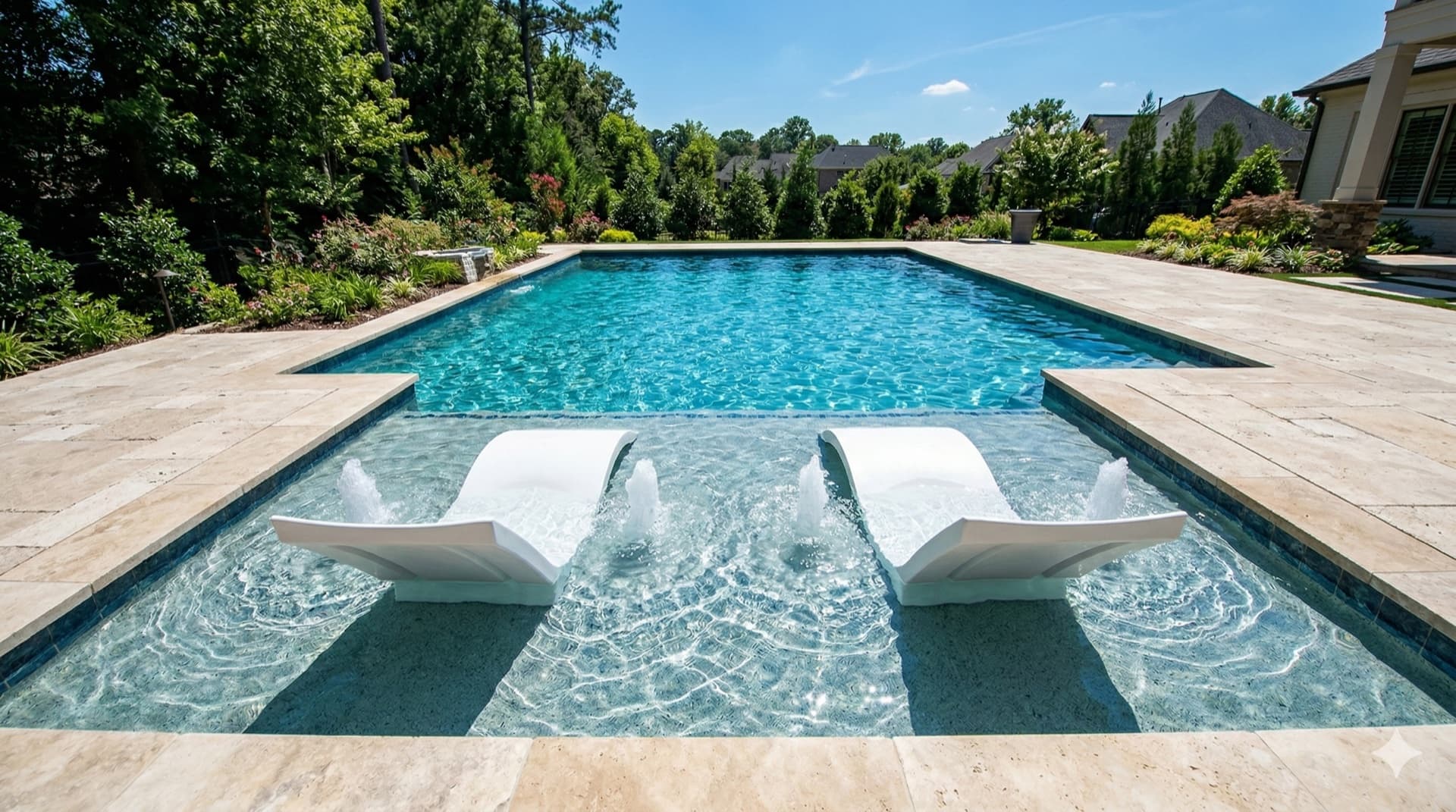
Travertine is one of the most popular coping materials in the Atlanta market, and for good reason. It's a natural stone with a soft, matte texture that stays cool underfoot even in direct sun — a real advantage during Georgia summers. The muted earth tones and natural variation give it an organic, high-end look that pairs well with both modern and traditional pool designs.
Travertine does require periodic sealing to protect against moisture absorption and staining, but when it's properly maintained, it holds up well for years. It's available in a range of profiles — bullnose, square edge, tumbled — so you can match it to your deck material and pool style. It's the material we install most often, and it's a strong default choice for homeowners who want a premium, timeless look.
Natural Stone
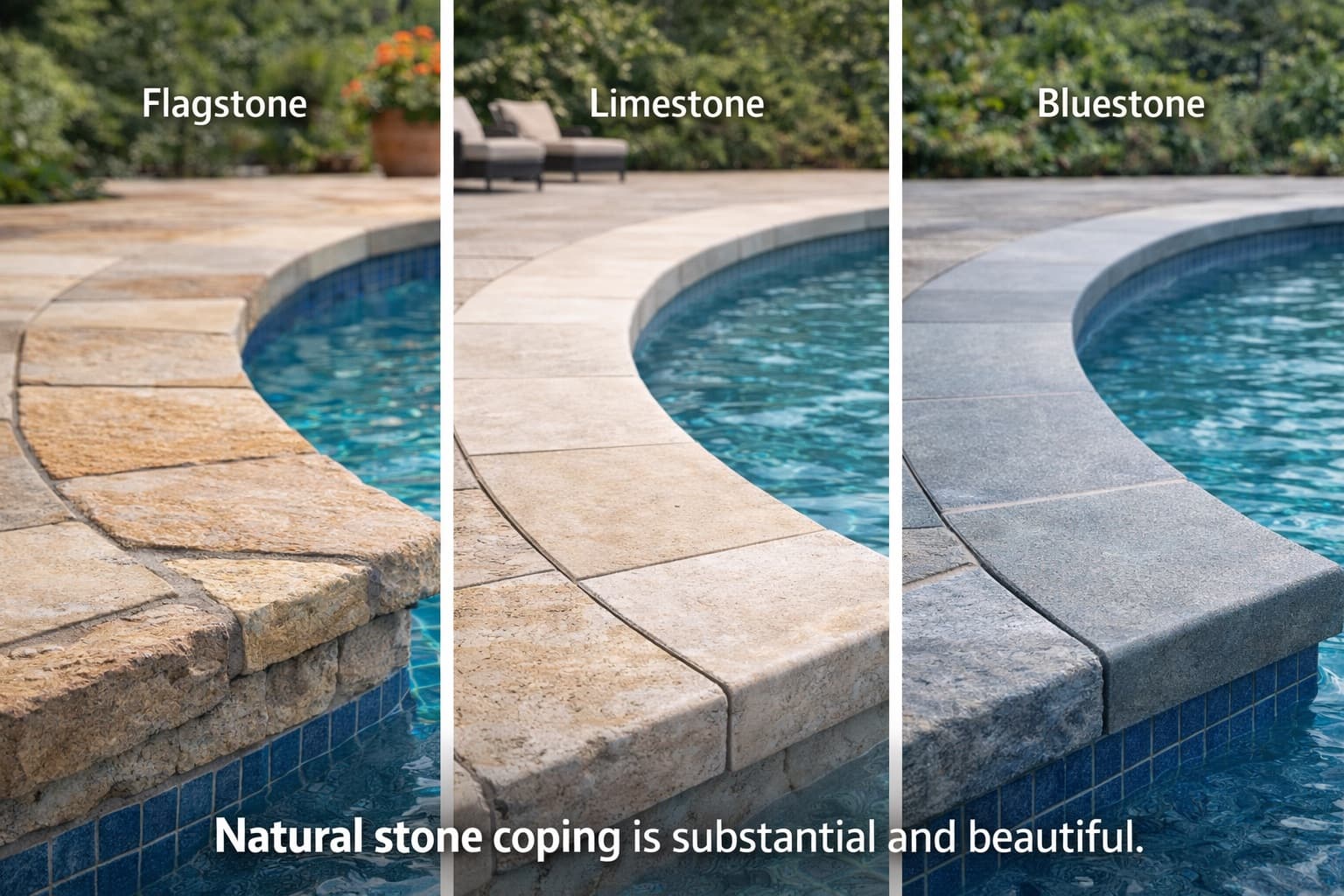
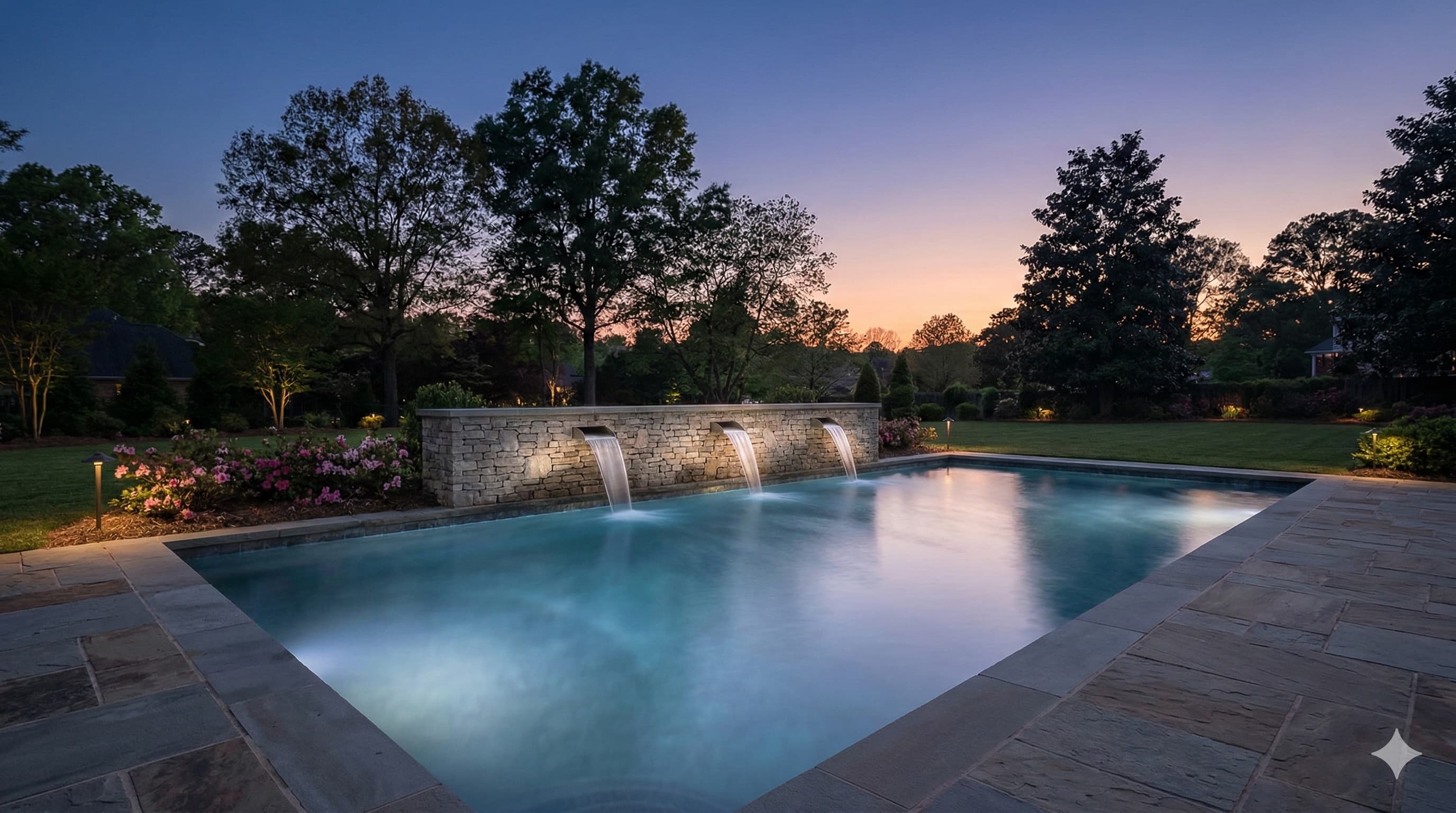
Natural stone coping gives your pool an earthy, substantial feel that's hard to replicate with manufactured materials. Flagstone, limestone, and bluestone are the most common options, and each has a distinct character — flagstone is rustic and irregular, limestone is refined and uniform, and bluestone brings a cool, slate-gray sophistication.
The tradeoff with natural stone is cost and complexity. It's typically the most expensive coping option, and it demands precise cutting and fitting, especially on curved pool edges. The thickness and weight of natural stone also require careful bonding and leveling to avoid future shifting. That said, when it's installed correctly, natural stone coping is one of the most durable and visually striking options available.
Brick
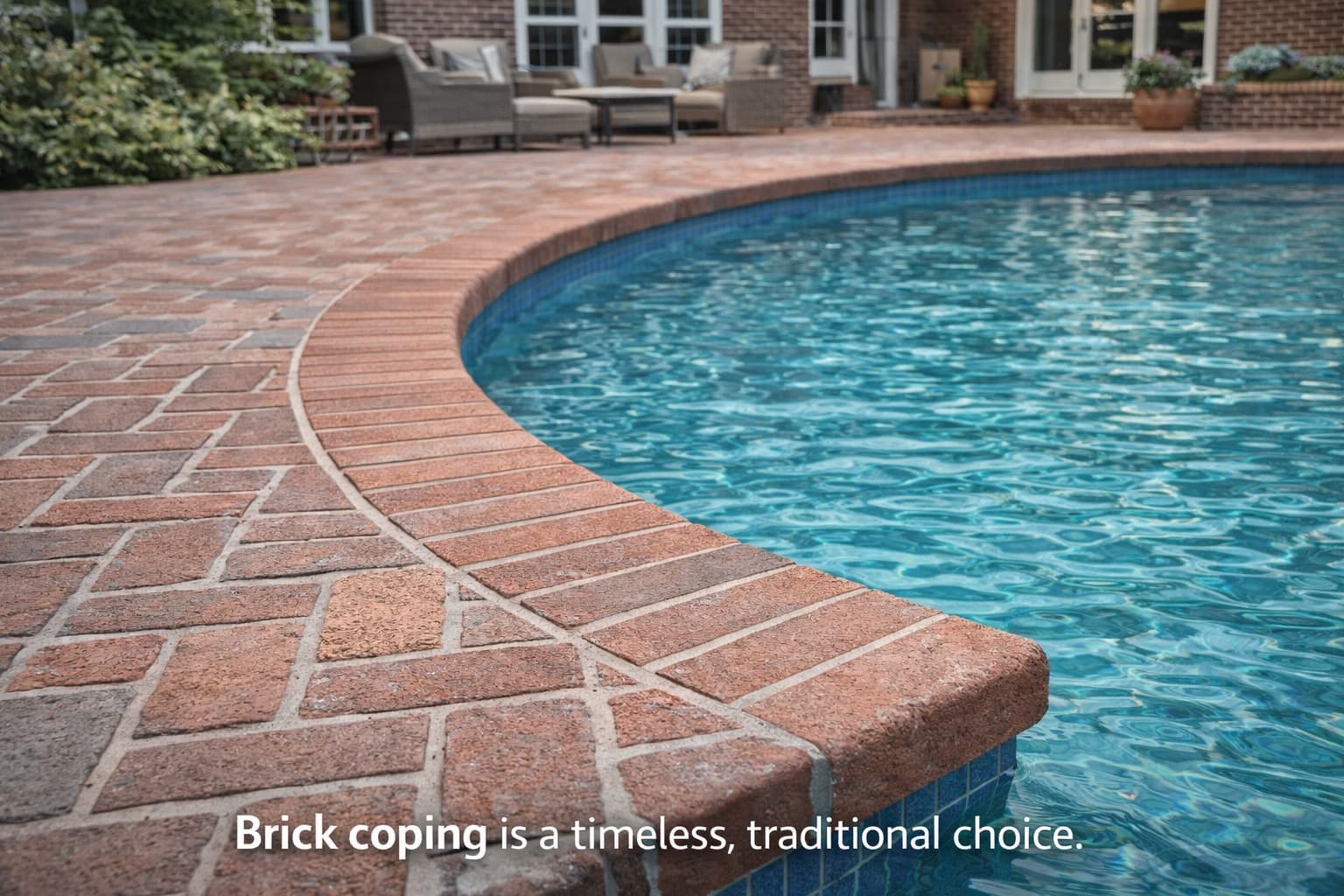
Brick coping has a classic, clean look that works particularly well with traditional home styles — especially common across Atlanta's older neighborhoods. It's durable, relatively affordable, and available in a range of colors from warm reds to cooler grays and browns.
Brick is one of the easier materials to match if you're coordinating with an existing brick deck, patio, or home exterior. It also holds up well structurally with minimal maintenance. The main limitation is aesthetic range — if you're going for a modern, natural, or resort-style look, brick may feel too traditional. But for the right home and the right pool, it's a proven choice that ages gracefully.
Concrete Pavers
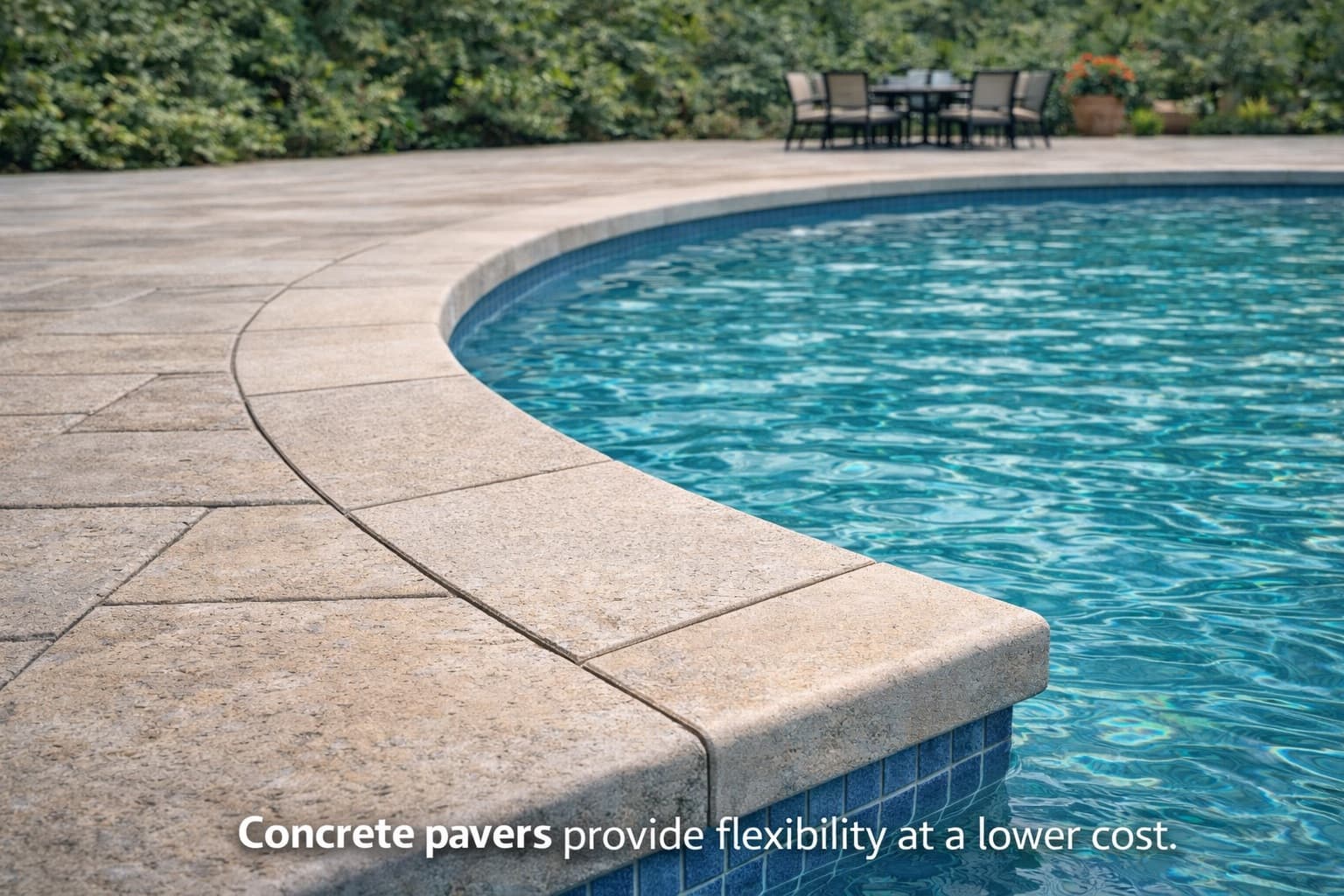
Concrete pavers offer the widest range of shapes, sizes, colors, and textures of any coping material. They can mimic the look of natural stone at a lower price point, and they're available in profiles specifically designed for pool edges — including bullnose and drop-face options that provide a clean, finished overhang.
Modern pavers are significantly more durable and consistent than they were a decade ago. They resist fading, they don't require sealing as frequently as natural stone, and they're easier to replace individually if one ever cracks or shifts. For homeowners who want design flexibility and a polished look without the premium cost of natural stone, pavers are a strong option.
Cantilevered Concrete
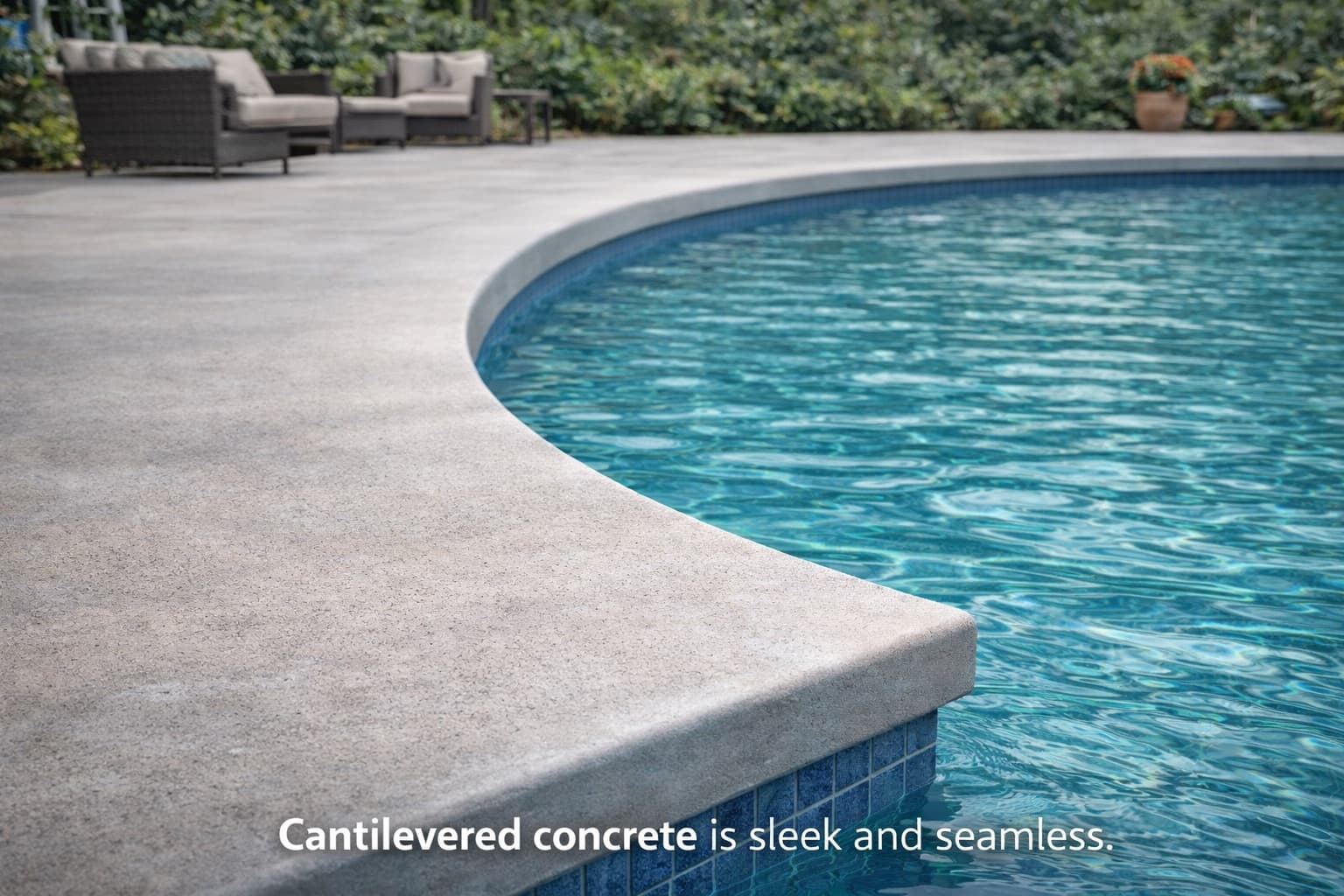
Cantilevered coping is formed by pouring concrete directly over the pool edge, creating a smooth, seamless overhang with no joints or individual pieces. It's the most streamlined look you can achieve — there are no grout lines, no seams, and no individual stones to shift or settle over time.
This style is common on mid-century and modern pool designs, and it works well when you want the coping to visually disappear rather than serve as an accent. It can be stamped, stained, or textured to coordinate with the surrounding deck. The main consideration is that repairs are more involved — if a section cracks or chips, you can't simply swap out one stone. But for a clean, contemporary aesthetic, cantilevered concrete is hard to beat.
Coping Is Precision Work &
We Do It Ourselves
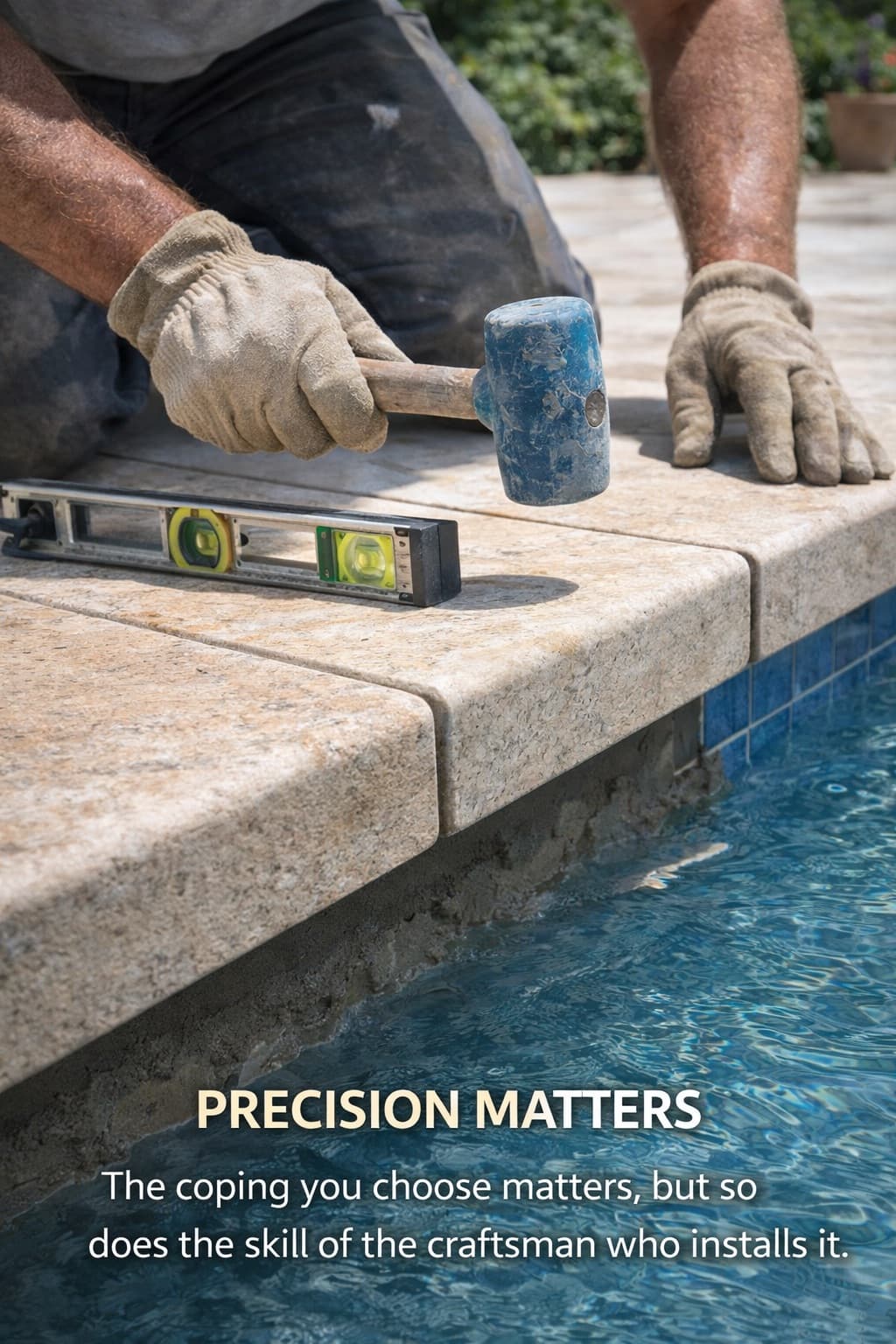
Here's something that doesn't come through in a materials brochure: the same coping material can look completely different depending on who installs it. Coping installation requires precise measurement, clean cuts — especially on curves and radius sections — consistent joint spacing, proper bonding to the beam, and dead-level setting from end to end. When any of those details are off, you get lippage between stones, uneven overhangs, joints that crack within a season, or coping that shifts the first time someone sits on the edge.
This is work our team does directly. Not a subcontractor. Not a crew we've never worked with before. The same hands-on craftsman you meet during your consultation is the one cutting and setting your coping on the day of installation. With over 15 years of tile and stone expertise — including training under Italian tile masters — the level of precision we bring to coping work is the same standard we hold across every surface we touch.
That direct involvement also means real-time decisions happen on-site, not through a chain of phone calls. If a cut needs adjusting, if the existing beam has an irregularity, if a material edge needs hand-finishing to sit flush — those calls are made in the moment by the person doing the work. That's the difference between coping that looks right from a distance and coping that holds up to scrutiny from six inches away.
A Standalone Upgrade or Part of a
Full Renovation
Coping replacement doesn't have to be part of a larger pool renovation — and it doesn't have to wait for one. If your pool surface is still in good shape but your coping is cracked, lifting, or outdated, replacing the coping on its own can dramatically change how your pool looks and functions. It's one of the most visible upgrades you can make without draining the pool or touching the interior finish.
That said, if you're already planning a resurface or a tile replacement, doing the coping at the same time is almost always the smarter move. The perimeter is already exposed, the work zones overlap, and you avoid the cost and disruption of a second mobilization later. We'll always give you an honest recommendation on whether your coping needs replacing now or whether it can wait — and if it can wait, how long you can reasonably expect it to last.
Common Questions About Coping
The clearest signs are visible cracking, stones that are lifting or shifting when you press on them, gaps where grout or mortar has washed out, and discoloration or staining that won't clean up. If your coping is original to a pool that's 15 or more years old, it's likely approaching the end of its useful life even if it still looks passable from a distance.
Yes. Coping replacement is a standalone project that doesn't require draining the pool or touching the interior finish. Many of our clients replace their coping independently — either because the surface is still in good condition or because they're not ready for a full renovation yet.
This is one of the most important decisions in the project, and it's something we walk through with you on-site. The coping needs to complement both the pool tile below and the deck material beyond it — it's the visual bridge between the two. We'll bring samples, look at your existing hardscape, and help you narrow the options to materials and colors that tie everything together.
Not necessarily — and in many cases, a deliberate contrast looks better than a forced match. A travertine coping against a paver deck, for example, creates a clean visual border that defines the pool's shape. We'll help you decide whether matching, complementing, or contrasting is the right approach for your specific backyard.
Most residential coping projects take 2 to 4 days depending on the pool's perimeter length, the complexity of the shape (curves and radius sections take more time), and the material being installed. Natural stone and flagstone generally require more cutting and fitting time than pavers or brick.
It depends on the material. Travertine is one of the coolest options underfoot — its natural density and light color reflect heat rather than absorbing it. Darker natural stones and some pavers will get warmer. We always factor heat performance into our recommendations, especially for pool edges where bare feet are constant.
Often Done Together
Coping sits at the intersection of your pool's interior and its surrounding deck — which means it's frequently part of a broader renovation that touches the surfaces above and below it. Here are the services our clients most commonly pair with a coping replacement:
Tile
Tile is where craft is most visible — and most unforgiving. With over 15 years of tile expertise and training under Italian tile masters, we handle everything from waterline bands to full-interior glass installations.
Pool Resurfacing
Your pool's interior surface determines how it looks, feels, and holds up over time. We manage the full resurfacing process — from drain and prep through finish application and startup — in plaster, pebble, and quartz.
Pool Deck
The largest surface around your pool sets the tone for the entire backyard. We handle full tear-outs, overlays, and new installations in pavers, travertine, natural stone, and stamped concrete.
Ready to Replace Your Coping?
Tell us what's going on with your current coping — what's bothering you, what you'd like it to look like, and whether you're considering any other work alongside it. We'll take a look, walk you through your material options, and give you a clear, honest recommendation.