Buckhead pools are their own category. We say that having worked on pools across every corner of Metro Atlanta — and the projects we do in the 30305, 30309, and 30327 zip codes are consistently more complex, more detailed, and more rewarding than typical suburban renovations.
It's not just about higher budgets (though Buckhead homeowners do tend toward premium materials). It's about the physical realities of Buckhead properties — the access constraints, the mature landscaping, the pool designs from the neighborhood's building booms — that make these projects genuinely different to plan and execute.
Here's what to expect if you're renovating a Buckhead pool, and what we've learned from doing it repeatedly.
The Buckhead Pool Profile
Most Buckhead pools we work on were built between 1997 and 2008. That means they're 17 to 28 years old — well into renovation territory. And they share some common characteristics:
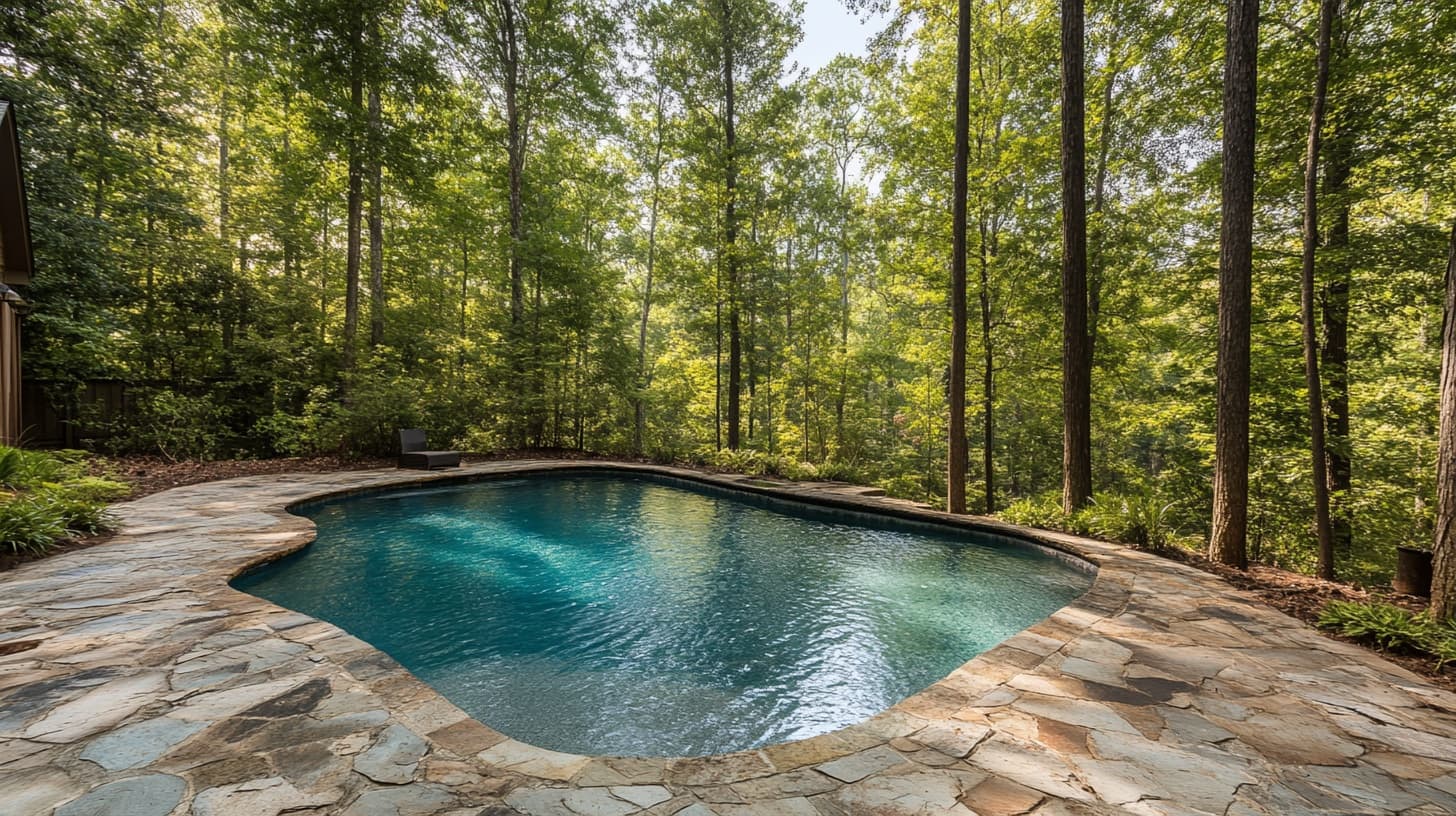
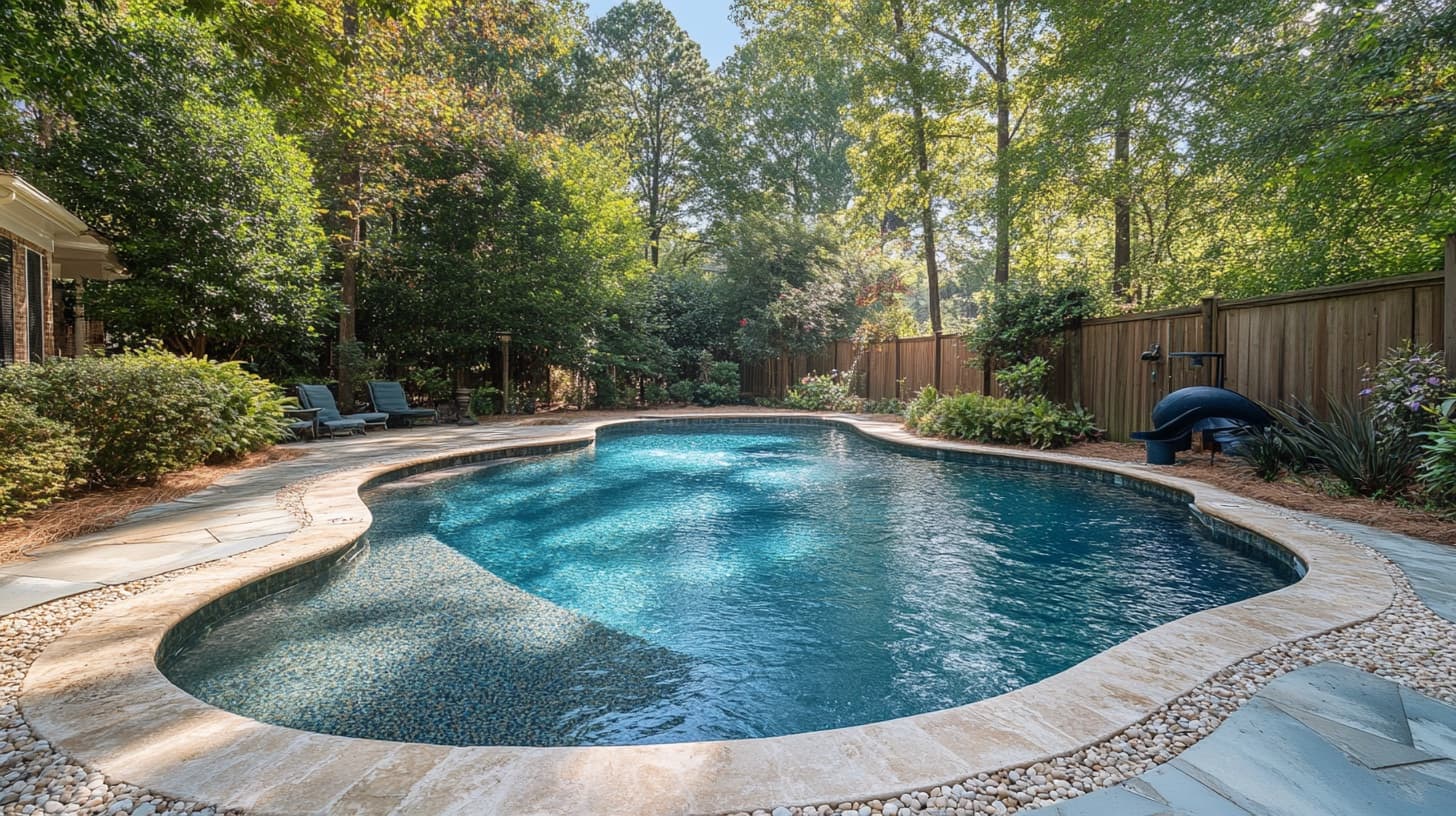
They're complex. Buckhead pools are rarely simple rectangles. Freeform shapes, raised spas, water features, grottos, and deep-end diving areas are standard. More features mean more surface area, more tile work, and more detailed labor per square foot than a straightforward suburban pool.
They're surrounded by mature trees. That oak canopy that makes Buckhead neighborhoods beautiful also means root systems pushing under decks, years of tannin staining in the pool, and limited sun exposure that affects curing times for new finishes. We factor tree proximity into material recommendations — a shaded pool with heavy leaf fall has different finish needs than a sun-exposed one.
The access is often challenging. Narrow side gates between close-set homes, steep grade changes on hillside lots, and long distances from street to pool. We've had Buckhead projects where every bag of material was hand-carried 150 feet through a side yard and down a slope. That's a labor reality that affects both timeline and cost — and it's something a contractor needs to assess in person, not estimate from Google Maps.
A Recent Buckhead Project
A 2003-era freeform pool in Peachtree Hills illustrates what a typical Buckhead renovation looks like in practice. The pool was about 550 square feet with a raised spillover spa, fieldstone waterfall, and the original white plaster surface — which was heavily etched and stained after 20 years.
The scope: StoneScapes pebble resurface on both the pool and spa, new glass mosaic waterline tile, travertine coping to replace the original concrete bull-nose, and replacement of two failing return lines discovered during drain-down.
The tight side-yard access added meaningful labor versus a pool with open access. The project took 12 working days from drain to fill.
The homeowner had gotten two other quotes. One didn't include spa resurfacing (a detail the homeowner didn't catch until it was flagged during quote comparison). The other included deck work they didn't need yet — a reminder to compare scopes carefully, not just bottom-line numbers.
What Drives Buckhead Renovation Costs
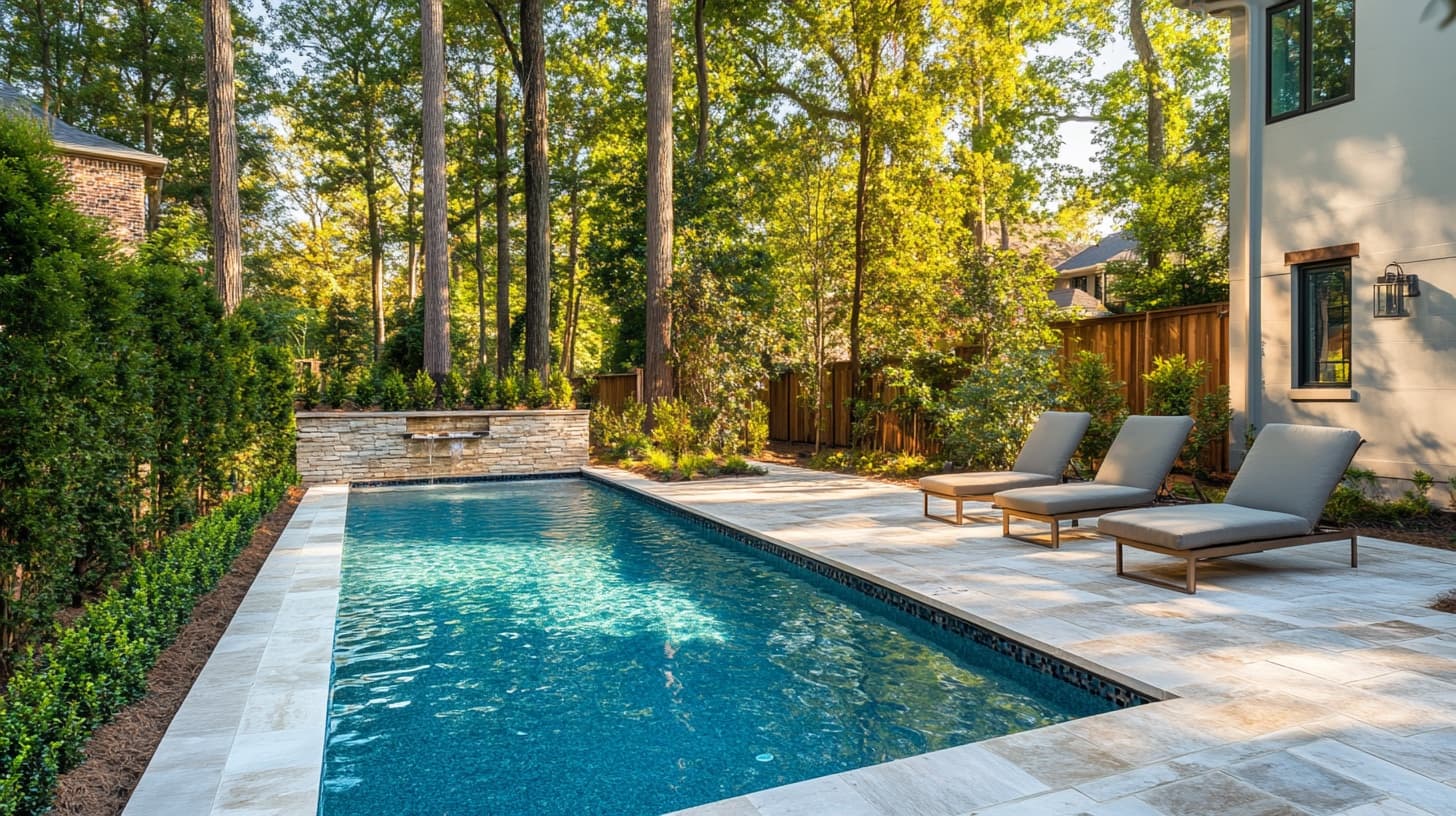
Costs vary based on materials, pool size, and project scope. Pebble and quartz finishes are far more popular than standard plaster in Buckhead — most homeowners here opt for the longer-lasting finish. Travertine coping is the most popular choice, with natural stone and brick also common. For a deeper breakdown of what drives resurfacing costs across Metro Atlanta, see the full cost guide.
Why Buckhead Runs Higher Than Suburban Projects
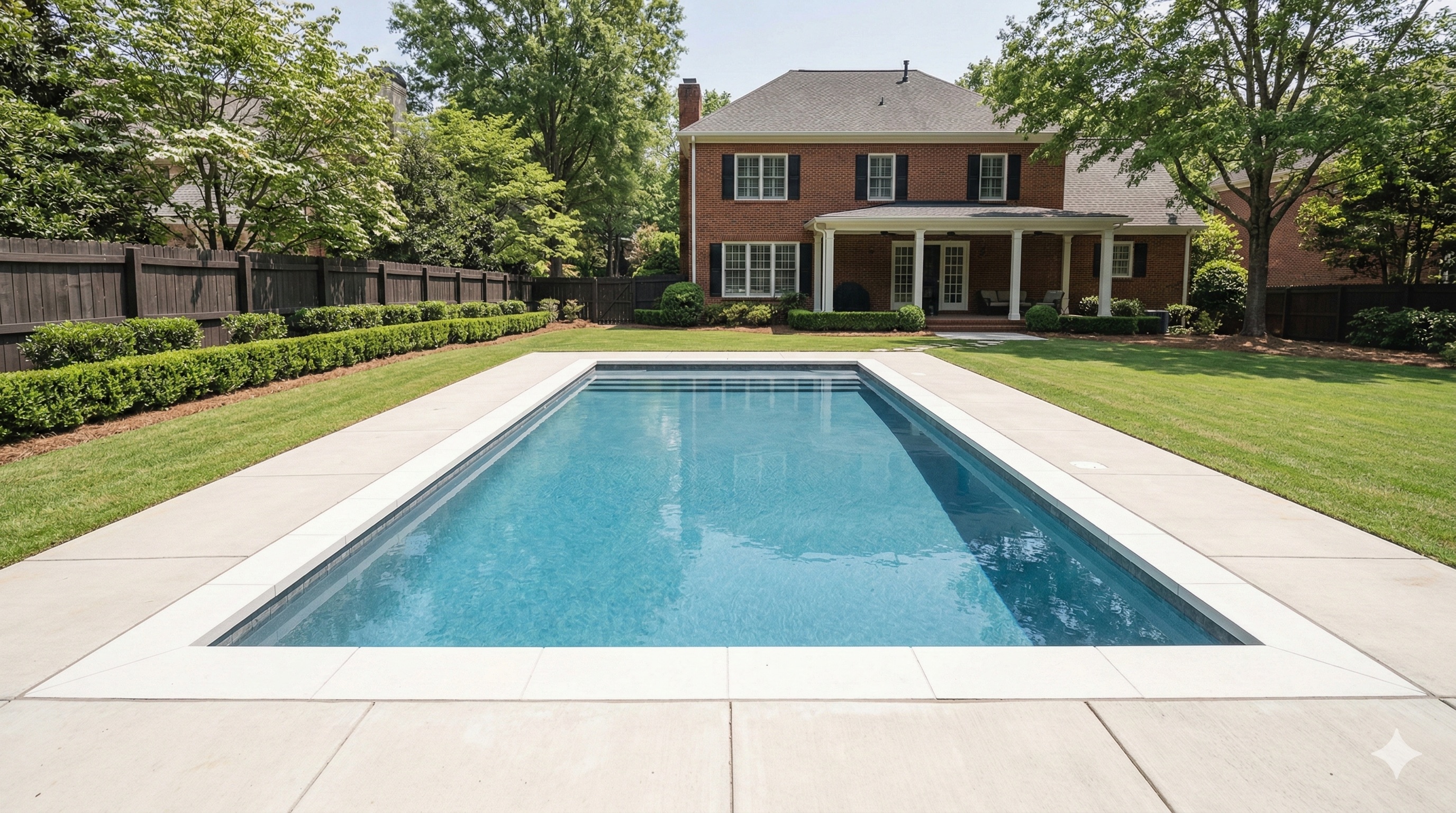
Three factors: access (more labor for material transport), pool complexity (more surface area and detail work per project), and material preferences (Buckhead homeowners overwhelmingly choose premium finishes, travertine, and custom tile). These are all legitimate cost drivers, not markups — and they show up in any contractor's pricing, not just ours.
Permits in the City of Atlanta
Buckhead is within the City of Atlanta, which has its own permitting requirements separate from Fulton County.
Standard resurfacing (draining, re-plastering, refilling) generally does not require a permit.
Structural modifications — adding a spa, changing the pool shape, building new walls or benches, or modifying plumbing — typically require a building permit through the City of Atlanta's Department of Buildings. Processing time runs 2 to 4 weeks.
Deck work may require a permit depending on scope. Replacing existing pavers usually doesn't. New concrete or expanded paver areas may.
Electrical work for lighting, pumps, or automation systems needs to comply with City of Atlanta codes and may require a separate electrical permit.
We handle all permitting when needed and factor the processing time into your project schedule. Permit fees are minimal — not a significant cost, but the timeline impact matters for planning.
HOA and Architectural Review
Some Buckhead neighborhoods — particularly Peachtree Hills, Garden Hills, and Peachtree Park — have HOA guidelines or architectural review boards that weigh in on exterior modifications. If your HOA requires approval, start that conversation early. We can provide the documentation review boards typically want: material specs, color samples, and project scope descriptions.
Choosing a Contractor for Intown Work
Buckhead homeowners have plenty of contractor options. A few things worth asking:
Do they regularly work intown? The access challenges, City of Atlanta permitting, and pace of Buckhead projects are different from suburban work. Ask how many intown projects the company has completed in the last year.
Who's doing the work? Many companies subcontract their renovation work — the salesperson you meet isn't the crew at your house. On a Buckhead property where access is tricky and details matter, you want the person who quoted the job overseeing the work. At Cornerstone, we lead our crew on every project from consultation through final walkthrough.
Can they handle specialty tile? Buckhead renovations frequently involve custom tile work — glass mosaics, decorative bands, or detailed patterns. That requires genuine tile expertise, not a general crew trying to figure it out on-site. Tile work is our specialty, with 15+ years of hands-on experience including formal training under Italian tile artisans. It's the part of these projects we enjoy most.
Start the Conversation
If your Buckhead pool is showing its age, the next step is straightforward: let us come look at it. Cornerstone Pool & Remodel consultations are free. We'll walk the pool with you, talk through your goals for the space, and give you a clear picture of what the project involves — scope, cost, and timeline specific to your property.
Reach out through our website or give us a call to schedule.
Ready to Talk About Your Pool?
Get a free, no-obligation consultation from Cornerstone Pool & Remodel.
Request a Free Quote