Roswell is one of the busiest areas in our renovation schedule. The city has a heavy concentration of pools from the late 1990s and early 2000s, which means a lot of homeowners are hitting that 20-year mark where the pool goes from "it's fine" to "something needs to happen."
If you're a Roswell homeowner staring at a rough pool surface, cracking coping, or a deck that's seen better days, here's what the renovation process looks like in your city — including the Roswell-specific details that matter.
The Typical Roswell Pool
Most pools we renovate in Roswell were built during the late 1990s through 2008 housing boom. They're typically larger pools on generous lots — Roswell properties tend to have bigger backyards than many closer-in Atlanta suburbs, which means bigger pool shells and more deck area.
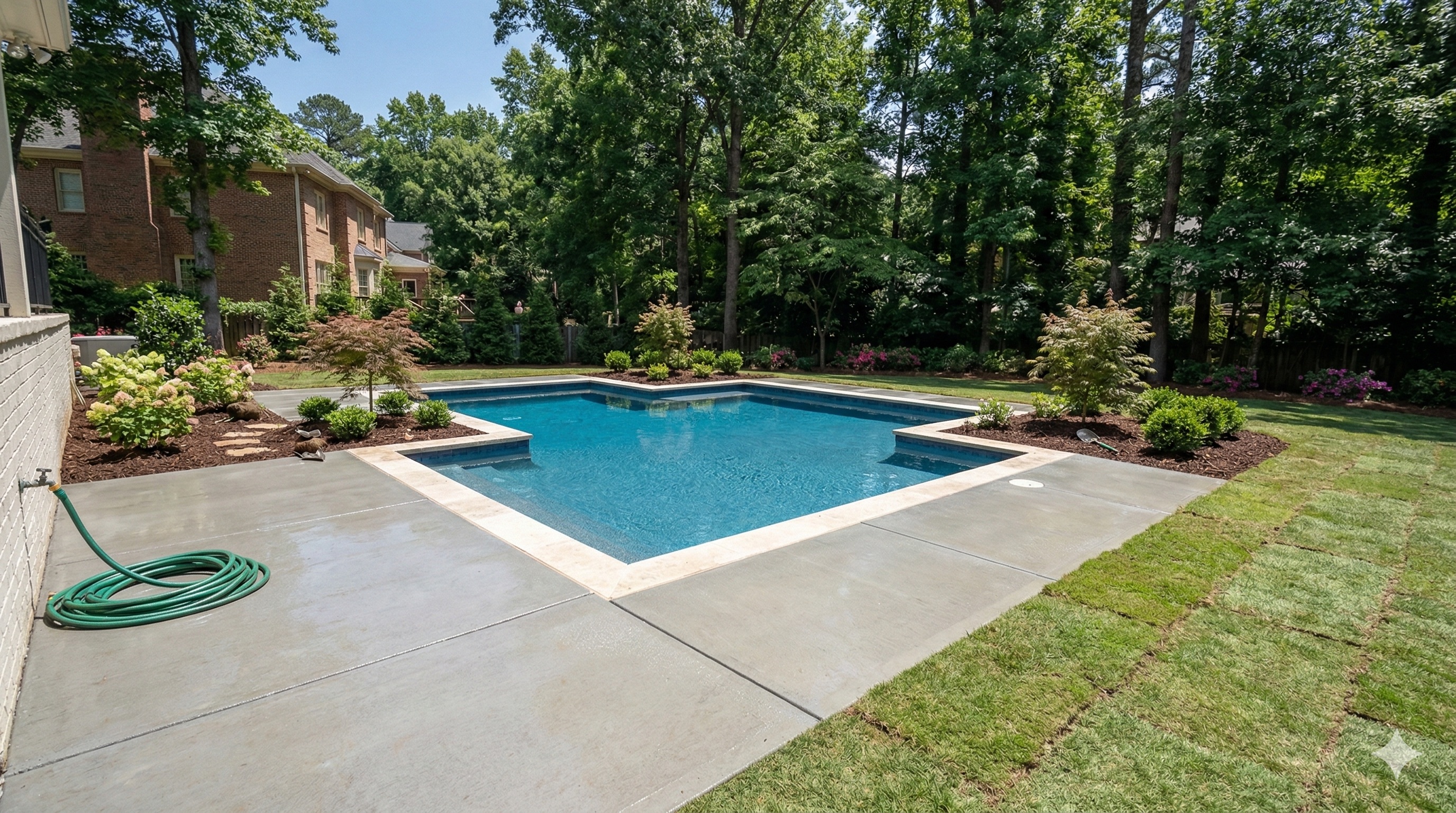
The standard Roswell pool from this era has a white or light plaster finish (now rough and stained), poured concrete or basic precast coping (cracking and separating), and a brushed concrete deck (discolored by red clay and Georgia weather).
After 15 to 25 years, most Roswell pools need some combination of:
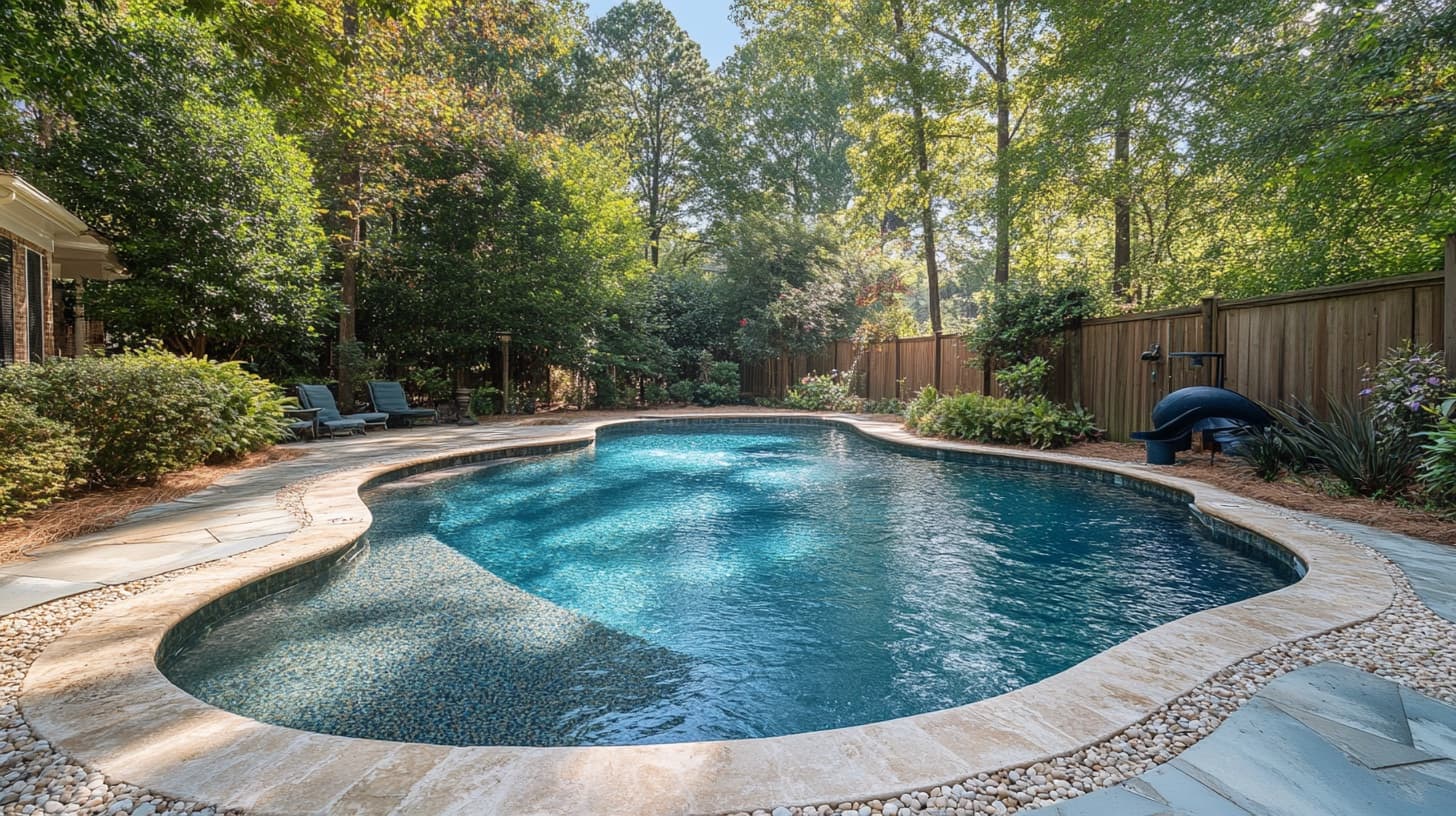
Resurfacing. The plaster is rough, discolored, or delaminating. Roswell homeowners overwhelmingly choose pebble (StoneScapes) or quartz finishes for the upgrade — the durability jump from basic plaster to a pebble finish is significant, and since you're paying for the labor to drain and prep regardless, the material upgrade is worth the cost difference. See our detailed finish comparison for material-specific details.
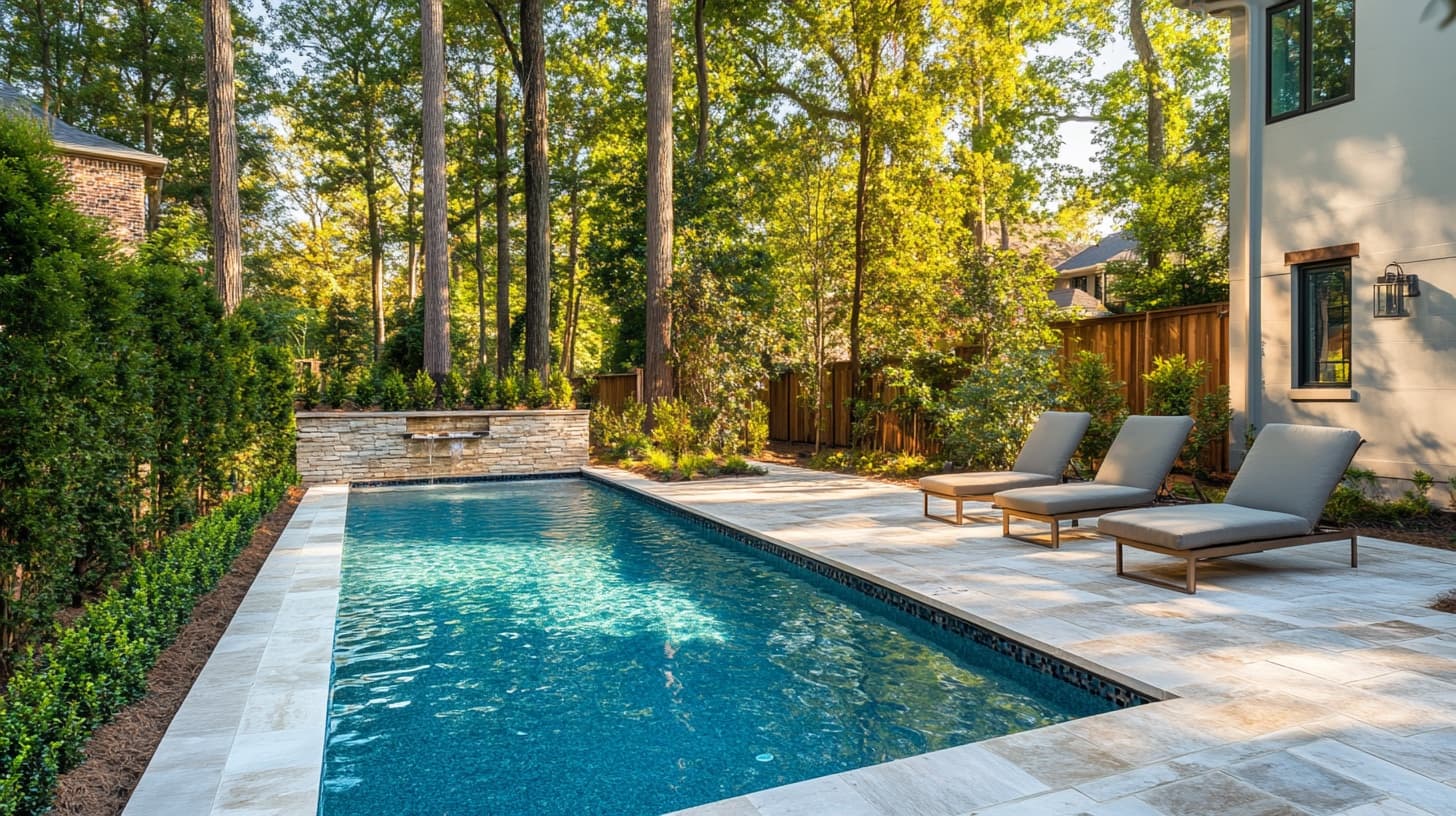
Coping replacement. The original poured or precast coping is cracking and pulling away from the bond beam. Travertine coping is the dominant upgrade choice in Roswell — it fits the area's aesthetic and stays cool underfoot.
Tile update. The original waterline tile is a basic ceramic band that's cracked or faded. Glass tile or detailed mosaic bands are popular upgrades.
Deck renovation. The original concrete deck is cracked and stained. Travertine pavers are the most popular replacement in Roswell, though concrete pavers are a solid alternative at a lower price point.
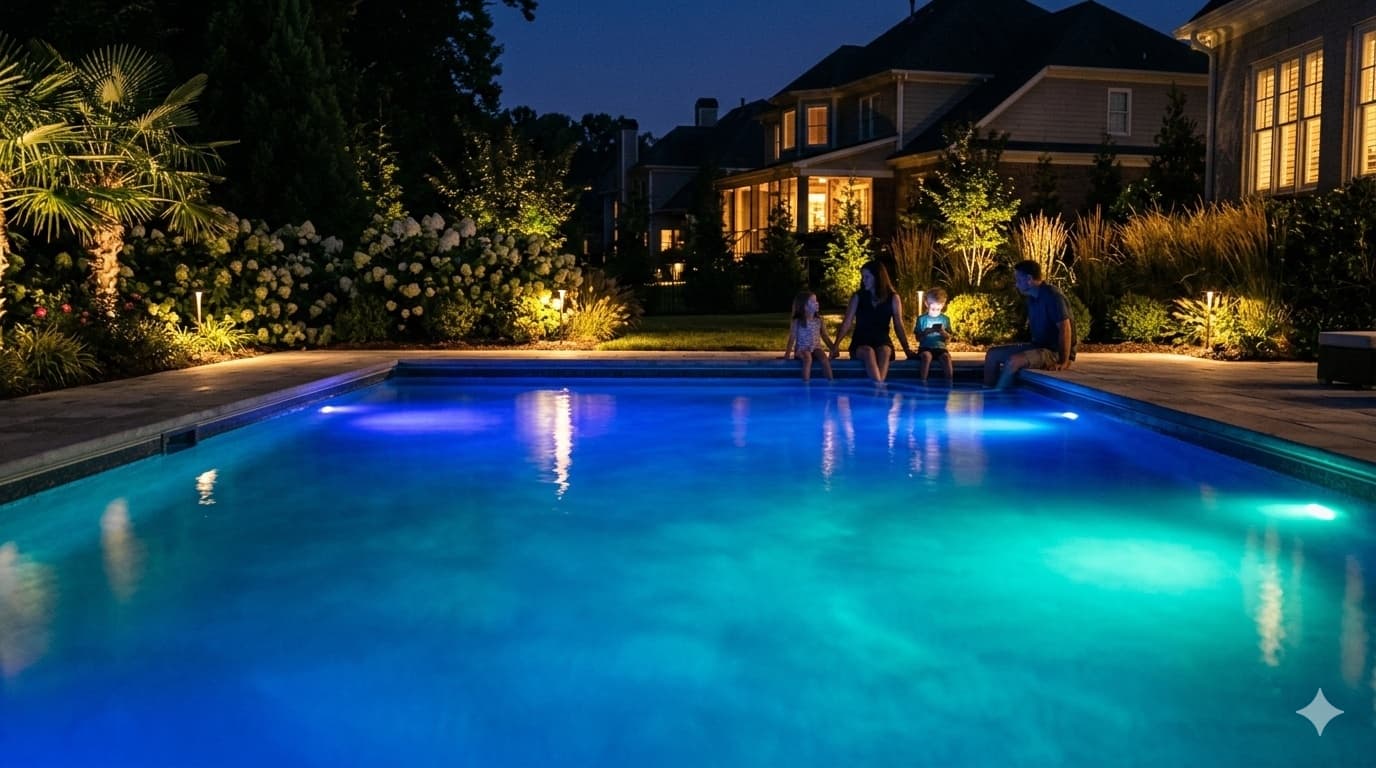
Equipment upgrades. Pools from this era often have single-speed pumps, outdated filters, and no automation. Many Roswell homeowners add variable-speed pumps, LED lighting, and automation systems during the renovation.
Roswell Permitting
Roswell is an incorporated city with its own Community Development Department — permitting is separate from Fulton County.
Standard resurfacing — draining, replastering or applying a new finish, refilling — does not require a permit in Roswell.
Structural modifications — adding a spa, building a tanning ledge, altering the pool shape or depth — require a building permit through the City of Roswell.
Deck replacement depends on scope. Replacing existing material is generally permit-free. New construction or expanded deck area may require a permit, particularly if it changes the impervious surface coverage on the lot.
Electrical work for new equipment, lighting, or automation requires a separate electrical permit under Roswell's electrical code.
Roswell's permitting process is well-organized. Applications are typically reviewed within 2 to 3 weeks. We handle the full permit process — application, required documentation, and inspector coordination — when permits are needed for your project.
What Drives Roswell Renovation Costs
Renovation costs in Roswell are consistent with the broader Metro Atlanta market, though Roswell pools tend to be on the larger side, which pushes total costs up on surface area-dependent items like resurfacing and deck work. Costs vary based on pool size, finish selection, coping material and pool perimeter, deck square footage, and whether equipment upgrades are included. The wide range in full renovation projects reflects size variation — a smaller pool with a modest deck is a very different project than a large pool with over a thousand square feet of deck.
HOA Considerations in Roswell
Many Roswell neighborhoods have active HOAs, particularly in the planned communities along Holcomb Bridge Road, Highway 9, and in the neighborhoods near the Chattahoochee River.
Common HOA requirements we navigate:
Architectural review. Some Roswell HOAs require approval of visible materials — deck pavers, coping stone, tile selection — before work begins. We provide material samples, specifications, and color documentation for your submission.
Fencing compliance. Pool safety fencing must meet the HOA's requirements, which sometimes exceed the minimum building code. If your renovation changes the deck layout or adds features near the fence line, adjustments may be needed.
Construction parameters. Typical restrictions include work-hour limitations (usually 7 AM to 7 PM on weekdays), weekend work restrictions, and advance notification to adjacent homeowners.
We've worked with most of the major Roswell HOAs and can tell you during the consultation if we anticipate any issues with your specific community.
Roswell Site Conditions
Roswell properties have characteristics that experienced renovation contractors plan for:
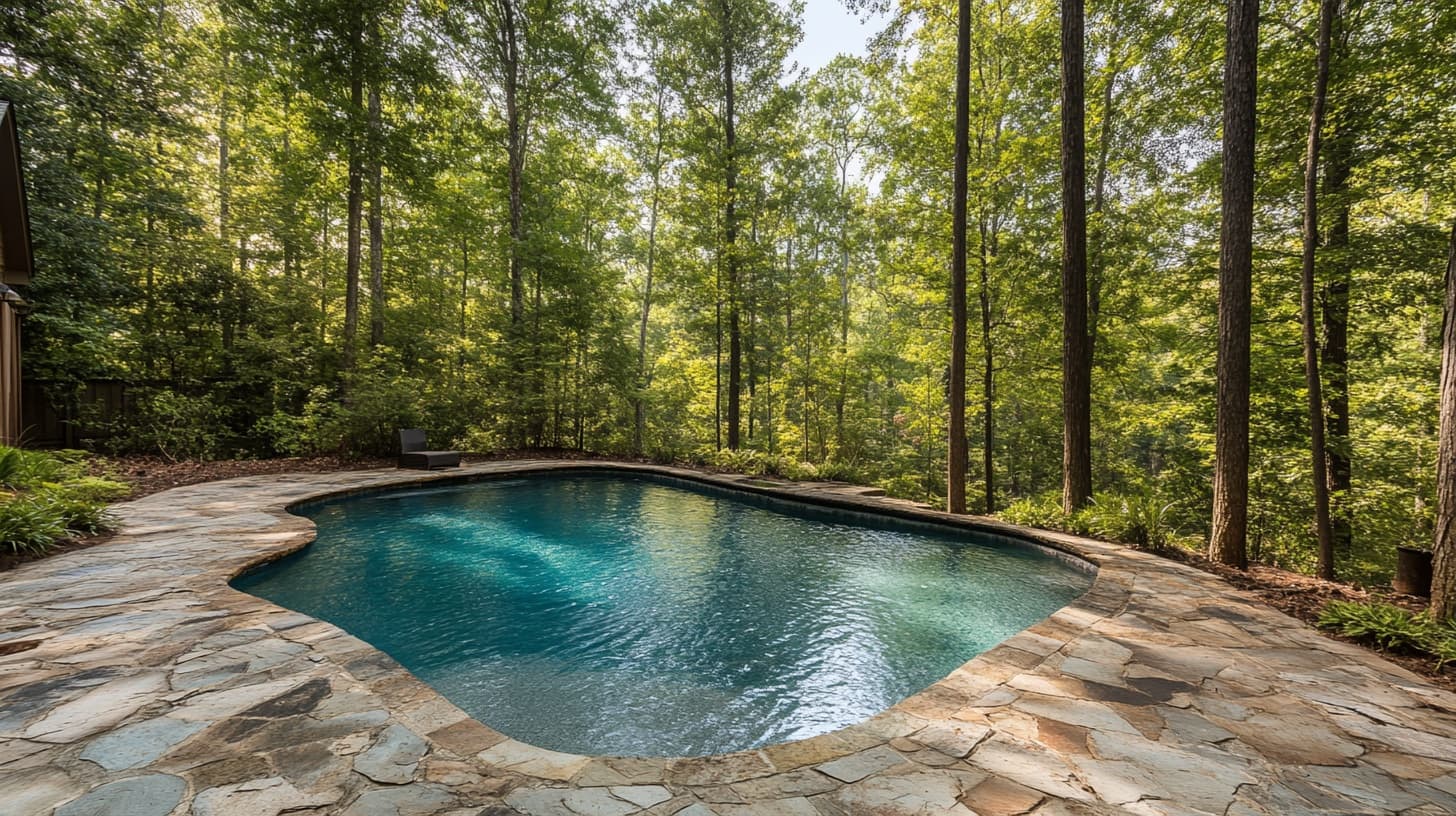
Large, wooded lots. Roswell is one of the more heavily wooded suburbs in Metro Atlanta. Mature oaks, pines, and hardwoods are common close to pool areas. Root systems can affect deck integrity and even pool structure over time. During the consultation, we assess whether root management needs to happen before or during the renovation.
Clay soil and drainage. Roswell sits on Georgia red clay, which expands and contracts with moisture. This affects pool deck drainage and can cause deck settling over time. Proper base preparation and drainage grading are critical during deck replacement — it's one of the areas where experience matters most.
Varied terrain. Unlike flat suburban developments, many Roswell properties have grade changes. Pools built on sloped lots may have retaining walls, elevation transitions, and drainage patterns that affect deck work and structural modifications.
Backyard access. Some Roswell homes, particularly in the established neighborhoods along Riverside Road and near the historic district, have narrow side-yard access. We assess this during the consultation and plan material delivery and equipment staging accordingly. It doesn't change what we can do — just how the logistics get planned.
What a Roswell Renovation Timeline Looks Like
For a typical resurface + coping + tile project in Roswell:
Consultation and quote: 1 week.
Material selection: 1 to 2 weeks. We bring finish, tile, and coping samples to your home so you can compare options in your actual space — next to your deck, your landscaping, and your home exterior.
HOA approval (if needed): 1 to 3 weeks depending on your community's review cycle.
Permitting (if needed): 2 to 3 weeks through the City of Roswell.
Production: 7 to 14 days of active work.
Cure and fill: 5 to 7 days.
Total: 5 to 9 weeks from first call to swimming, depending on whether permits and HOA approval are needed.
For straightforward resurfacing projects without structural changes or HOA review, the timeline compresses to 3 to 5 weeks.
A Roswell Project: Holcomb Bridge Area
A homeowner near Holcomb Bridge had a 1999-era pool — 500 square feet, freeform shape — with the original white plaster crazing and pulling away from the shell. The poured concrete coping had separated from the beam in multiple spots, and the 900-square-foot brushed concrete deck was stained orange from two decades of Georgia red clay runoff.
The bigger issue was site-related. Three mature water oaks canopied the pool area, and one root system had lifted a section of deck slab by almost two inches, creating both a trip hazard and a drainage reversal — rainwater was flowing toward the pool instead of away. The original builder hadn't accounted for the root growth trajectory when placing the deck.
The renovation scope: StoneScapes Mini Pebble in Tropics Blue, tumbled French pattern travertine coping, glass mosaic waterline tile in an iridescent blue-green blend, and travertine pavers for the full deck — with proper base regrading and a root barrier along the oak-side perimeter. The deck work added meaningful cost beyond what a flat, root-free lot would have required, but it solved a problem that was only going to get worse.
The project was completed over six weeks. The pool went from being the weakest part of the backyard to the centerpiece. The homeowner had been getting quotes for two years and kept putting it off — once they saw the material samples next to their stone-front house, the decision clicked.
The City of Roswell's Community Development Department notes that pool-related building permits have increased steadily as the city's 1990s-era housing stock reaches the renovation cycle — a trend consistent with what we see in our project pipeline every year.
Your Pool's Next Step
If your Roswell pool is approaching that 20-year mark — or past it — the first move is a walk-through. We'll assess what needs work now, what can wait, and how the site conditions will affect the scope and cost.
Call or use the contact form to set up a time.
Ready to Talk About Your Pool?
Get a free, no-obligation consultation from Cornerstone Pool & Remodel.
Request a Free Quote