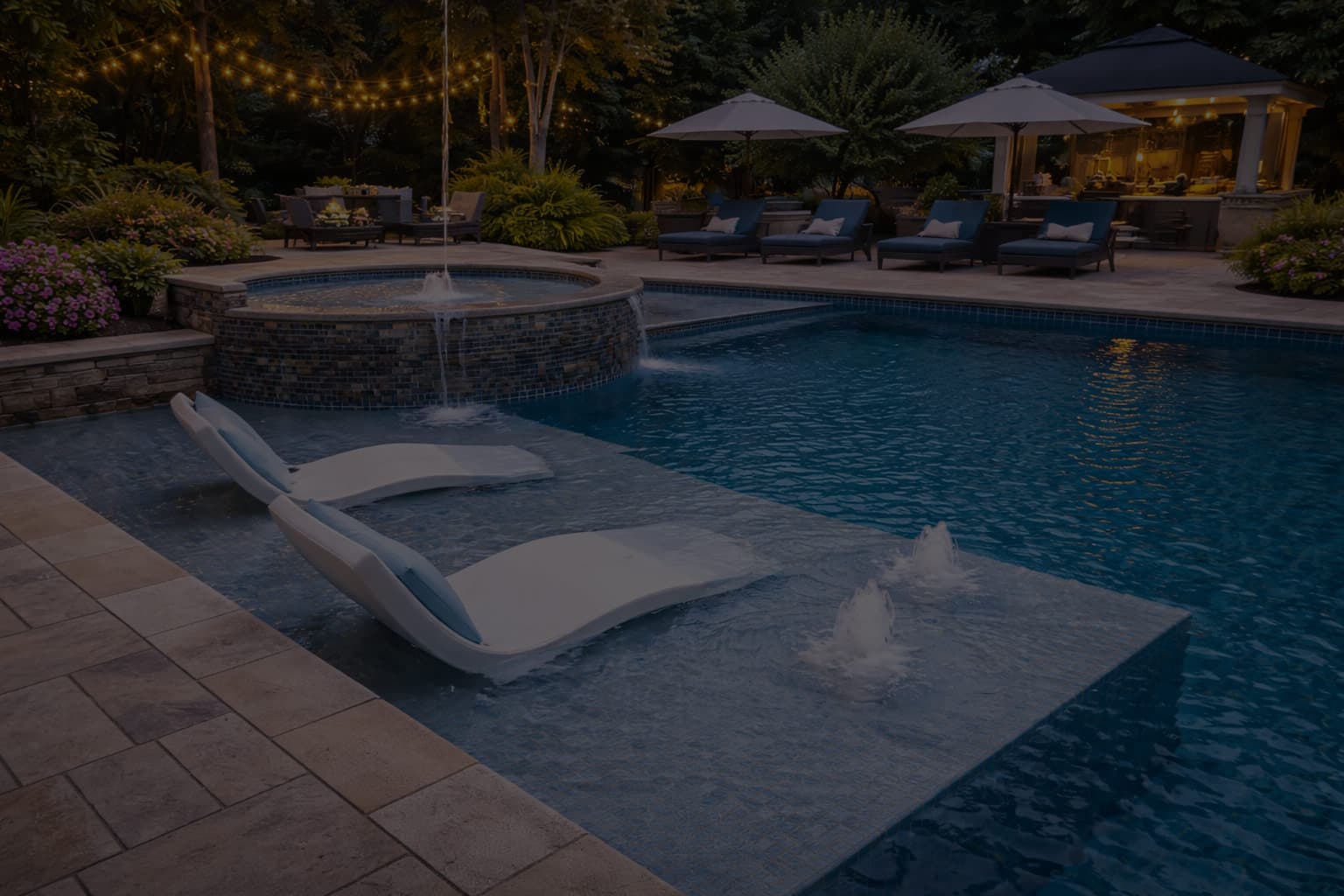
Redesign How Your Pool Works —
Not Just How It Looks
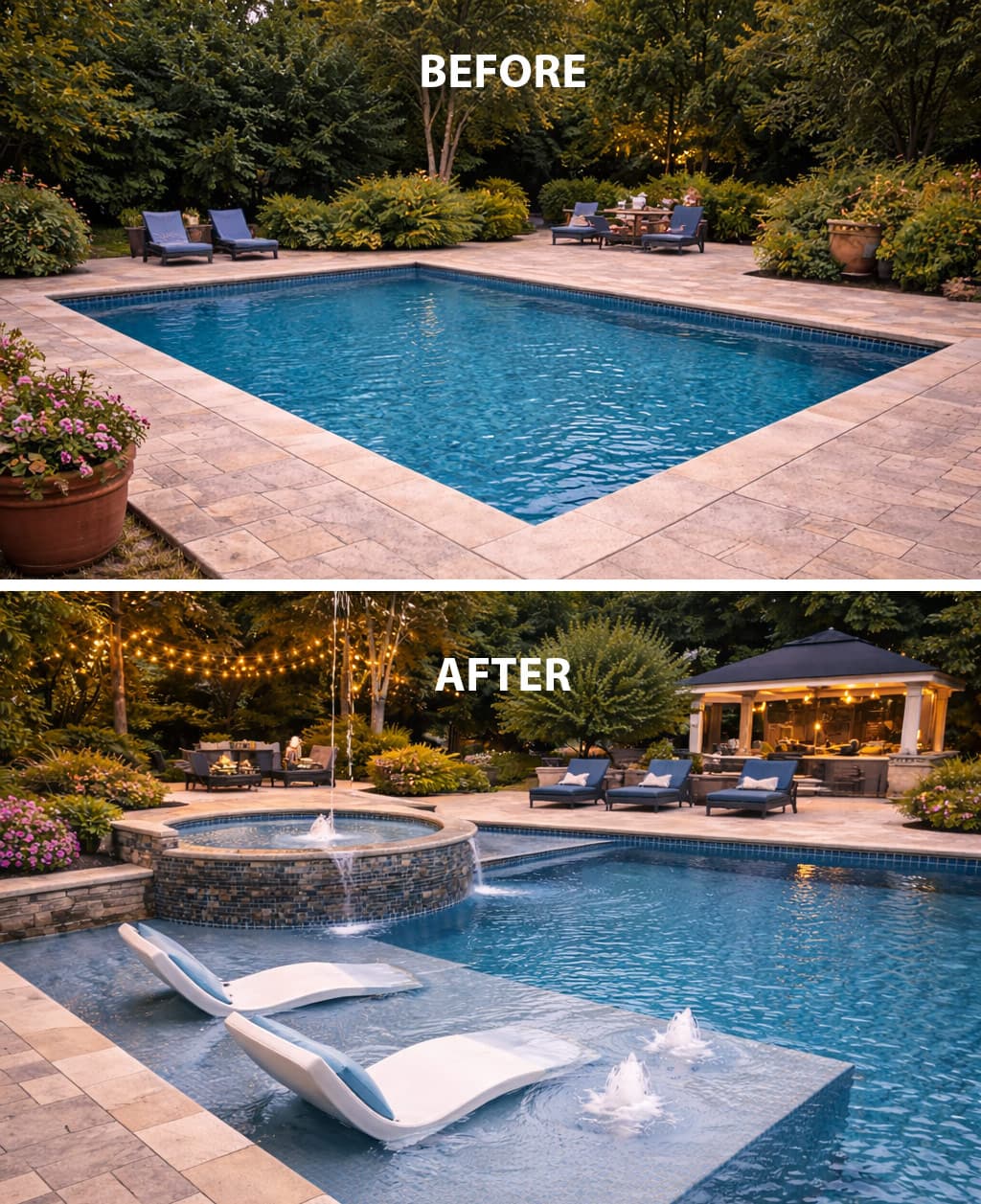
A new surface, fresh tile, and updated coping can make your pool look brand new. But if the pool itself doesn't function the way you want it to — if there's no comfortable place to sit at water level, no shallow area for kids to play, no spa to unwind in after a long day — then you're still living with someone else's design decisions. Structural modifications let you change the actual shape, depth, and features of your existing pool without tearing the whole thing out and starting over. We handle all structural work in-house across metro Atlanta — from tanning ledges and spa additions to complete pool reshaping. Same crew, same standards, no subcontractors.
Your Pool Was Built for
Someone Else's Life
Most pools in the Atlanta market were designed and built years — sometimes decades — ago, based on the original homeowner's preferences, the trends of the time, and whatever the builder offered as standard options. That means you may be living with a pool that's too deep throughout, has no shallow lounging area, lacks a spa entirely, or has a layout that doesn't match how your family actually uses the backyard today.
The assumption most homeowners make is that changing the pool's structure means demolishing it and building new. That's almost never the case. An existing pool shell is an engineered concrete structure that can be modified, extended, reshaped, and added to — as long as the work is done correctly. Tanning ledges can be built into deep ends. Spas can be integrated into existing walls. Steps can be reconfigured. Depths can be changed. Walls can be raised and fitted with water features. The pool you already have is the foundation — structural modifications turn it into the pool you actually want.
What We Build
Tanning Ledges (Baja Shelves)
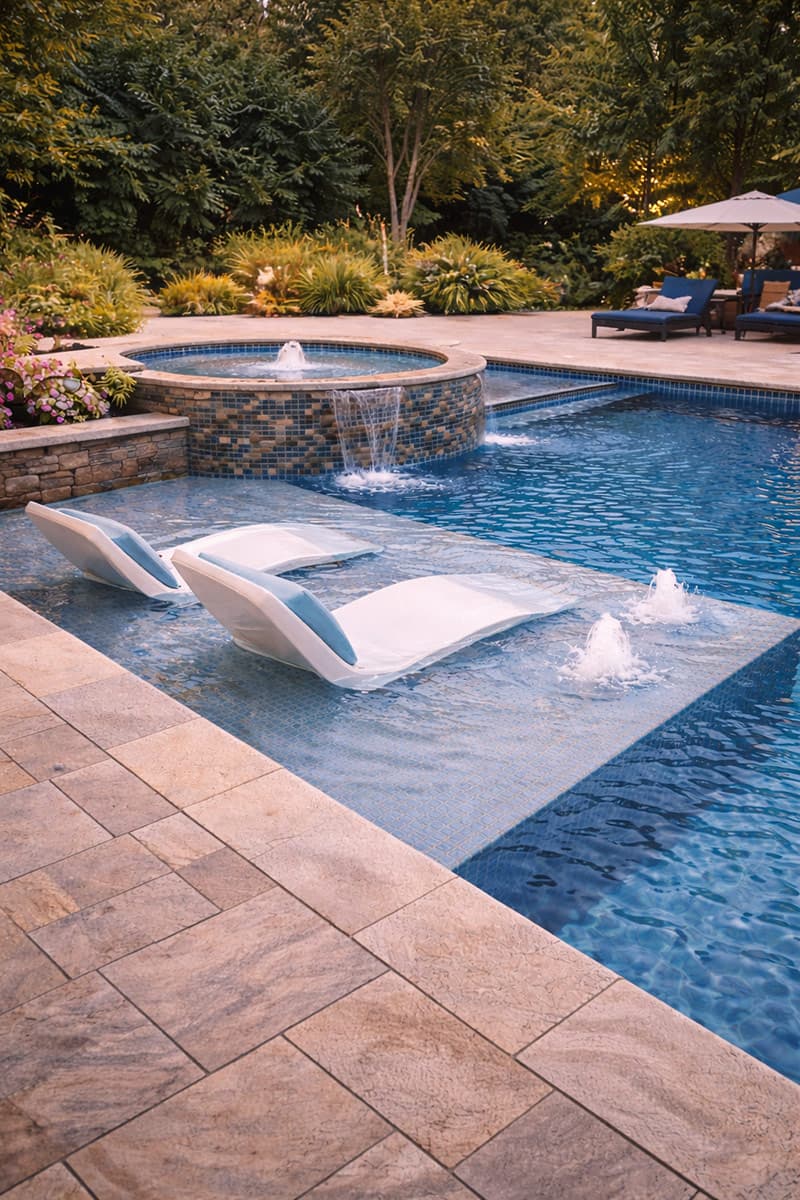
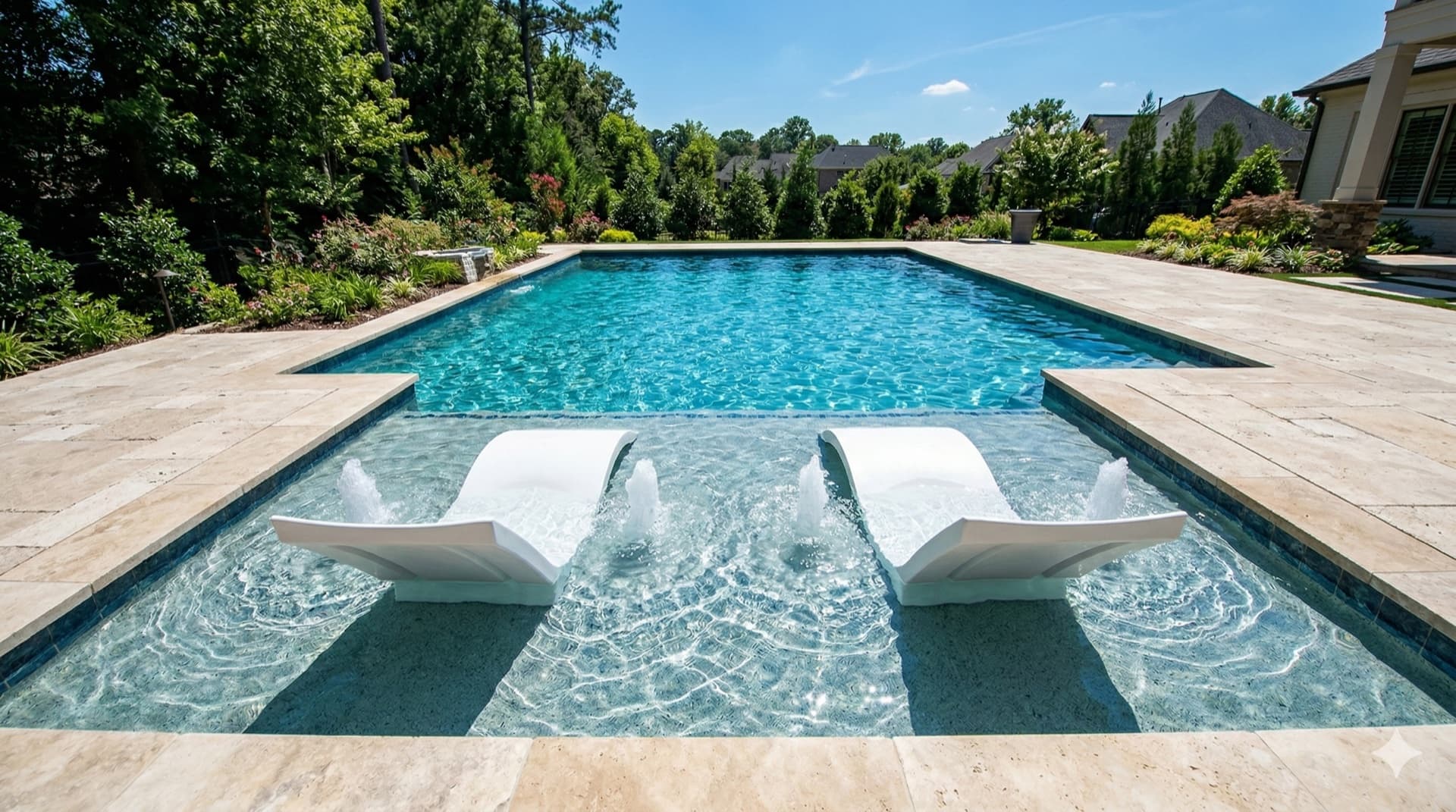
A tanning ledge — sometimes called a Baja shelf or sun shelf — is a broad, shallow platform (typically 6 to 8 inches deep) built into the pool where you can set lounge chairs in the water, let kids splash safely, or just sit at water level with a drink in hand. It's one of the most requested pool modifications we do, and for good reason — it fundamentally changes how the pool is used on a daily basis.
Adding a tanning ledge to an existing pool requires building a new structural shelf within the shell, tying it into the existing walls and floor, and finishing it to match the rest of the pool interior. The size, shape, and placement depend on your pool's geometry and how you want to use the space. Some homeowners want a small shelf for two chairs. Others want a full-width ledge that spans an entire side of the pool.
Spa Additions
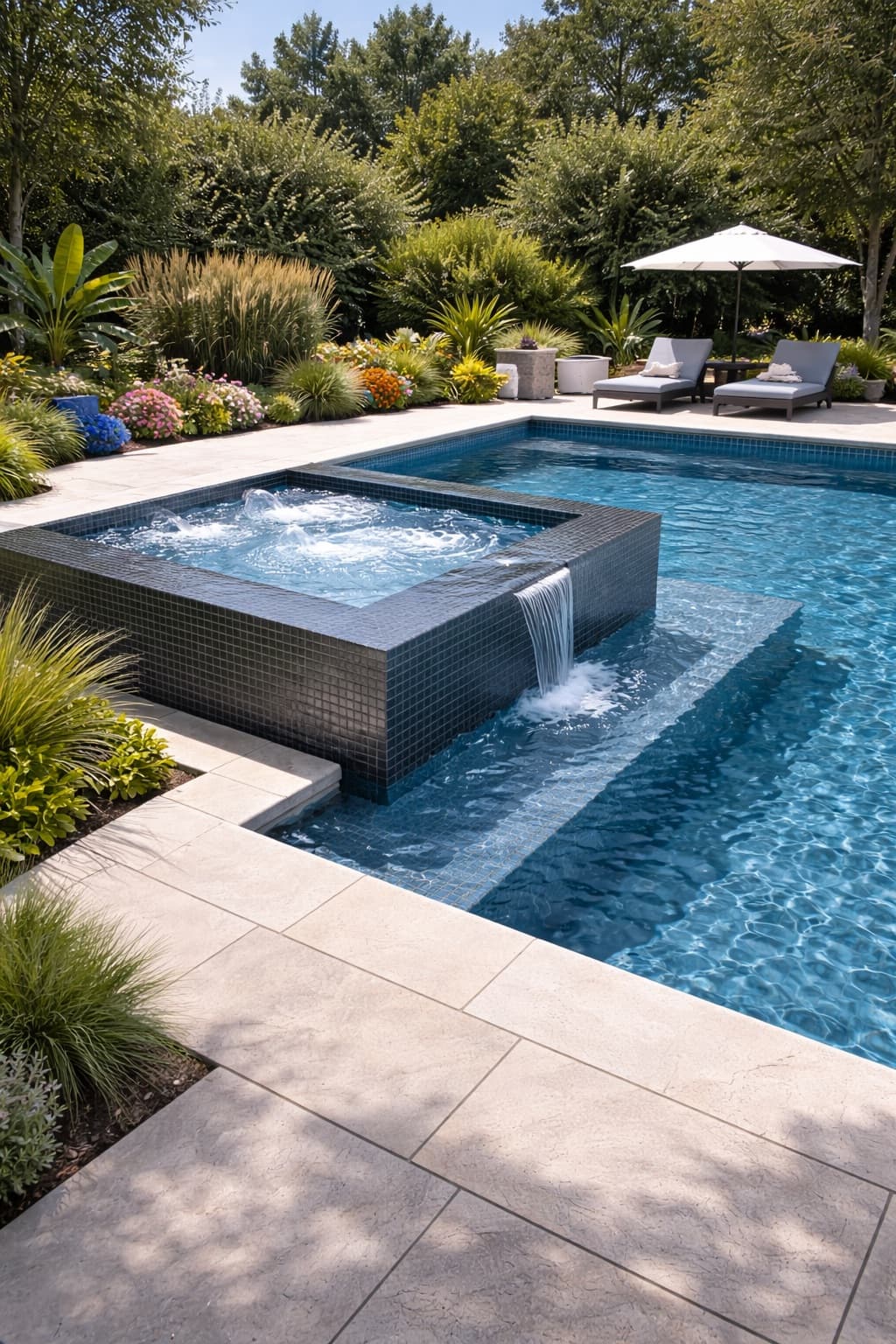
Adding a spa to an existing pool is one of the most transformative — and most complex — structural modifications we handle. It involves building an entirely new vessel that ties into the existing pool's plumbing and equipment, with its own jets, heating, and often its own circulation system. The spa can be integrated directly into the pool (sharing a wall with a spillover) or built as a separate, elevated vessel connected by a channel or waterfall.
The design possibilities are wide open — the shape, size, depth, seating configuration, jet placement, and finish are all custom. What matters most is that the new structure is engineered to work with the existing pool and equipment, not bolted on as an afterthought. A well-integrated spa addition looks like it was always part of the original design.
Water Features
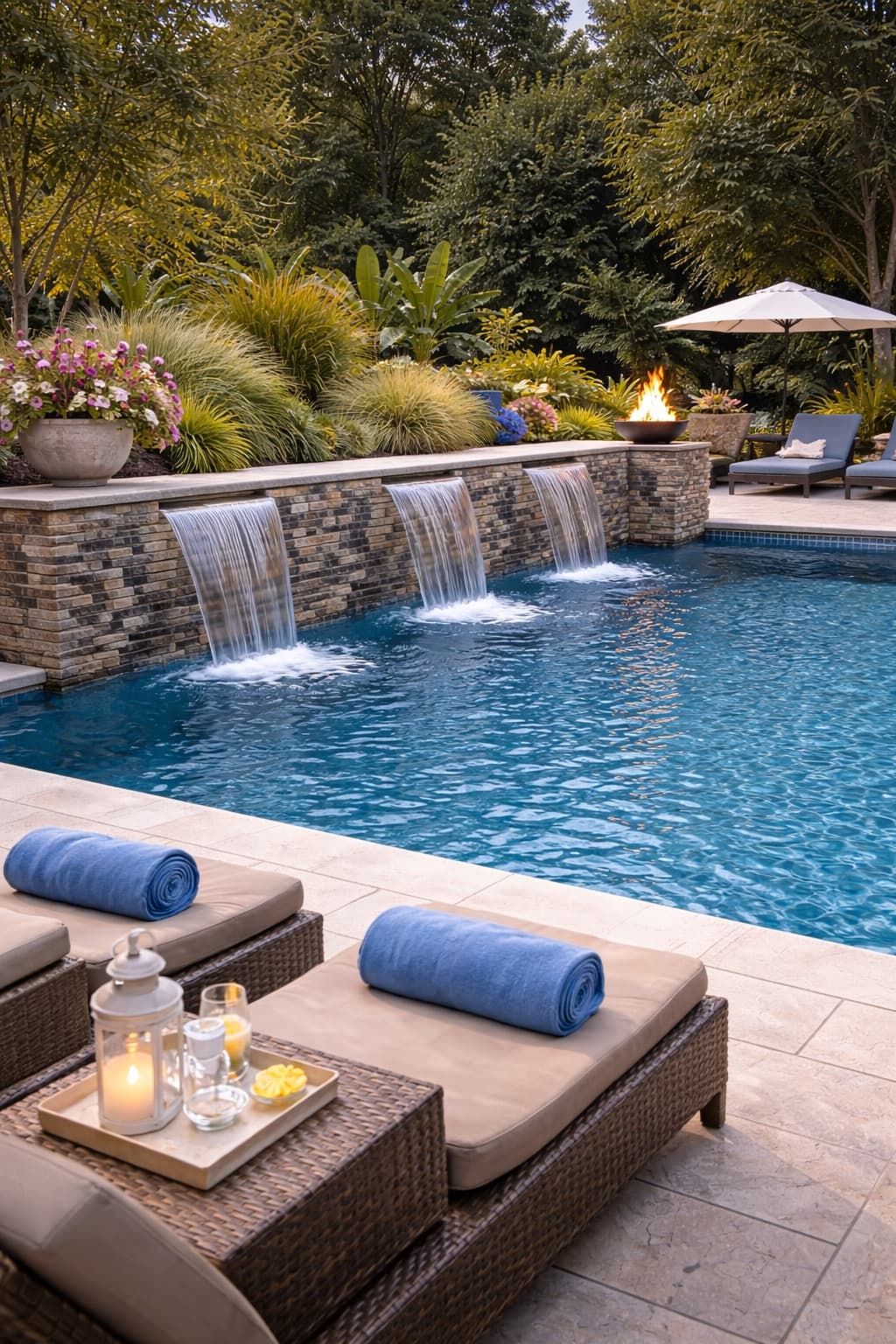
Water features add movement, sound, and visual interest to a pool that would otherwise be a static body of water. The range is broad — raised walls with sheer descent waterfalls, scuppers, spillover bowls, deck jets, bubblers on tanning ledges, and natural rock waterfalls for a more organic look. Some are dramatic focal points. Others are subtle additions that you hear more than you see.
Every water feature requires plumbing, a dedicated pump or integration into the existing system, and structural support for anything that's elevated or wall-mounted. The key to a water feature that looks intentional rather than tacked on is planning it as part of the pool's overall renovation — coordinating the tile, coping, and deck materials so the feature integrates visually with everything around it.
Bench Seating & Steps
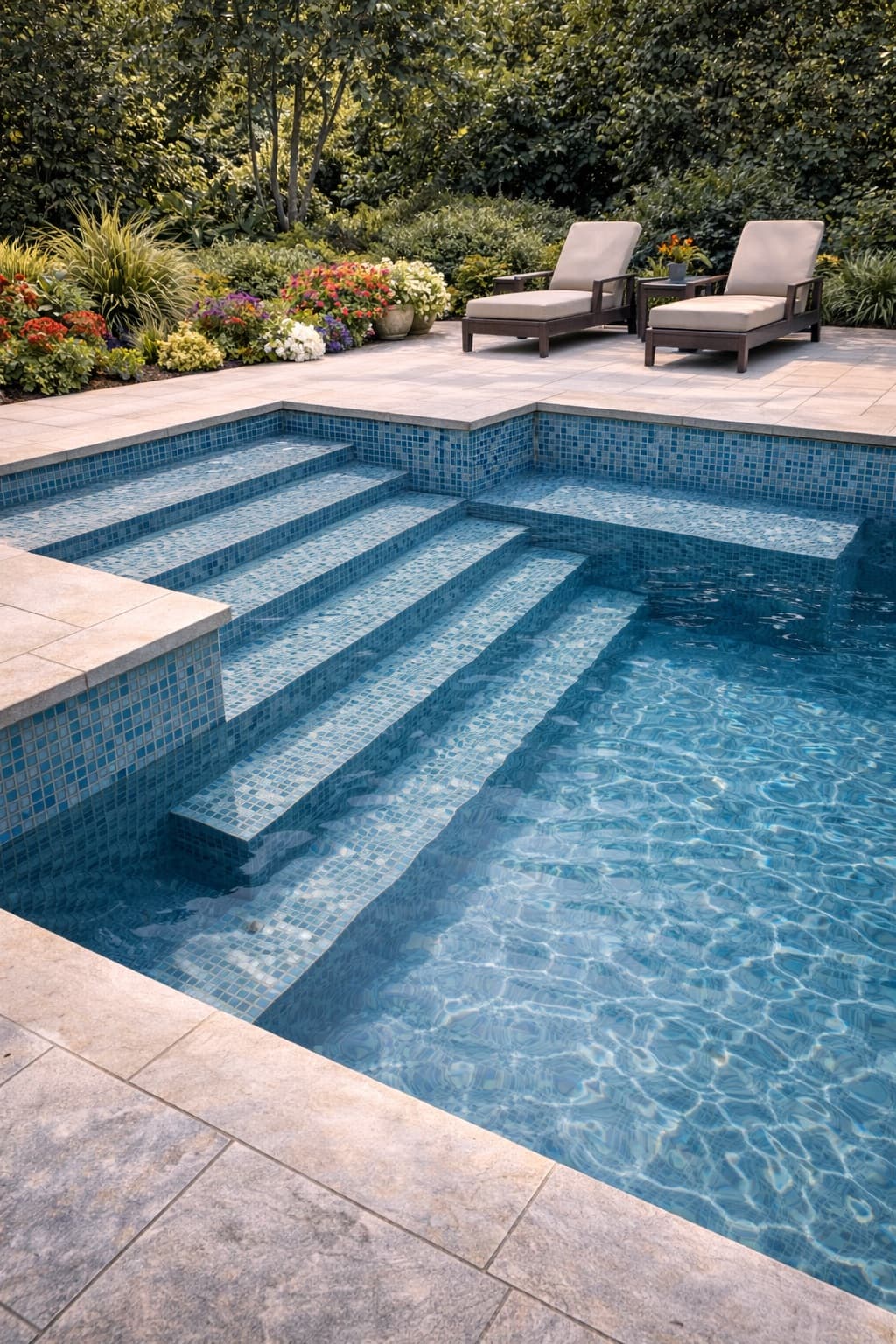
Steps and bench seating seem like minor elements, but they have an outsized impact on how a pool feels to use. A pool with steep ladder entry and no place to sit at water level is a pool people swim in and get out of. A pool with wide, comfortable steps and built-in bench seating is a pool people hang out in.
We reconfigure existing steps, build new entry points, and add bench seating along pool walls — all tied into the existing structure and finished to match the pool's interior. Step and bench shapes can range from simple straight-wall designs to curved, organic forms that soften the pool's geometry. This is one of the most cost-effective structural modifications for improving the day-to-day usability of a pool.
Beach Entries
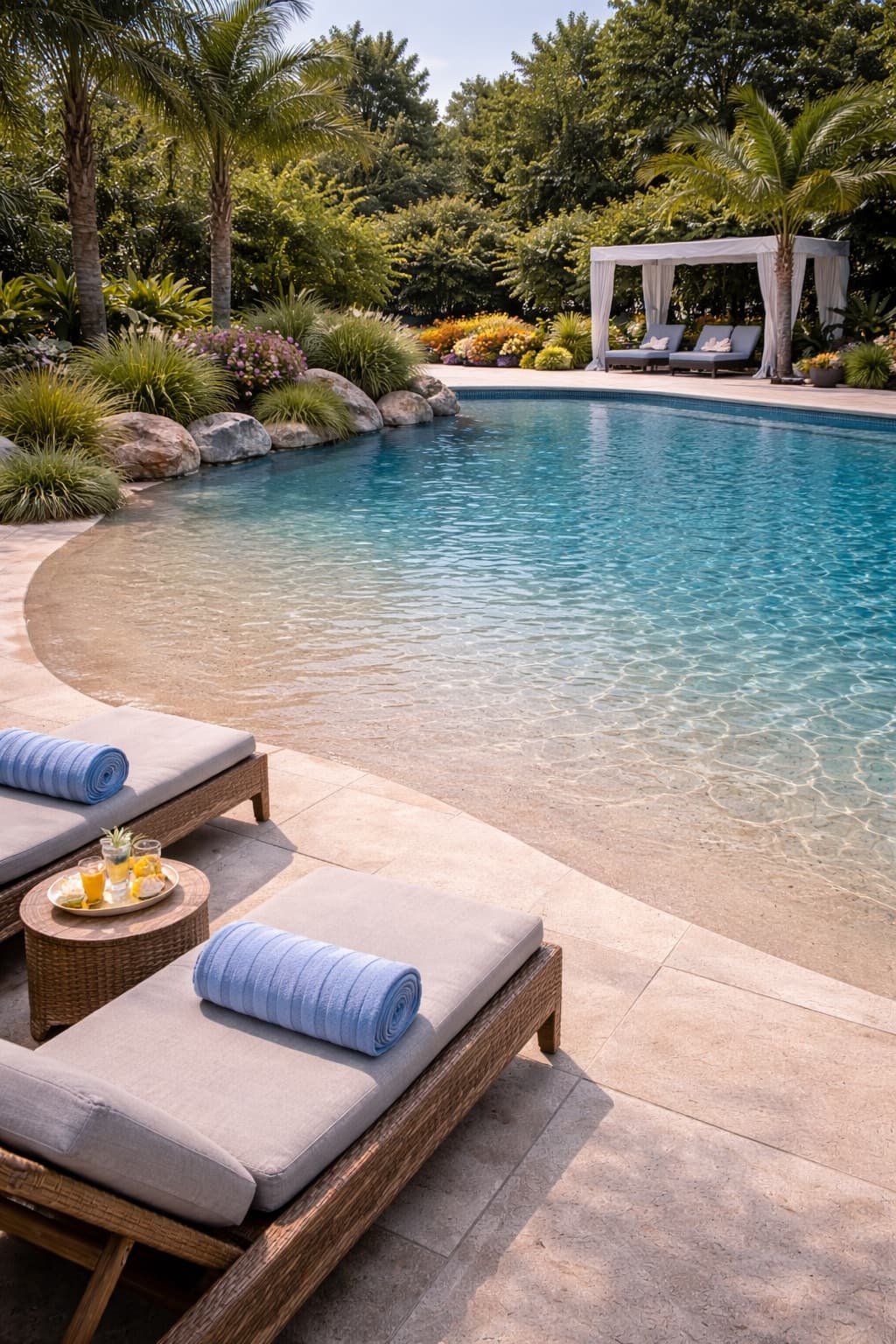
A beach entry — also called zero entry or walk-in — replaces a section of the pool's edge with a gradual slope from the deck surface down into the water, mimicking the feel of walking into the ocean from a sandy shore. It's a popular modification for families with young children, for accessibility, and for homeowners who simply prefer the resort feel of stepping gradually into the water rather than down a set of stairs.
Building a beach entry into an existing pool requires reshaping a section of the pool wall and floor, re-grading the transition, and finishing the slope with a textured, slip-resistant surface. It changes the pool's visual character significantly — a pool with a beach entry feels more relaxed and resort-like than one with hard edges all the way around.
Raised Walls
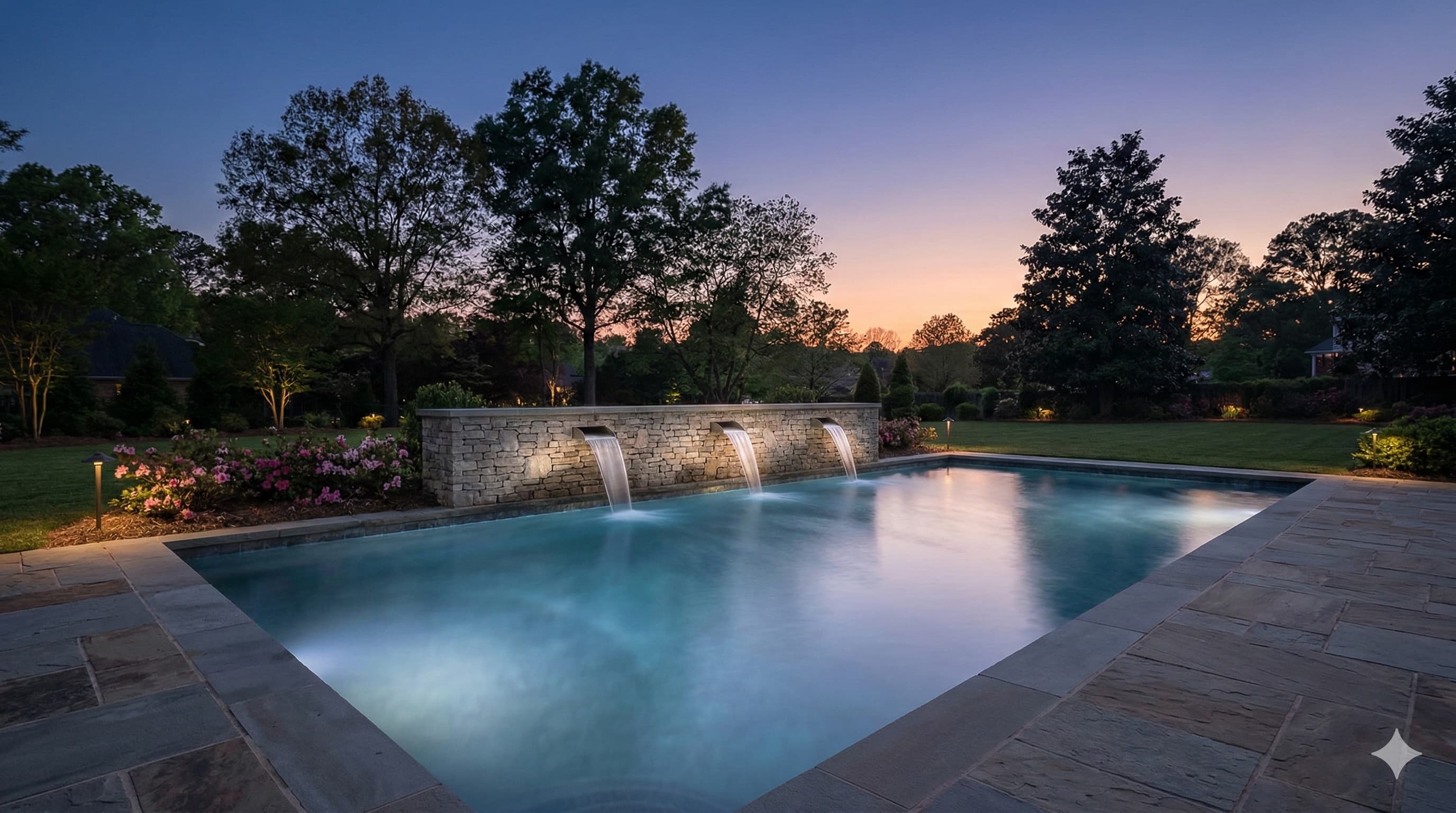
A raised wall adds a vertical element to one or more sides of the pool — extending the pool wall above the deck level and creating a surface for tile, stone veneer, water features, or a combination of all three. Raised walls are often combined with sheer descent waterfalls or scuppers, turning what would otherwise be a flat, ground-level pool into something with real architectural presence.
Beyond aesthetics, raised walls can serve functional purposes — providing privacy screening from neighbors, creating a visual backdrop for the pool, or defining the boundary between the pool area and the rest of the yard. They're a structural addition that changes the entire scale and character of the pool environment.
We Build It. All of It.
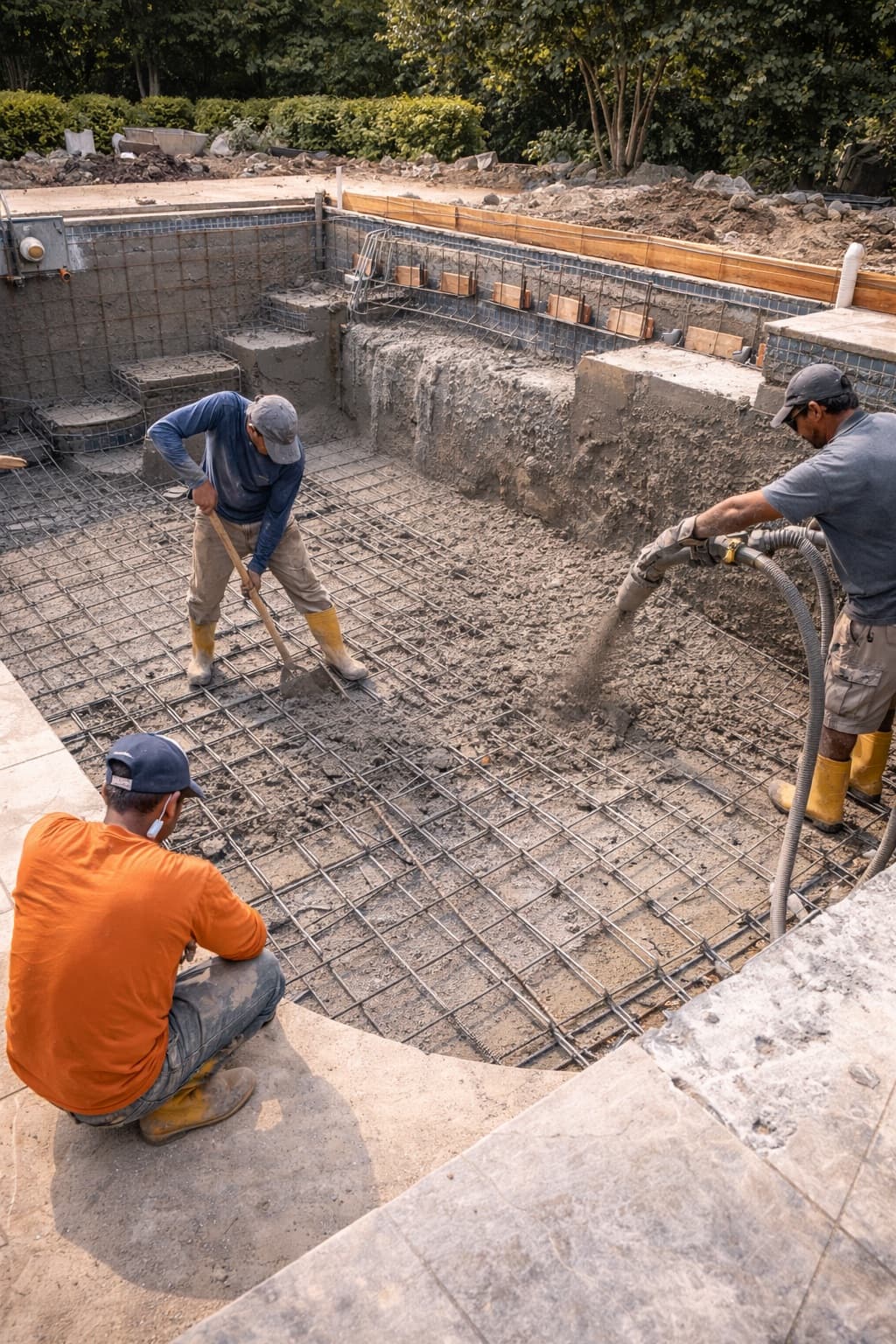
Structural pool modifications are the most demanding work in pool renovation. They involve cutting into an existing concrete shell, forming and pouring new structural elements, integrating new plumbing, tying new walls and floors into existing ones, and finishing every new surface to match or complement the original. It's work where engineering, craftsmanship, and problem-solving intersect — and where mistakes are extraordinarily expensive to fix after the fact.
This is why we handle all structural work in-house. Our crew does the demolition, the forming, the structural build, the plumbing, and the finishing. There's no general contractor handing pieces off to different trades who've never worked together. There's no disconnect between the person who planned the modification and the person pouring the concrete. The same team that walks your pool during the consultation is the one swinging the hammer and troweling the finish.
That matters because structural work on an existing pool is never perfectly predictable. You don't always know exactly what you'll find inside a 30-year-old pool wall until you open it up. When an unexpected condition shows up — and it will — the person who discovers it is the same person who knows the plan, understands the goal, and can make the right call on the spot without a chain of phone calls and change orders.
Common Questions About Structural Modifications
In the vast majority of cases, your existing pool can be modified. The concrete shell is an engineered structure designed to last decades — it can support tanning ledges, spa additions, depth changes, and wall extensions when the work is done correctly. Full pool replacement is almost never necessary unless the shell has catastrophic structural failure, which is rare. We'll assess your pool and give you an honest answer about what's realistic.
It depends on the scope. A tanning ledge addition might take 1 to 2 weeks. A spa addition or major reshaping can take 3 to 6 weeks. Multiple modifications done as part of a larger renovation are coordinated into a single project timeline. We'll provide a detailed schedule during planning so you know what to expect.
That's entirely a function of how the work is done. When the structural build, the surface finish, the tile, and the coping are all planned and executed as one cohesive project, the modification should look like it was always part of the original design. That's the standard we hold ourselves to — if you can tell where the old pool ends and the new work begins, we haven't done our job.
Most pools can accommodate a spa addition, but the specifics — size, placement, plumbing integration, pool equipment requirements — depend on your pool's existing layout, the available space around it, and the capacity of your current pool equipment. Some spa additions require upgrading the heater, pump, or plumbing to handle the additional volume and jet demand. We'll evaluate all of this during the planning phase.
Almost always, yes. Structural modifications require draining the pool, and so does resurfacing. Doing both during the same drain-down saves time, money, and disruption. It also ensures that the new structural surfaces and the existing pool interior are finished in the same session, so everything matches perfectly. If you're considering a resurface in the near future, it makes sense to plan any structural changes at the same time.
Tanning ledges, by a significant margin. They're the modification that changes daily pool use the most — suddenly, there's a place to lounge at water level, set the kids up in a few inches of water, or sit with your feet in the pool without committing to a full swim. Spa additions are the second most popular, followed by raised walls with water features.
From Our Blog
Helpful articles related to structural modifications.
Often Done Together
Structural modifications almost always happen alongside other renovation work — since the pool is drained and the site is active, it's the most efficient time to address surfaces, finishes, and equipment in one project. Here are the services most commonly paired with structural work:
Pool Resurfacing
Your pool's interior surface determines how it looks, feels, and holds up over time. We manage the full resurfacing process — from drain and prep through finish application and startup — in plaster, pebble, and quartz.
Tile
Tile is where craft is most visible — and most unforgiving. With over 15 years of tile expertise and training under Italian tile masters, we handle everything from waterline bands to full-interior glass installations.
Pool Equipment
Pumps, heaters, salt systems, automation, LED lighting, and sanitation upgrades — installed as an integrated part of your renovation, not an afterthought.
Have an Idea for Your Pool?
Whether it's a tanning ledge you've been thinking about for years or a complete reimagining of how your pool looks and functions, it starts with a conversation. Tell us what you're working with and what you'd like to change — we'll walk the site, talk through what's possible, and give you a clear path forward.