You're standing in your backyard looking at a pool that's seen better days. The surface is rough, the deck is cracked, the equipment sounds like it's dying. And somewhere in the back of your mind, a thought forms: what if we just got rid of it?
It's a fair question. Pool removal is a real option, and for some homeowners it's the right one. But before you go down that road, it's worth understanding what removal actually costs, what you lose, and whether renovation might make more sense than you think.
What Pool Removal Actually Involves
Let's start with something most people don't expect: pool removal is not cheap. The cost often surprises homeowners who assume tearing something out is simpler than fixing it.
There are two types of removal:
Partial removal (demolition and fill-in). The pool structure is broken up, the upper walls are knocked down, holes are punched in the bottom for drainage, and the cavity is filled with gravel and dirt. This is the more common and affordable option.
Full removal (complete excavation). The entire pool structure — walls, floor, plumbing — is excavated and hauled away. The hole is backfilled with clean compacted fill. This is required if you plan to build a structure over the former pool location.
Both options require permits in most Metro Atlanta jurisdictions. You'll also need to disclose the former pool location when you sell the home, regardless of removal method.
And then there's the yard. After removal, you've got a patch of backyard that needs grading, topsoil, and landscaping. Some homeowners spend even more to build a patio, garden, or other feature in the former pool space. The total cost of removal plus yard restoration can be substantial.
Renovation vs. Removal: The Comparison That Surprises People
Here's what most homeowners don't realize: a basic pool renovation often costs about the same or less than removing the pool. And instead of a backyard with a filled-in hole, you have a functioning pool that adds value to your home.
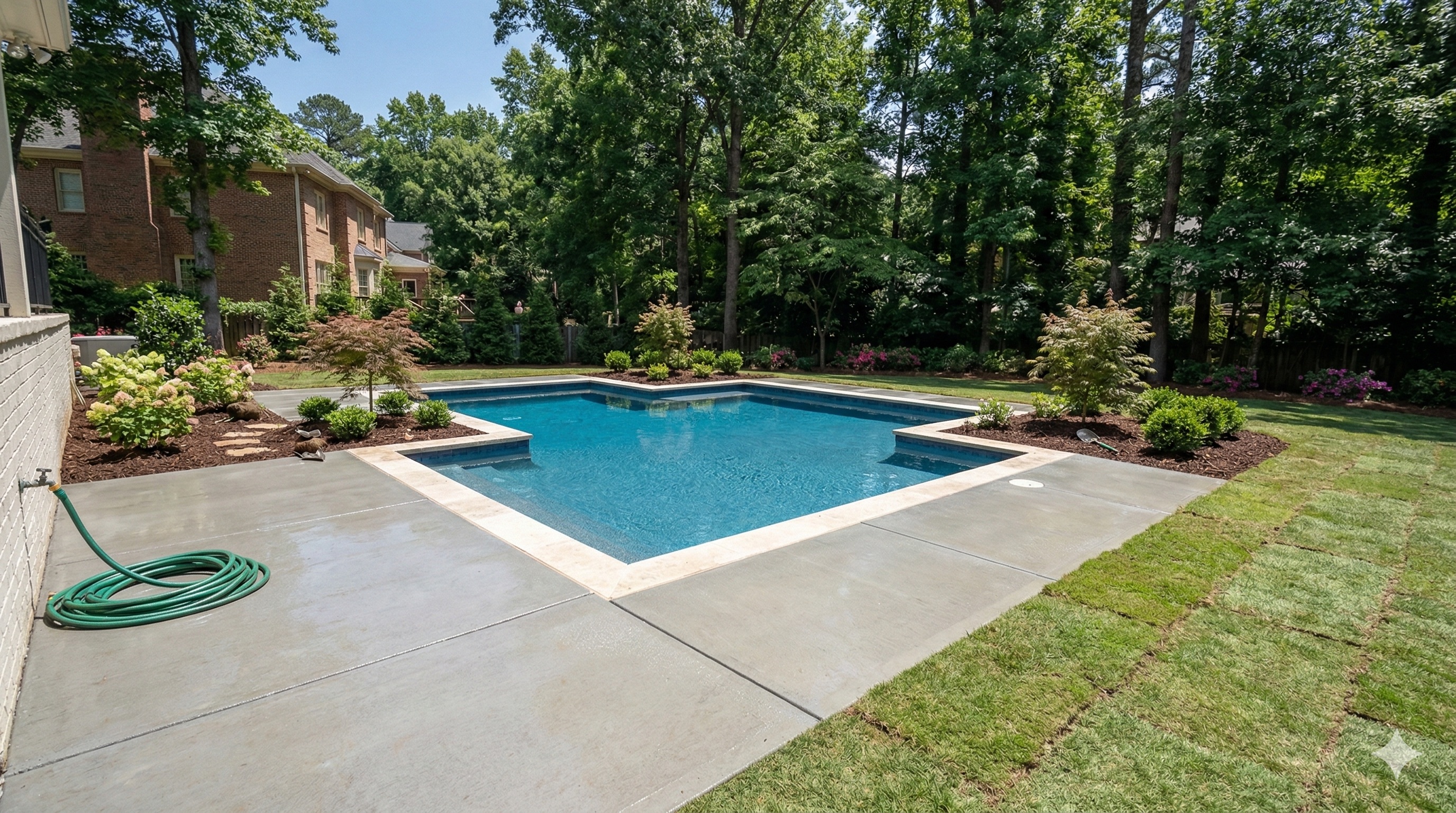
Even a moderate renovation — resurface with pebble, new coping, fresh tile — puts a pool back in service for 12 to 15 years. More comprehensive renovations that include deck work and structural modifications cost more, but you're investing in an asset rather than paying to eliminate one.
When Removal Makes Sense
To be fair, there are legitimate reasons to remove a pool:
You genuinely don't want a pool. If nobody in the household swims, you don't entertain outdoors, and the pool is nothing but a maintenance burden, removal frees up the space and eliminates ongoing costs.
The pool has serious structural problems. If the pool shell has major structural failure — cracked beam, shifted walls, compromised plumbing lines that run under the foundation — repair costs can escalate beyond what makes financial sense. This is relatively rare but does happen, particularly with older pools built with substandard construction.
You need the yard space. If you're planning a home addition, detached building, or significant landscaping project that requires the pool's footprint, removal may be necessary.
The pool is in a terrible location. Some older pools were built too close to the house, too close to property lines, or in locations that don't work with how the family uses the yard today. Renovation fixes the pool itself but doesn't fix where it sits.
When Renovation Makes More Sense
For most homeowners we talk to, renovation wins the cost-benefit analysis:
You use the pool — even occasionally. If anyone in the household swims, or if you entertain outdoors during summer, a renovated pool adds meaningful lifestyle value. Removing an asset you'd actually use doesn't make financial sense.
You plan to sell eventually. A well-maintained, updated pool increases home value in Metro Atlanta. A filled-in pool location is a disclosure item that can raise questions from buyers. In neighborhoods where pools are standard — most of the areas we serve, from Buckhead to Sandy Springs to Roswell — not having a pool can actually be a negative.
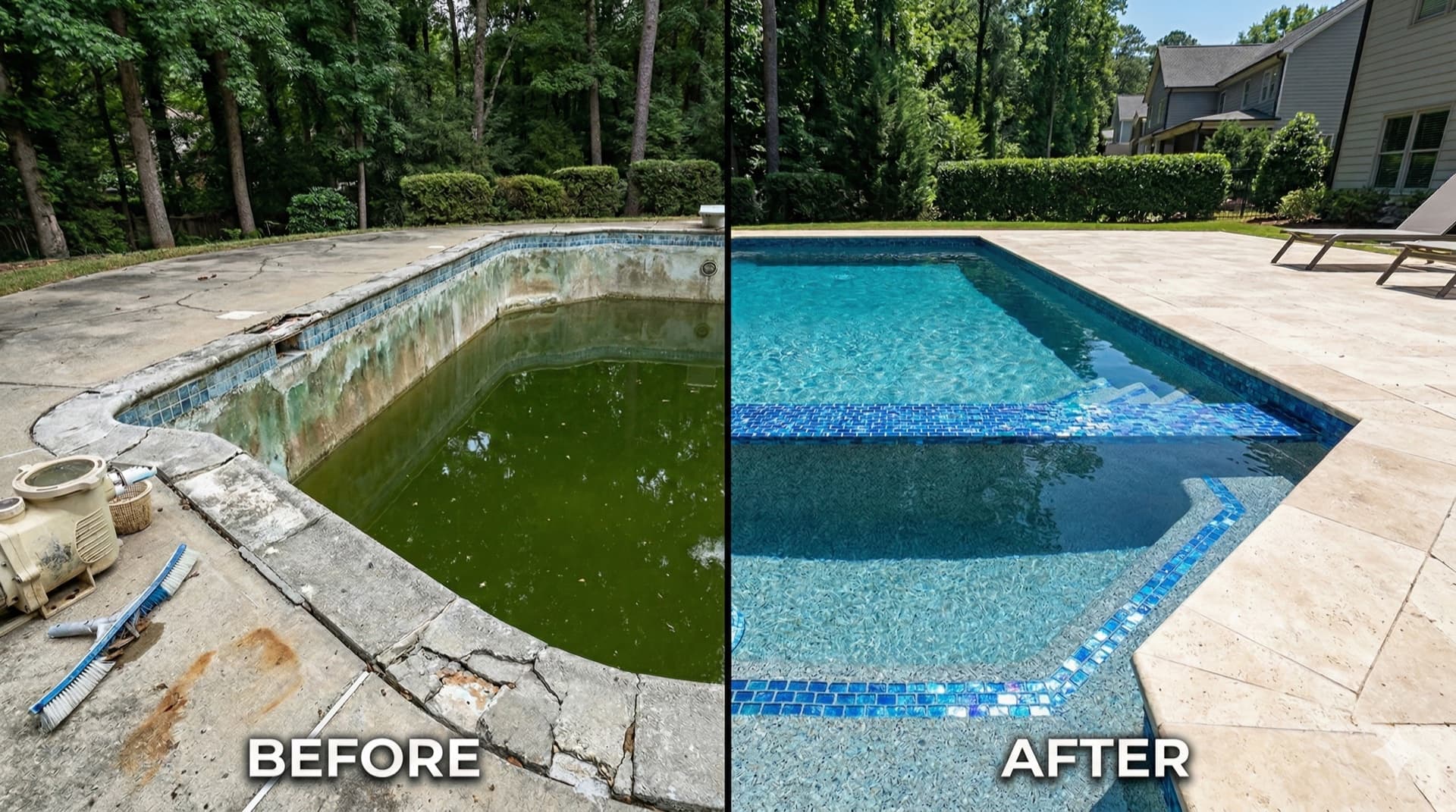
The problems are cosmetic and surface-level. Rough plaster, stained finishes, cracked coping, dated tile, worn decking — all of these are fixable through renovation. They look bad and feel bad, but they don't mean the pool is fundamentally broken.
The structure is sound. If the pool shell, beam, and plumbing are intact — which they are in the vast majority of pools we evaluate — the renovation scope is straightforward. A new surface, new coping, and new tile make a 20-year-old pool look and function like new.
The Hidden Costs of Removal People Don't Consider
Ongoing property value. In pool-heavy neighborhoods across Metro Atlanta, removing a pool can reduce your home's appeal to a significant segment of buyers. Families with kids specifically search for homes with pools.
You can't undo it. If you fill in the pool and later wish you hadn't — or a future buyer wishes you hadn't — installing a new pool costs significantly more than renovation ever would. Renovation is reversible. Removal isn't.
The yard won't look the same. A filled-in pool area settles over time. Even with proper compaction, you may see slight depressions or uneven ground for years. Growing grass or landscaping over compacted fill is more challenging than on natural soil.
How to Decide
Here's how to think through it:
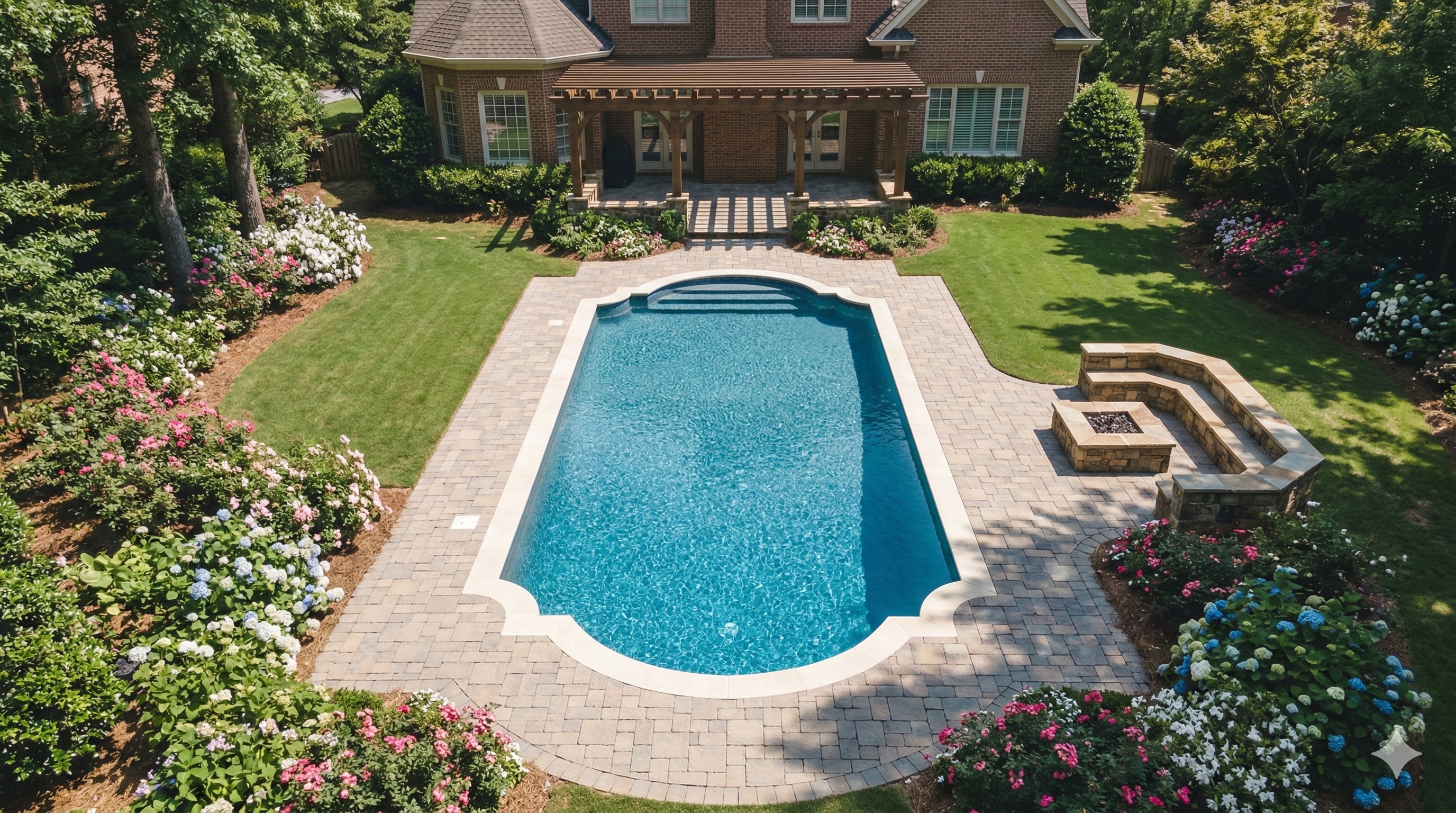
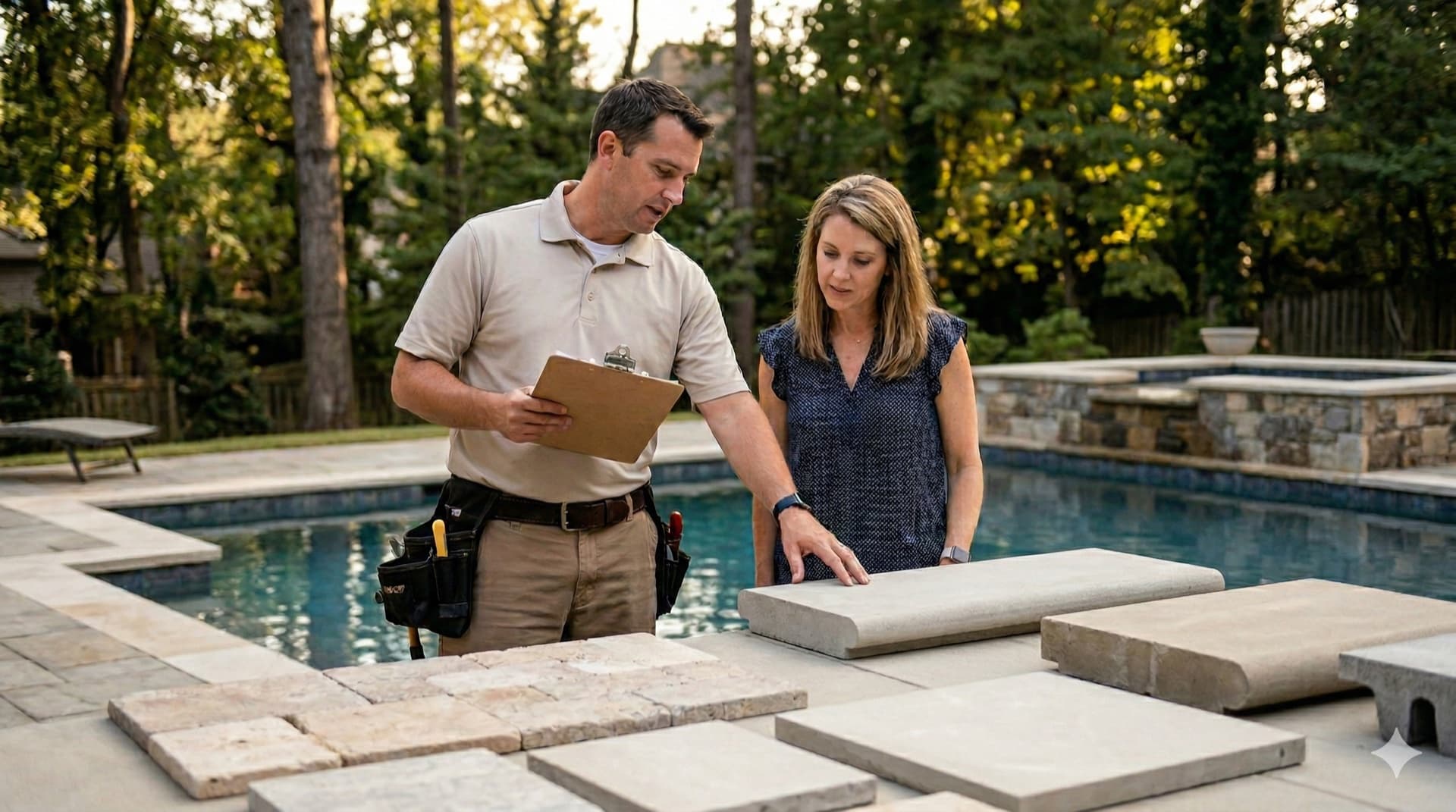
Step 1: Get the pool assessed. Before deciding, have a pool renovation professional look at the pool. Not a pool removal company — they have an incentive to recommend removal. A renovation company will tell you what the pool actually needs.
We'll assess the structural condition, the surface, the equipment, and the deck. If the pool is a good candidate for renovation, we'll tell you exactly what it needs. If there are structural issues that make renovation impractical, we'll tell you that too.
Step 2: Compare the real numbers. Get a renovation quote and a removal quote for your specific pool. Compare them honestly, including the yard restoration costs after removal.
Step 3: Think about the next 10 years. Will you use the pool? Will your kids use it? Will a pool help when you sell the home? If the answer to any of these is yes, renovation almost certainly makes more sense.
A Renovation That Almost Didn't Happen
A homeowner in Roswell had gotten a quote to remove their 2003 freeform pool. The surface was rough, the coping was cracked, and one of the return lines had a slow leak. They assumed the pool was beyond saving.
An assessment told a different story. The shell was structurally sound — no cracks in the beam, no wall movement. The leak turned out to be a failed fitting at the equipment pad, not a plumbing line under the deck. The renovation scope: StoneScapes pebble resurfacing, travertine coping, new waterline tile, and the fitting repair. The renovation came in at less than the removal quote — and they kept a functioning pool that their teenagers use almost daily from May through September.
The National Association of Realtors' 2023 Remodeling Impact Report found that pool-related improvements rank among the top outdoor projects for both homeowner satisfaction and perceived value recovery at resale — particularly in markets where pools are common in the housing stock.
Not Sure Which Direction to Go?
If you're weighing renovation against removal, the first step is an assessment. We'll look at the pool, evaluate the structure and equipment, and give you a clear picture of what renovation would involve for your specific situation. If the pool genuinely isn't worth saving, we'll tell you that — We'd rather lose the project than steer you wrong.
Call or use the contact form to schedule a visit.
Ready to Talk About Your Pool?
Get a free, no-obligation consultation from Cornerstone Pool & Remodel.
Request a Free Quote