Waterline tile is one of those details that most homeowners don't think much about — until they start shopping. Then it becomes the most fun (and sometimes the most agonizing) decision of the whole renovation.
The tile band running along the top edge of your pool — where water meets coping — serves a practical purpose: it protects the pool finish from chemical buildup, oils, and scum that accumulate at the waterline. But it's also the most visible decorative element of your pool. It's what catches your eye from the deck. It sets the tone for the entire pool aesthetic.
Here's how to think about the options without getting overwhelmed.
The Three Main Tile Materials
Glass Tile
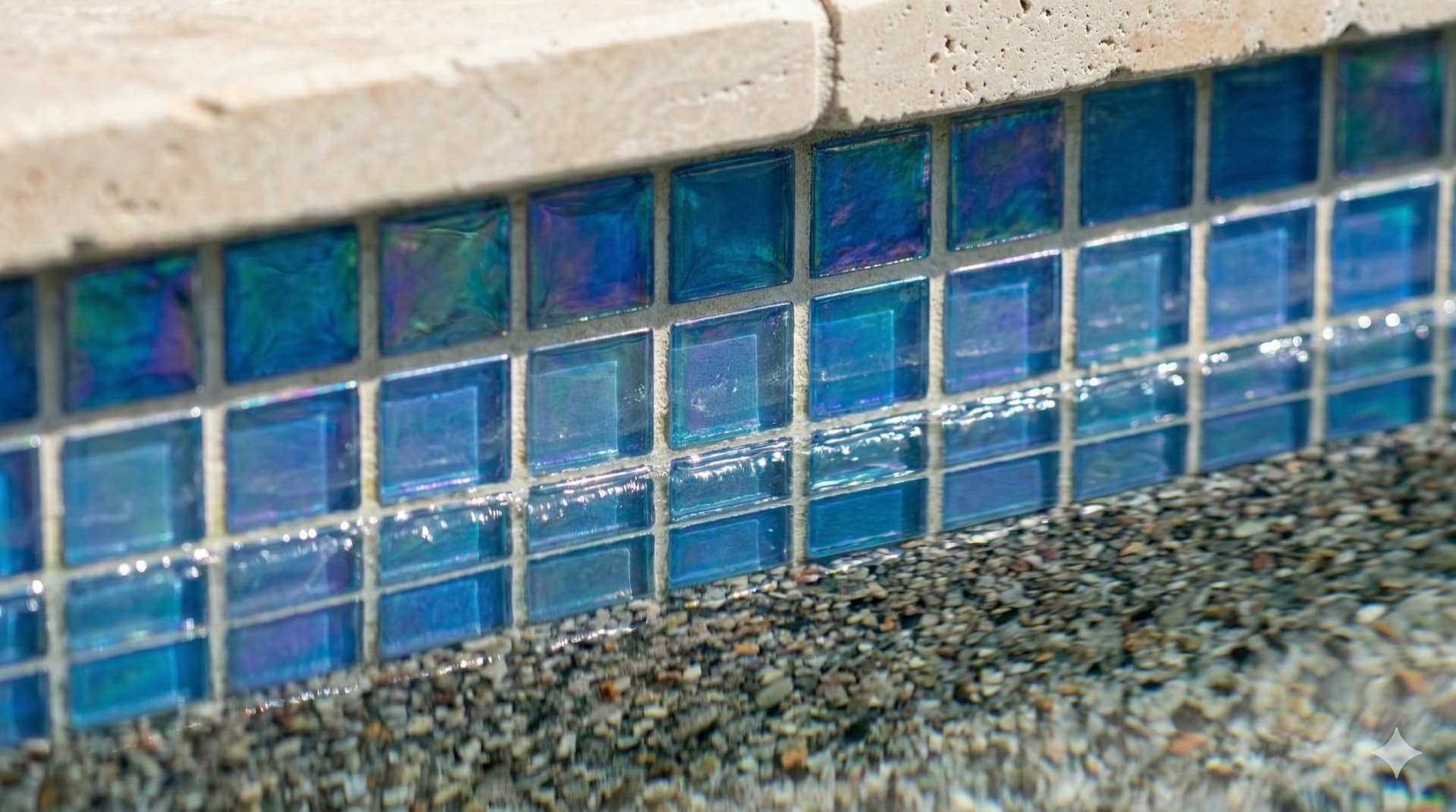
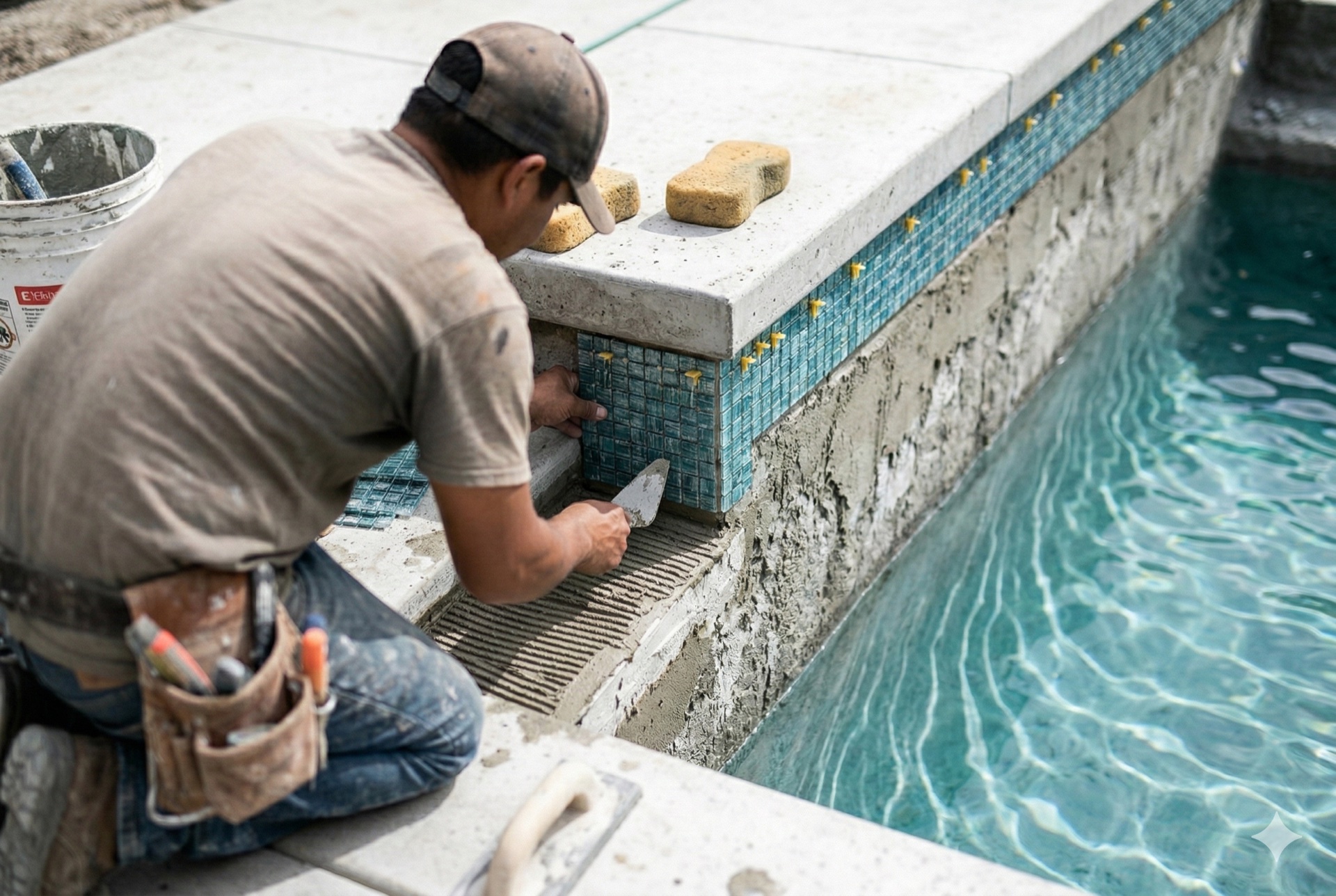
Glass tile is the premium choice and the one we install most frequently. It's luminous — light passes through it and bounces off the pool surface behind, creating depth and sparkle that ceramic and stone can't match.
Why it works: The translucency creates a visual connection between the tile and the water. Blues and greens shift subtly depending on the light, the water depth behind them, and the time of day. A glass tile waterline band makes the pool feel alive.
Popular choices in Metro Atlanta: Iridescent blue blends are the most requested. We also see a lot of demand for blue-green combinations, clear glass with subtle color variation, and deeper cobalt and midnight blue tones in pools with darker pebble finishes.
The cost and skill factor: Glass tile costs more than ceramic and requires more precise installation. The tiles are harder, more brittle, and less forgiving of uneven substrate than ceramic. This is a tile where the installer's skill directly affects the finished result.
Our background includes formal training under Italian tile artisans, which is where that precision matters most. Glass tile installation is exacting work, and the difference between a competent job and a great one shows at the waterline — it's the first place the eye travels.
Porcelain and Ceramic Tile
Ceramic and porcelain tiles have been the standard waterline choice for decades. They're durable, affordable, and available in a huge range of colors, patterns, and sizes.
Why it works: Reliability and versatility. You can find ceramic tile in virtually any color and style, from classic solid-color 2x2 squares to Mediterranean-patterned decorative pieces. Porcelain is denser and more water-resistant than standard ceramic, making it the better choice if you're going this route.
Popular choices: Classic blue or teal 2x2 tiles are the default. For a more updated look, 1x2 or 1x3 subway-style porcelain tiles in muted blues, grays, or white create a clean, contemporary feel. Patterned encaustic-style porcelain tiles are trending for homeowners who want personality without the glass-tile price point.
The tradeoff: Ceramic and porcelain won't give you the luminosity of glass. They're opaque, so the visual effect is flatter. For many pools — especially those with lighter plaster finishes — this is perfectly fine and looks great. But next to a pebble finish with natural stone coping, glass tile creates a more cohesive premium feel.
Natural Stone Tile
Stone waterline tiles — marble, travertine, limestone — aren't as common as glass or ceramic, but they're worth considering if your pool design leans heavily into natural materials.
Why it works: If you have travertine coping and a travertine deck, a natural stone waterline tile creates seamless continuity from the deck to the coping to the waterline. The entire pool surround becomes one unified material palette.
The maintenance factor: Natural stone is porous and requires sealing, especially at the waterline where chemical exposure is highest. It's higher maintenance than glass or porcelain, and color options are limited to what nature provides. It's a specific aesthetic choice, not a default one.
Design Patterns and Layouts
Beyond the material, the layout of your waterline tile changes the look significantly:
Single Row Band
The simplest and most common approach. One row of tiles (typically 2 to 6 inches tall) runs around the pool at the waterline. Clean, understated, and cost-effective. This is the starting point for most renovations.
Double or Triple Band
Two or three rows of tile create a wider decorative band. This works well with smaller tiles (1x1 or 2x2) and creates more visual impact. A common approach: a main color with an accent row in a contrasting shade above or below.
Mixed Material Band
Combining two materials — such as a row of glass mosaic above a row of complementary porcelain — creates depth without the cost of an all-glass installation. The glass tiles catch light at the waterline while the porcelain provides a grounding accent.
Mosaic and Custom Patterns
For homeowners who want something truly unique, custom mosaic work is an option. This can range from a geometric border pattern to more elaborate designs. Custom mosaic work requires significant installation skill and adds cost, but the result is one of a kind.
We design custom tile layouts in collaboration with homeowners — sometimes sketching options on-site during the material selection visit. Our formal training under Italian tile artisans means we approach tile work as craft, not just installation.
How Tile Choice Interacts With Your Pool Finish
This is the part most blog posts skip, and it matters more than people realize.
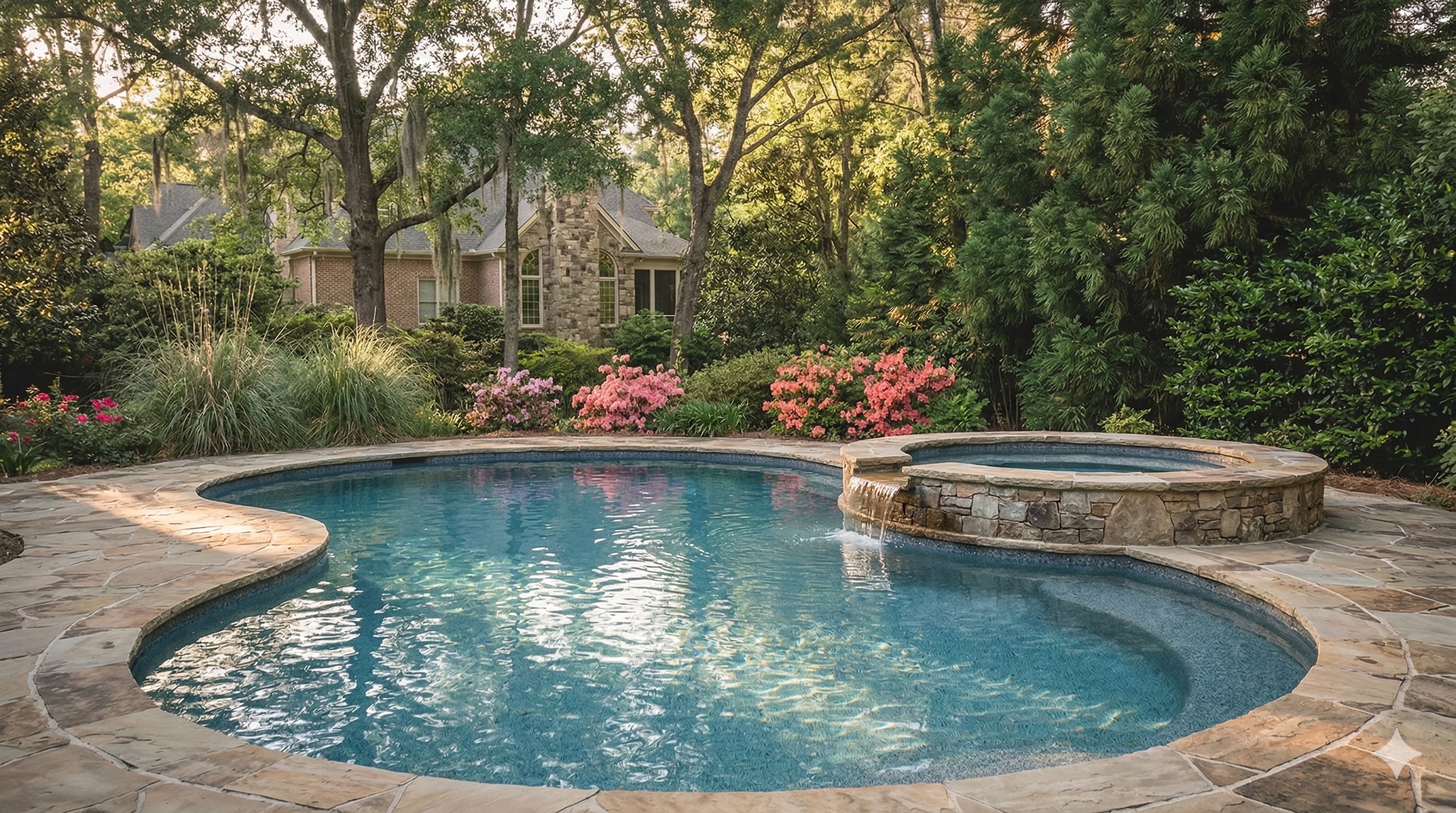
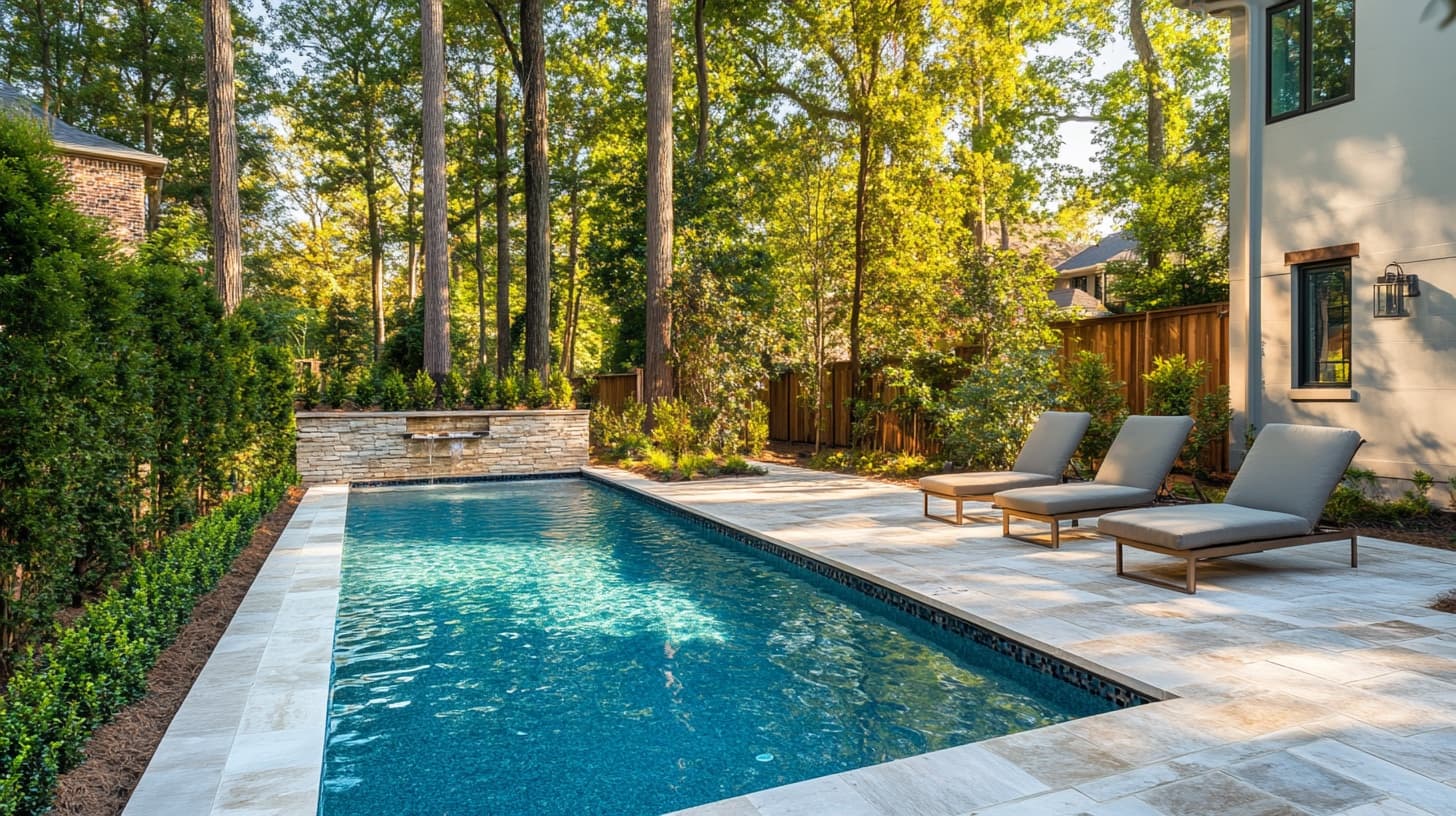
Your waterline tile doesn't exist in isolation — it sits between your coping (above) and your pool finish (below). All three need to work together.
Light plaster finish + glass tile: The tile becomes the star. Light finishes create bright blue water that makes glass tile pop. This combination works with virtually any glass color.
Dark pebble finish (like StoneScapes Midnight Blue) + glass tile: Dramatic effect. The deep water color behind dark pebble finishes makes iridescent glass tile glow. Go for richer, deeper tile colors — cobalt, sapphire, or emerald.
Pebble finish + natural stone coping: Pair with glass tile for contrast, or natural stone tile for continuity. This is an aesthetic choice — there's no wrong answer, but seeing the materials together in person matters here.
Quartz finish + porcelain tile: Clean and classic combination. The subtle sparkle of quartz pairs well with solid-color porcelain in complementary tones.
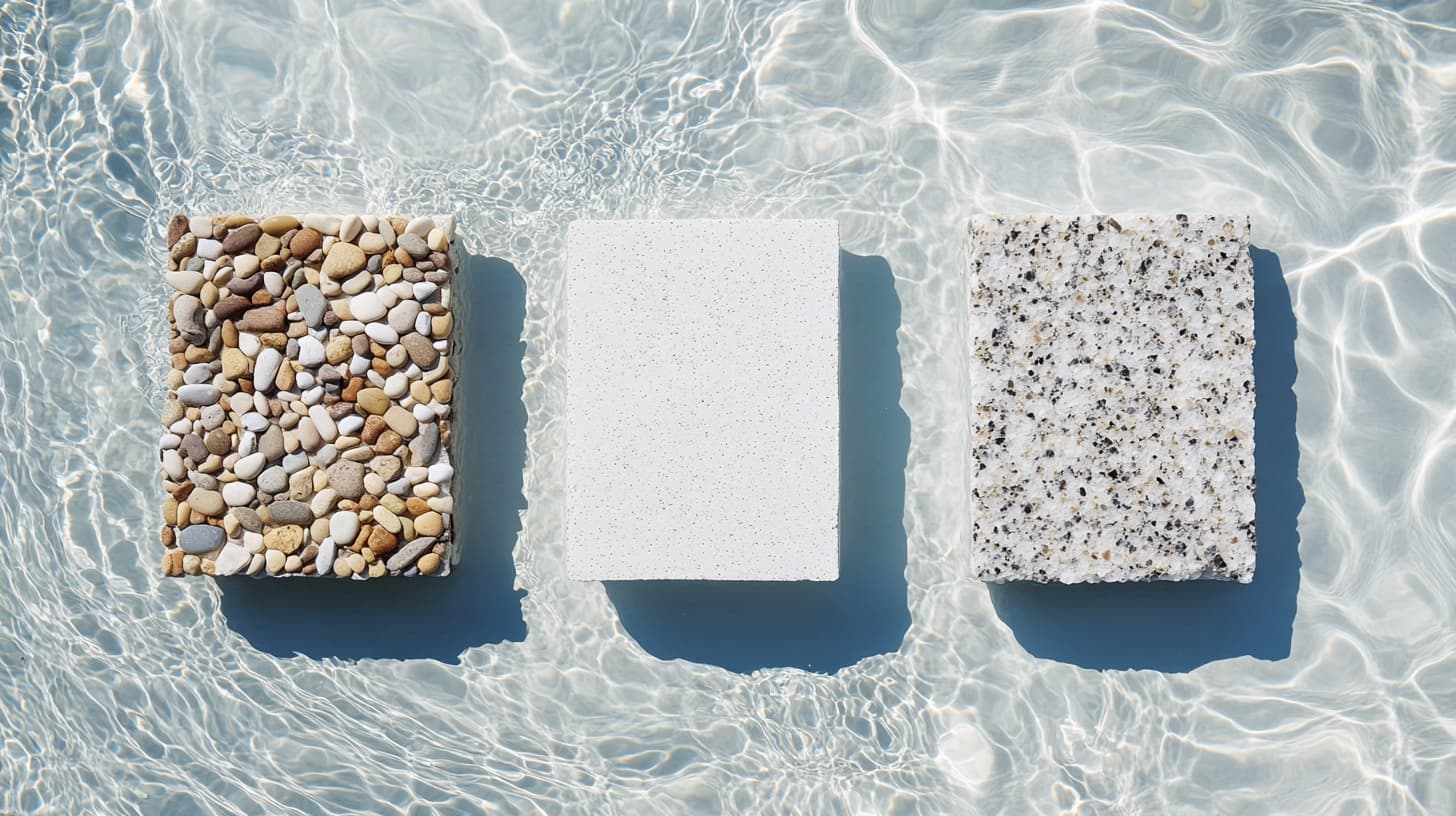
The best way to navigate this is to see the actual materials together — not individual samples on a screen. When we do material selection with homeowners, we bring the finish samples, tile options, and coping samples together so you can see the full picture as a composition.
Practical Considerations
Cost Considerations
Tile costs vary significantly by material. Ceramic and porcelain are the most affordable, natural stone falls in the middle, and glass tile is the premium option. Installed costs depend on pool size, the number of tile rows, and pattern complexity. Multi-row installations, custom patterns, and larger pools increase the investment.
Timing
Waterline tile replacement is almost always done during resurfacing. The pool is already drained, the old surface is being removed, and the tile goes in before the new finish is applied. Doing tile work independently of a resurface is possible but more expensive and less efficient.
Maintenance
Glass and porcelain tiles are essentially maintenance-free — they don't stain, fade, or deteriorate under normal conditions. Calcium scale can build up at the waterline regardless of tile material, but regular brushing and proper water chemistry keep it in check.
Natural stone tiles need periodic sealing and are more prone to showing scale and chemical etching.
What Tile Selection Looks Like in Practice
A homeowner in Druid Hills was renovating a 2006-era pool — resurfacing with StoneScapes Midnight Blue pebble, replacing cracked concrete coping with tumbled travertine, and upgrading the waterline tile. They'd originally leaned toward a classic blue ceramic to save on cost. During the material selection visit, glass, porcelain, and ceramic samples were held against the dark pebble finish sample and the travertine coping. The ceramic looked flat against the dark finish — perfectly fine, but it disappeared visually. The iridescent glass in a deep sapphire blend caught light from the pool surface and created the depth the homeowner was looking for. The final choice was a single row of 1x1 glass mosaic — a step up from ceramic in investment, but it became the visual centerpiece of the finished pool.
The Tile Council of North America recommends glass and porcelain tiles rated for freeze-thaw exposure in climates like Metro Atlanta's, and notes that proper thin-set selection is more critical than the tile material itself for long-term waterline performance.
See the Tile Before You Commit
Tile is a visual decision. Photos on websites and in catalogs don't capture how materials look wet, how they interact with light at different angles, or how they pair with your specific coping and finish choices.
We bring tile samples to your home so you can see and feel the options next to your pool, in your light, against your coping — or we'll take you to the tile center in person. For homeowners in Vinings, Druid Hills, and across Metro Atlanta, that's how the best tile decisions get made.
Call or use the contact form to set up a time.
Ready to Talk About Your Pool?
Get a free, no-obligation consultation from Cornerstone Pool & Remodel.
Request a Free Quote