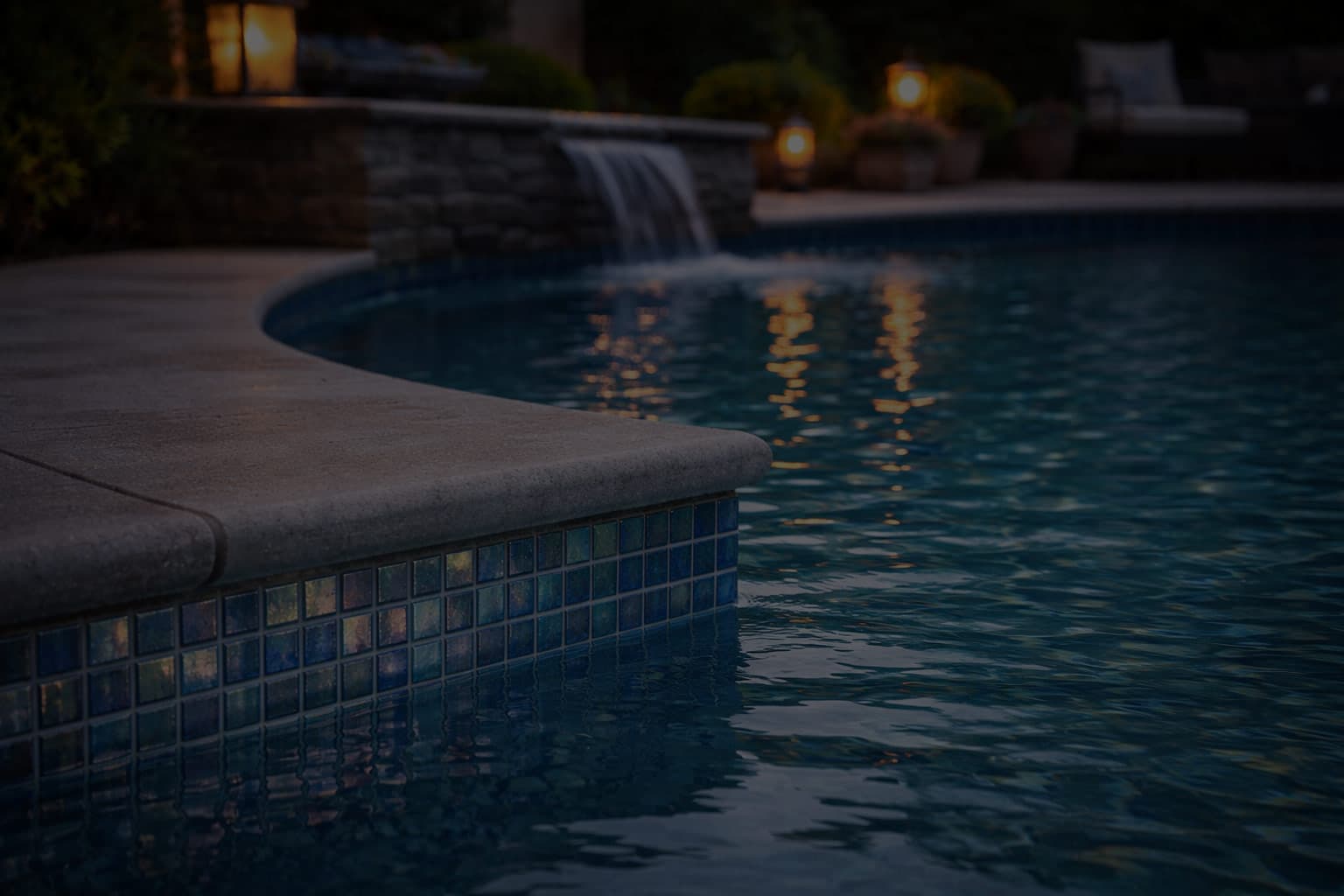
Tile Is Where Craft Meets Character
Pool tile is the most visible expression of your pool's personality. It's the detail people notice from across the yard — the waterline band that catches the light, the accent wall behind a water feature, the mosaic pattern on a spa floor.
With over 15 years of tile expertise and training under Italian tile masters, we bring a level of precision to selection and installation that most pool companies simply can't match. Every tile project is installed by our team directly — no subcontractors, no outsourced labor. From waterline bands to full-interior glass installations, we handle it all.
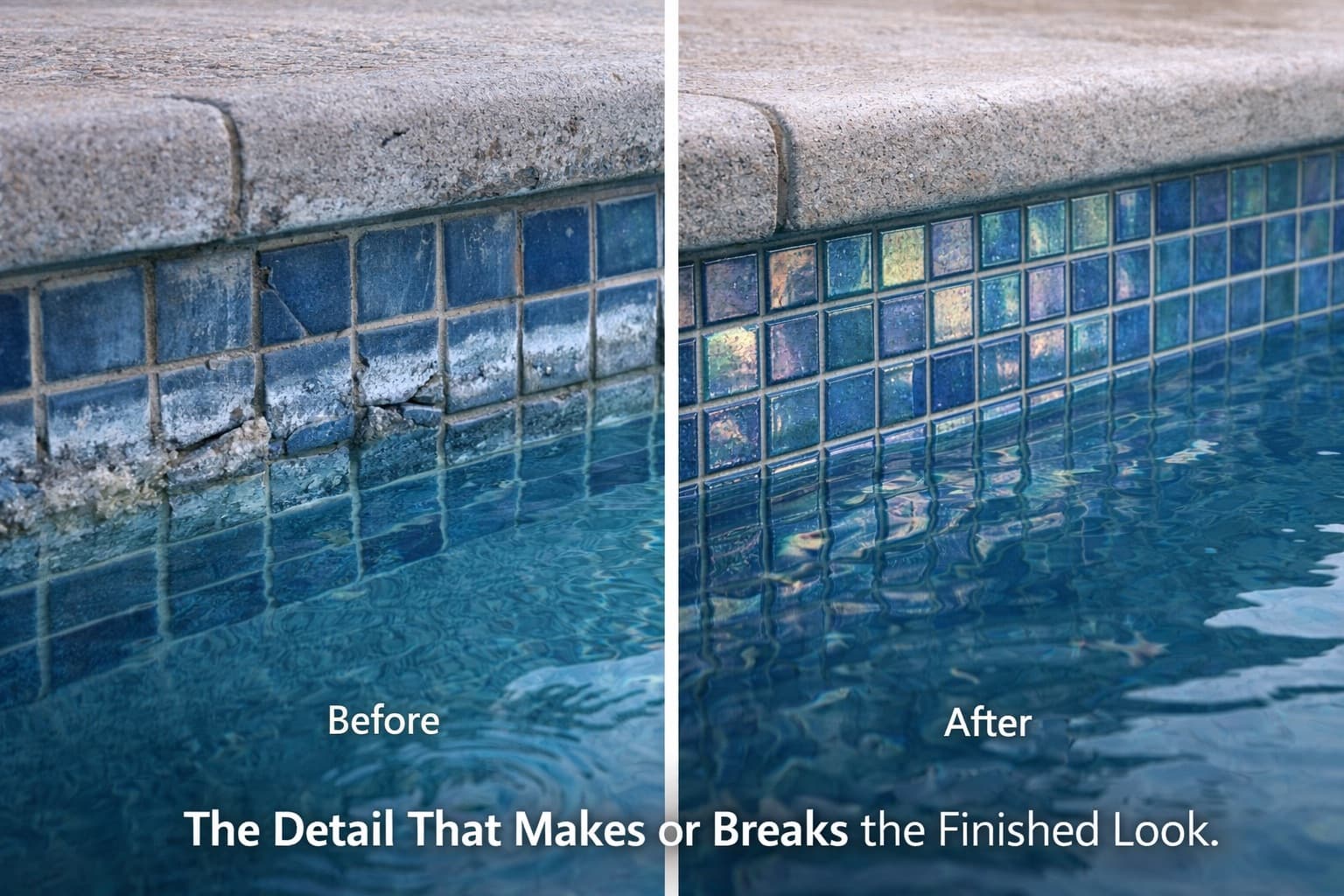
The Detail That Makes or Breaks the Finished Look
You can resurface a pool with a premium finish, install beautiful coping, and renovate the entire deck — and one band of cracked, faded, or poorly installed tile will undermine all of it. Tile is the most visible element at the water's edge, and it's the one surface where craftsmanship is fully on display.
Common tile failures include cracked or missing tiles, loose tiles popping off the wall, heavy calcium buildup that won't clean off, deteriorated grout, and tile that's simply dated. The right tile selection and a precise installation are what separate a pool that looks finished from one that looks truly refined.
What We Tile
Pool tile isn't limited to the waterline — though that's where most projects start. Here's the full range of tile applications we handle and what each one brings to the finished pool.
Waterline Tile
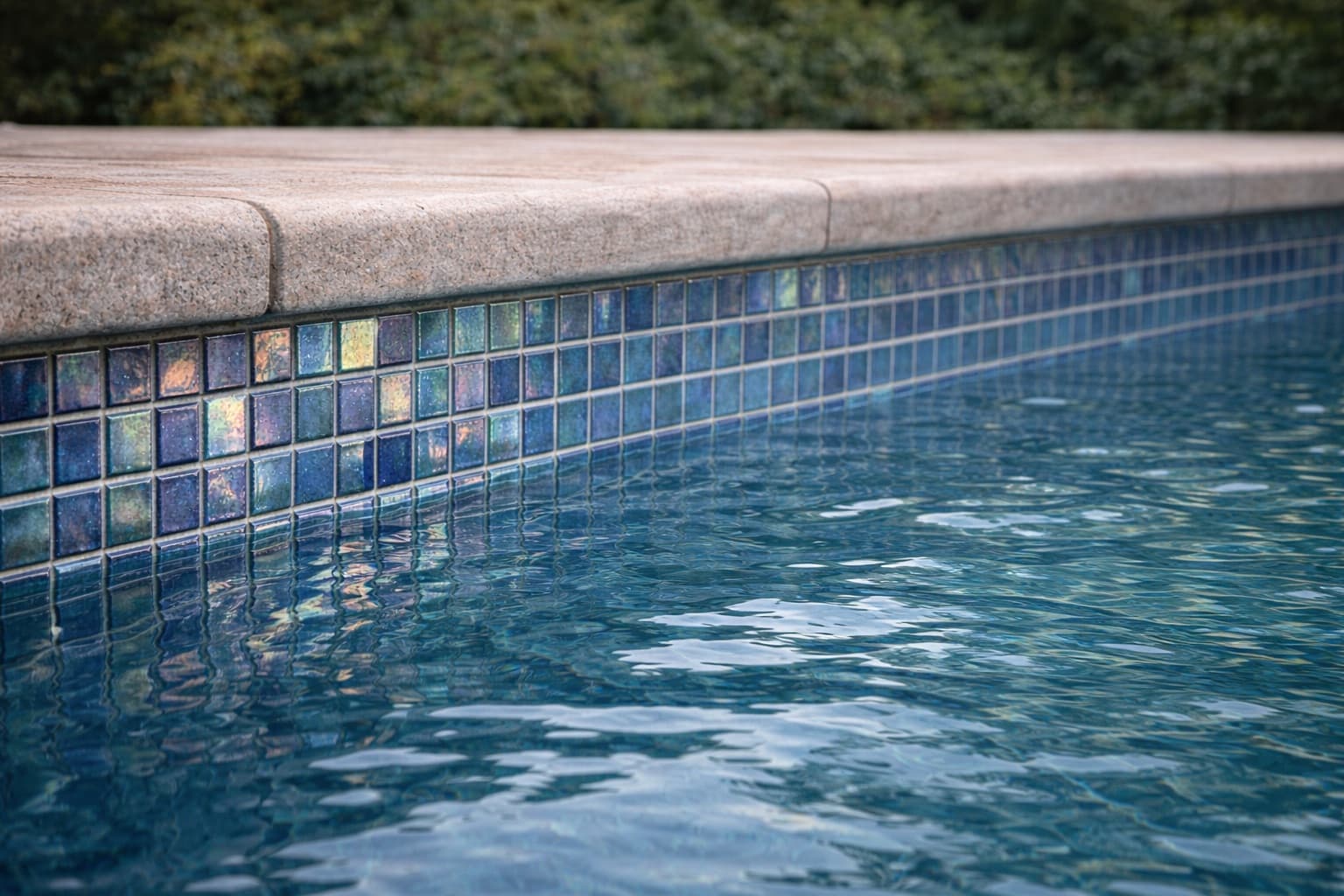
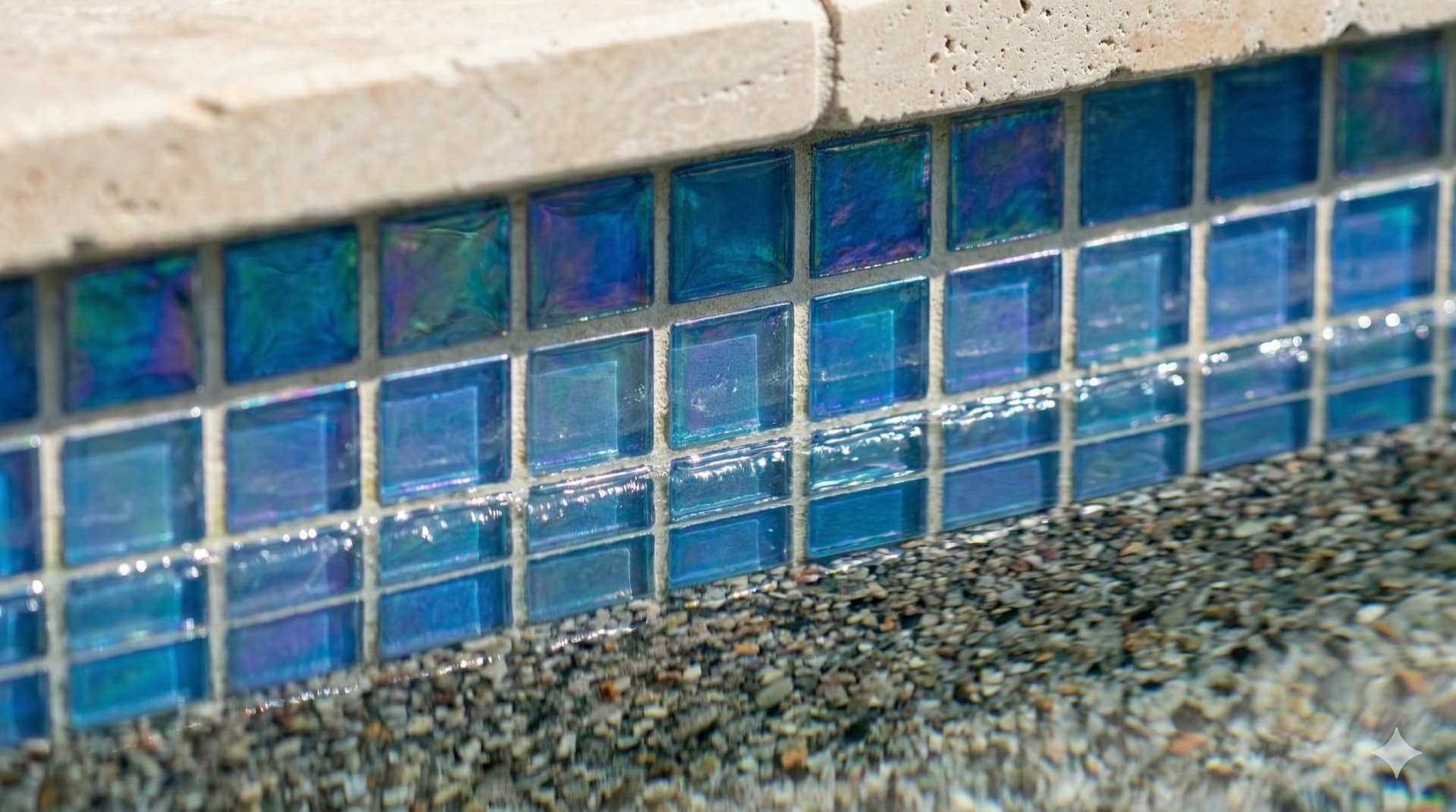
The waterline band is the most common pool tile application and typically the most visible. It runs along the top 6 inches of the pool's interior wall, right where the water meets the surface. Waterline tile endures constant abuse — direct sun, fluctuating water chemistry, calcium deposits, and the repeated thermal expansion of the water's surface. The tile selection and installation quality at the waterline determine how the pool looks day-to-day and how well that appearance holds up over the years.
Floor Tile
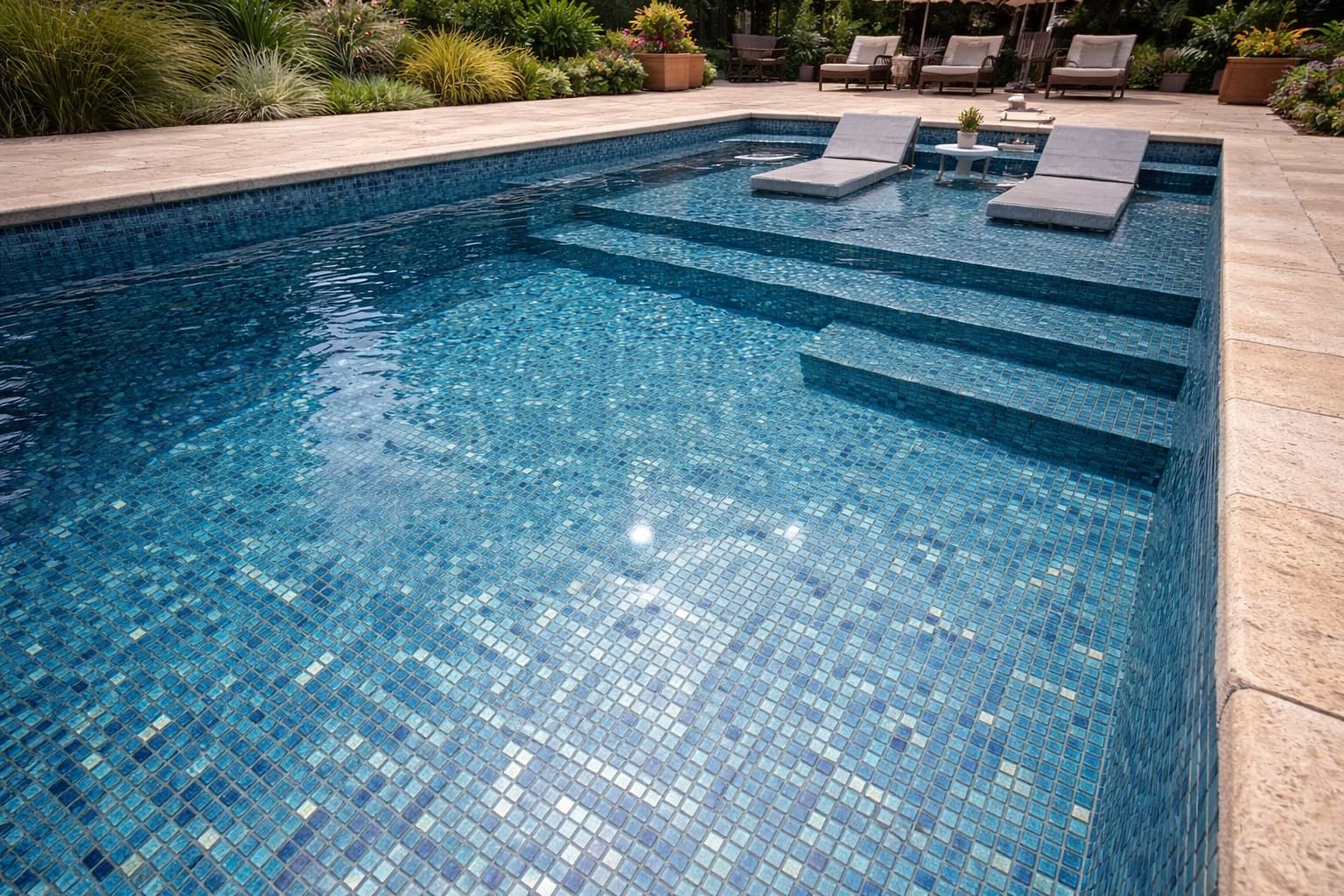
Full floor tile transforms a pool's interior from a single-surface shell into something with real depth and dimension. It's less common than a standard plaster or pebble finish, but for homeowners who want a fully tiled interior — or a tiled accent on steps, benches, or a tanning ledge — the result is a level of refinement you can't achieve any other way. Floor tile requires careful attention to slip resistance, substrate preparation, and waterproofing.
Wall & Feature Tile
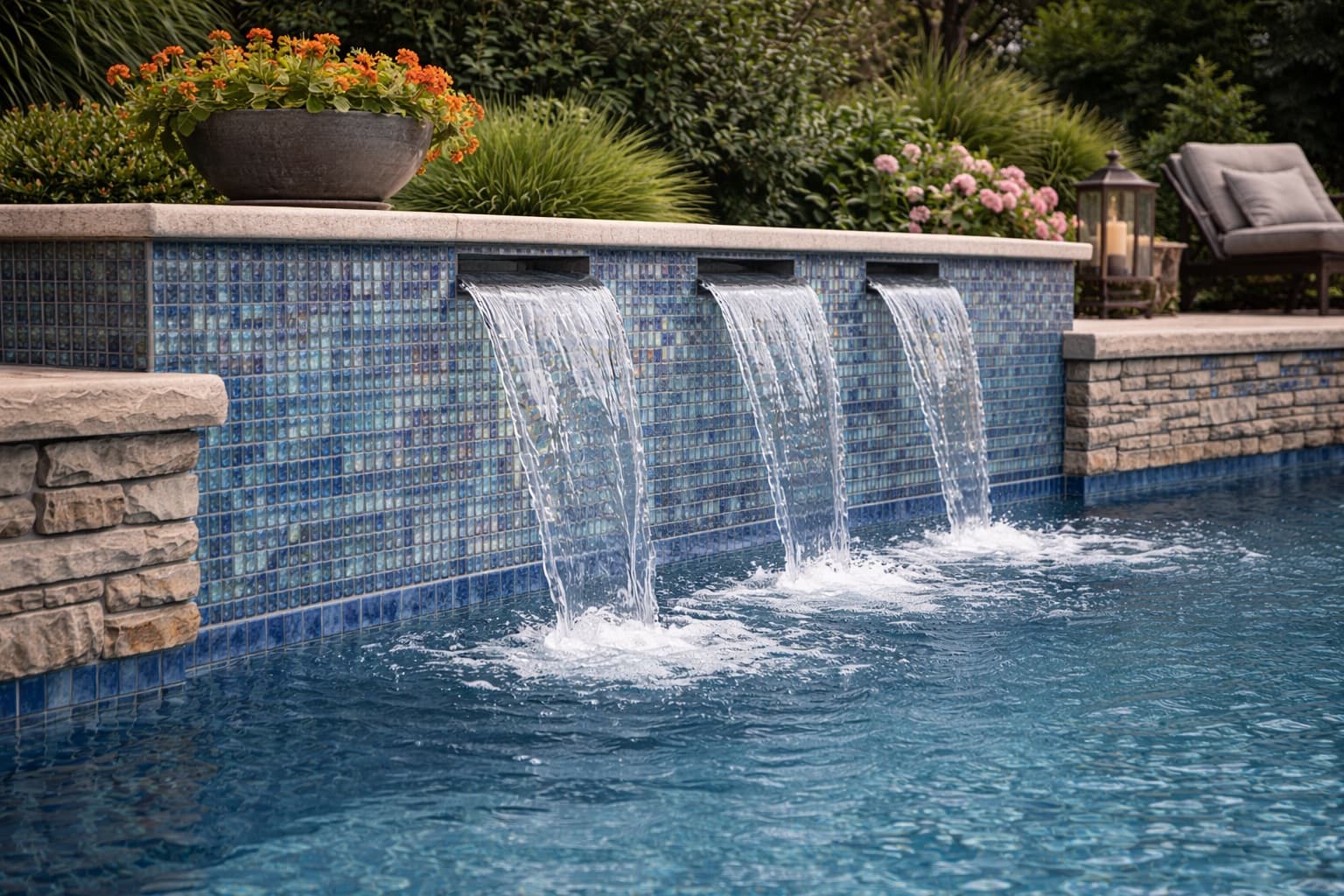
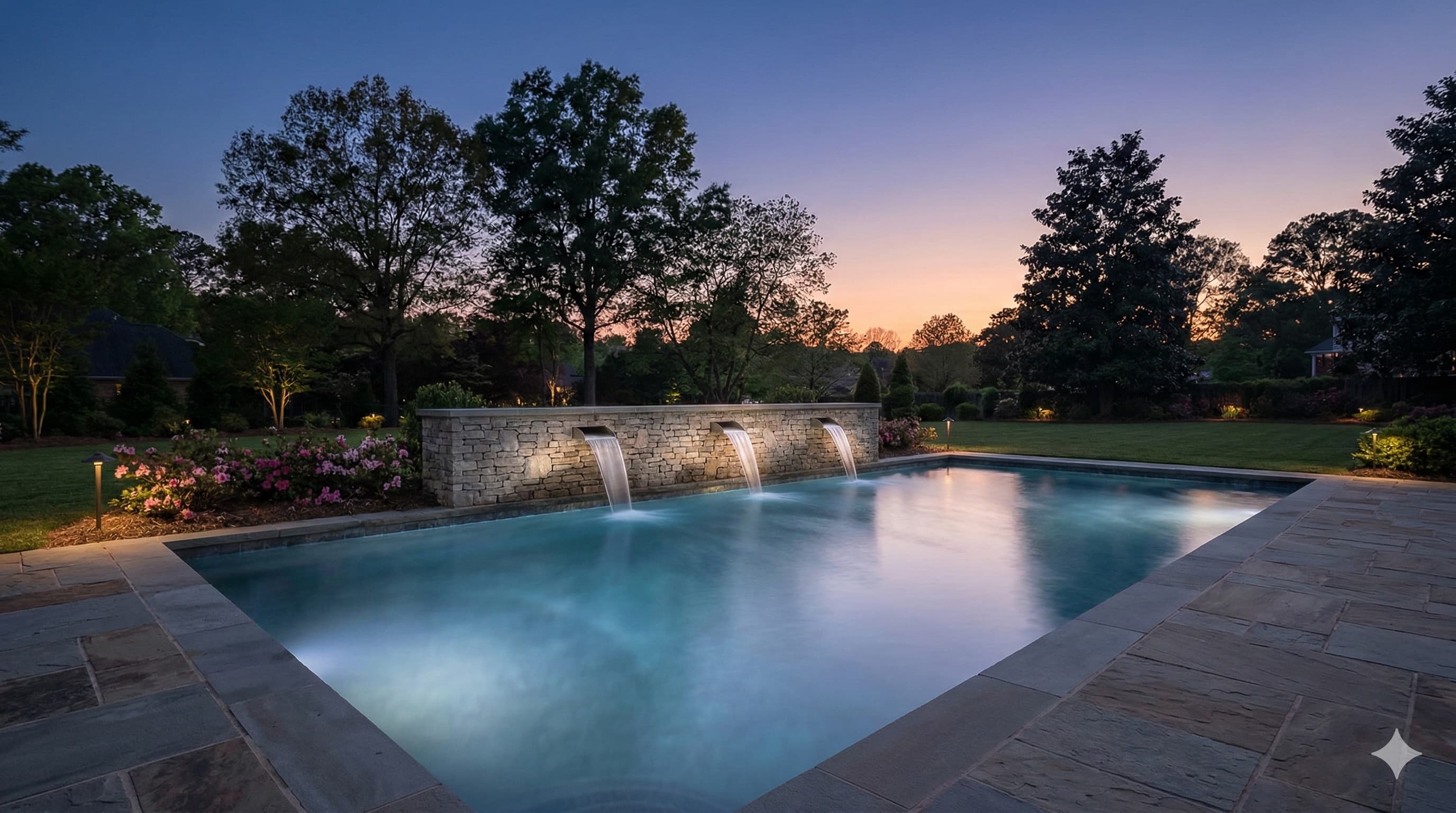
Raised walls, spillover features, grottos, and spa interiors all present opportunities for tile that goes beyond the standard waterline band. Wall tile adds visual weight and character to vertical surfaces that would otherwise be plain stucco or stone — and it's especially effective on features where water flows over the surface, catching light and creating movement.
Custom Mosaics
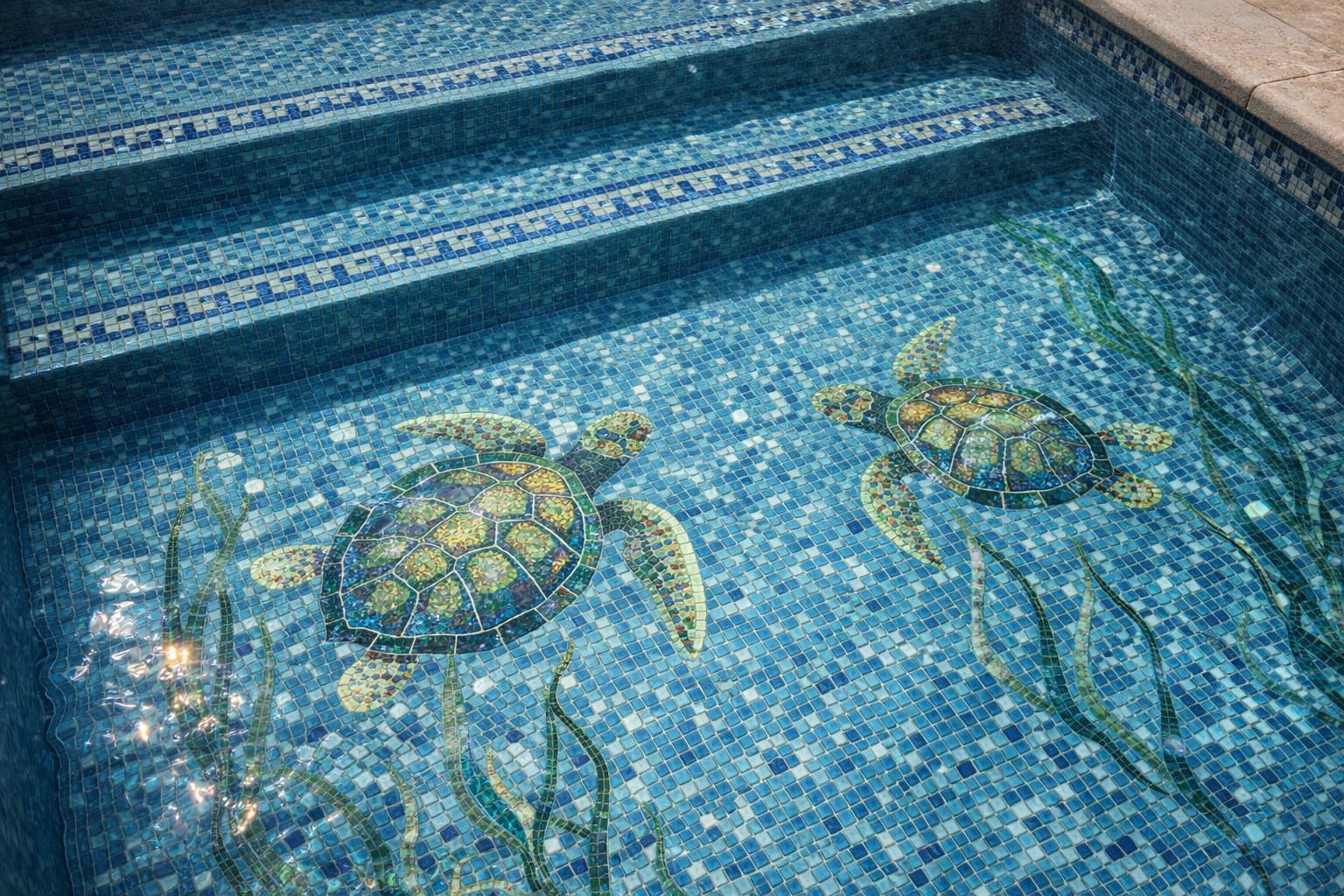
Mosaic tile work is the most detailed and design-intensive tile application we offer. Whether it's a medallion on the spa floor, a pattern inlaid into the pool steps, or a full decorative scene on a feature wall, mosaic work turns the pool into a genuine design statement. Mosaic installation requires planning the layout at full scale before a single tile is set, accounting for grout line spacing across irregular patterns, and hand-cutting individual pieces to fit curves and transitions that no factory sheet will match exactly.
Choosing Your Tile
The material you choose for your tile affects its durability, maintenance, visual impact, and cost. Here's a breakdown of the four main tile materials used in pool applications.
Glass Tile
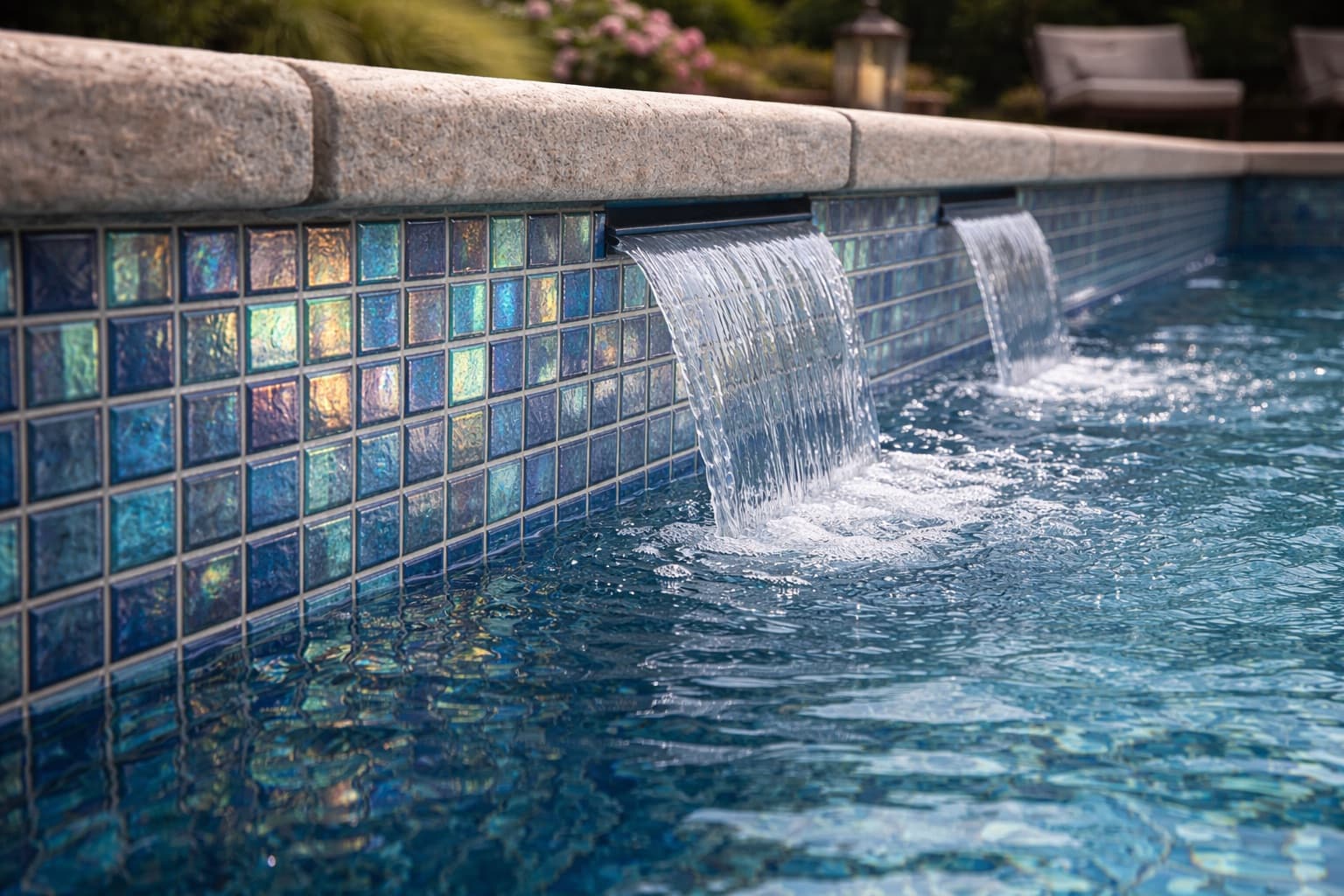
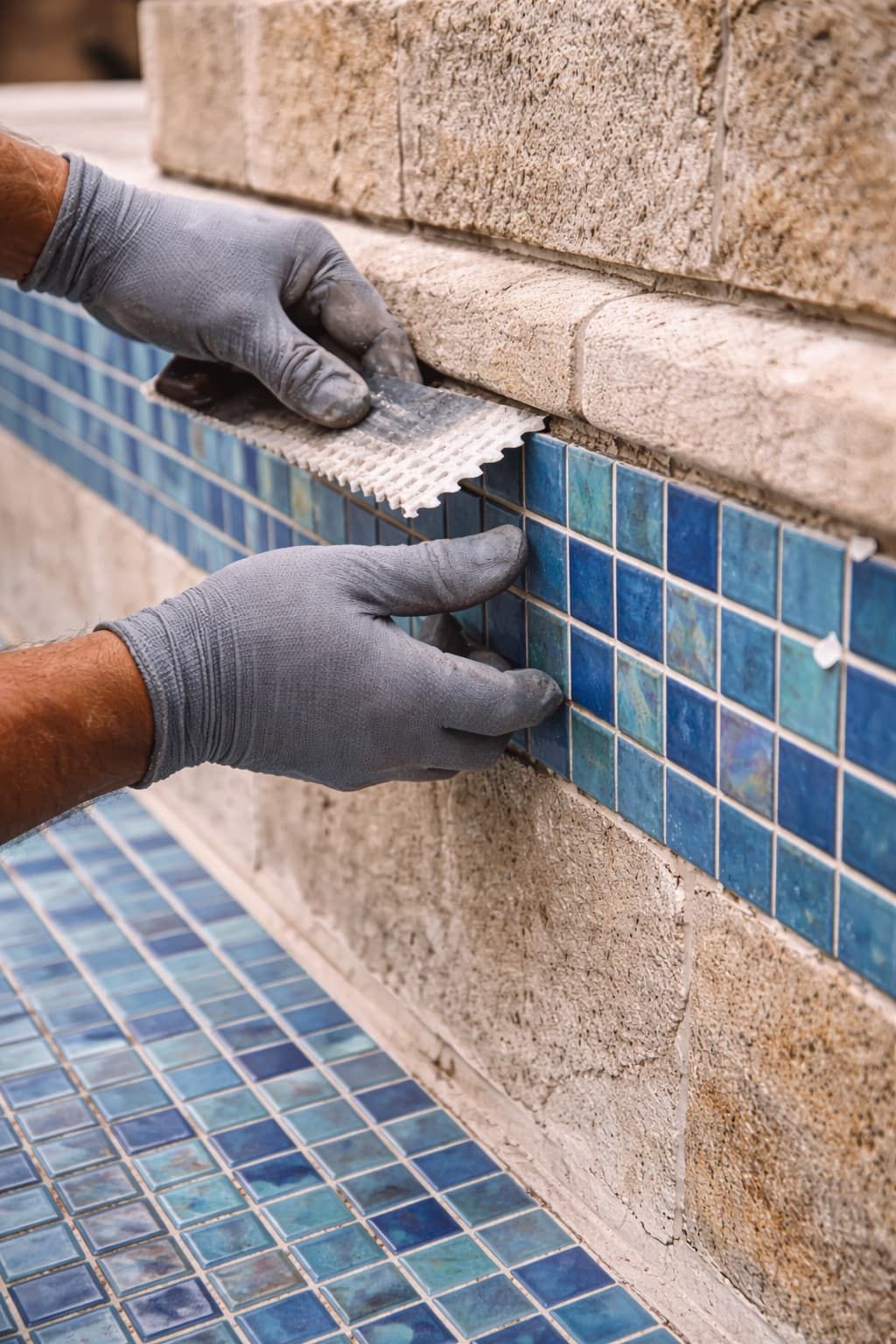
Glass tile is the premium option for pool applications. It's nonporous, which means it resists staining, chemical damage, and calcium buildup better than any other tile material. It reflects light beautifully underwater, creating depth and luminosity that other materials can't match. Glass tile is available in an enormous range of colors, finishes, and sizes — from small mosaics to large-format pieces. It requires a skilled hand to install properly (the transparent material shows every imperfection in the substrate and adhesive), but the result is the most luminous, durable pool tile available.
Porcelain Tile
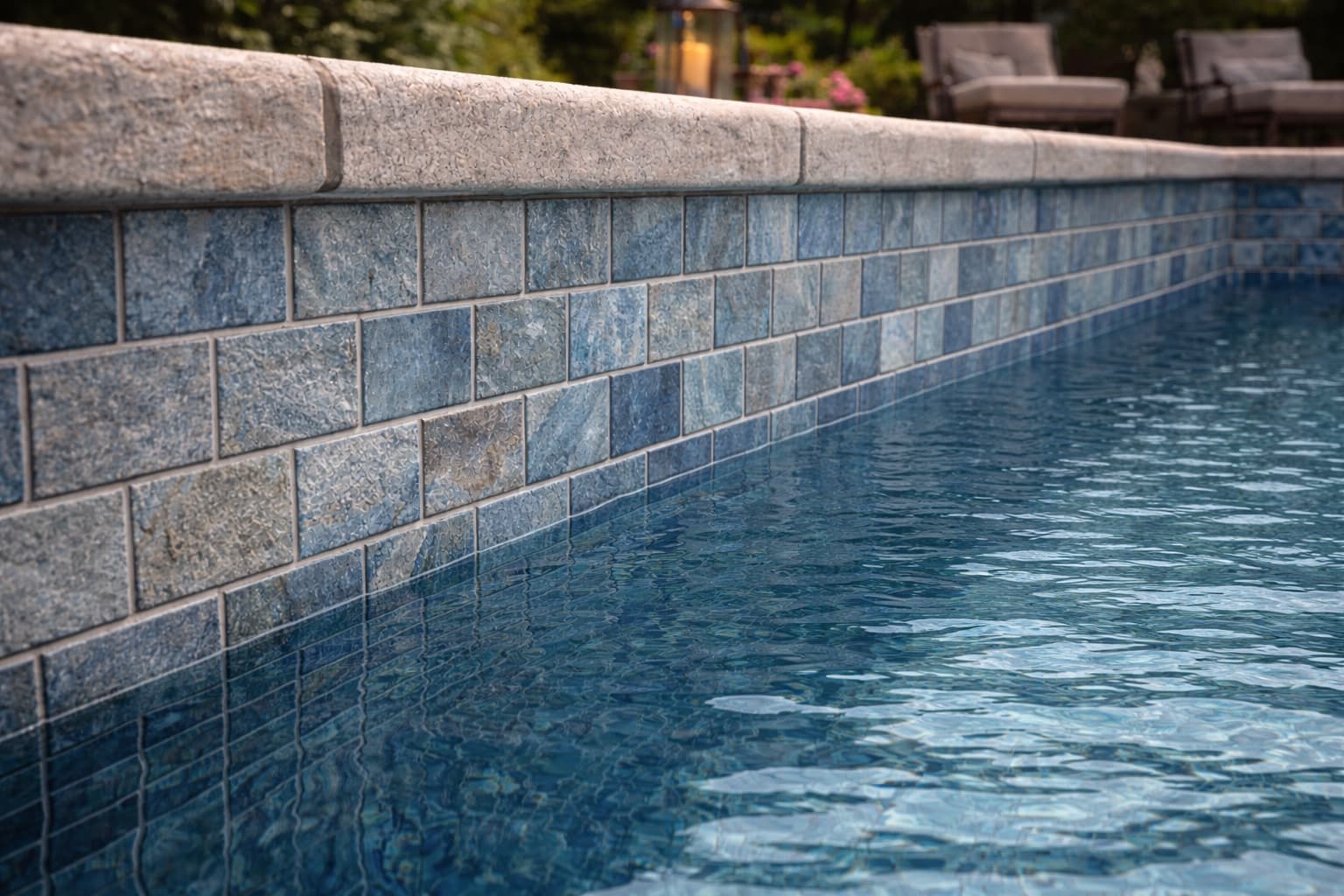
Porcelain is a dense, low-absorption tile that works well in pool environments. It's more affordable than glass, more durable than ceramic, and available in a wide range of colors and finishes — including options that convincingly mimic natural stone. Modern porcelain pool tiles are frost-resistant and rated for submerged use, making them a practical, versatile choice for waterline bands and wall applications.
Ceramic Tile
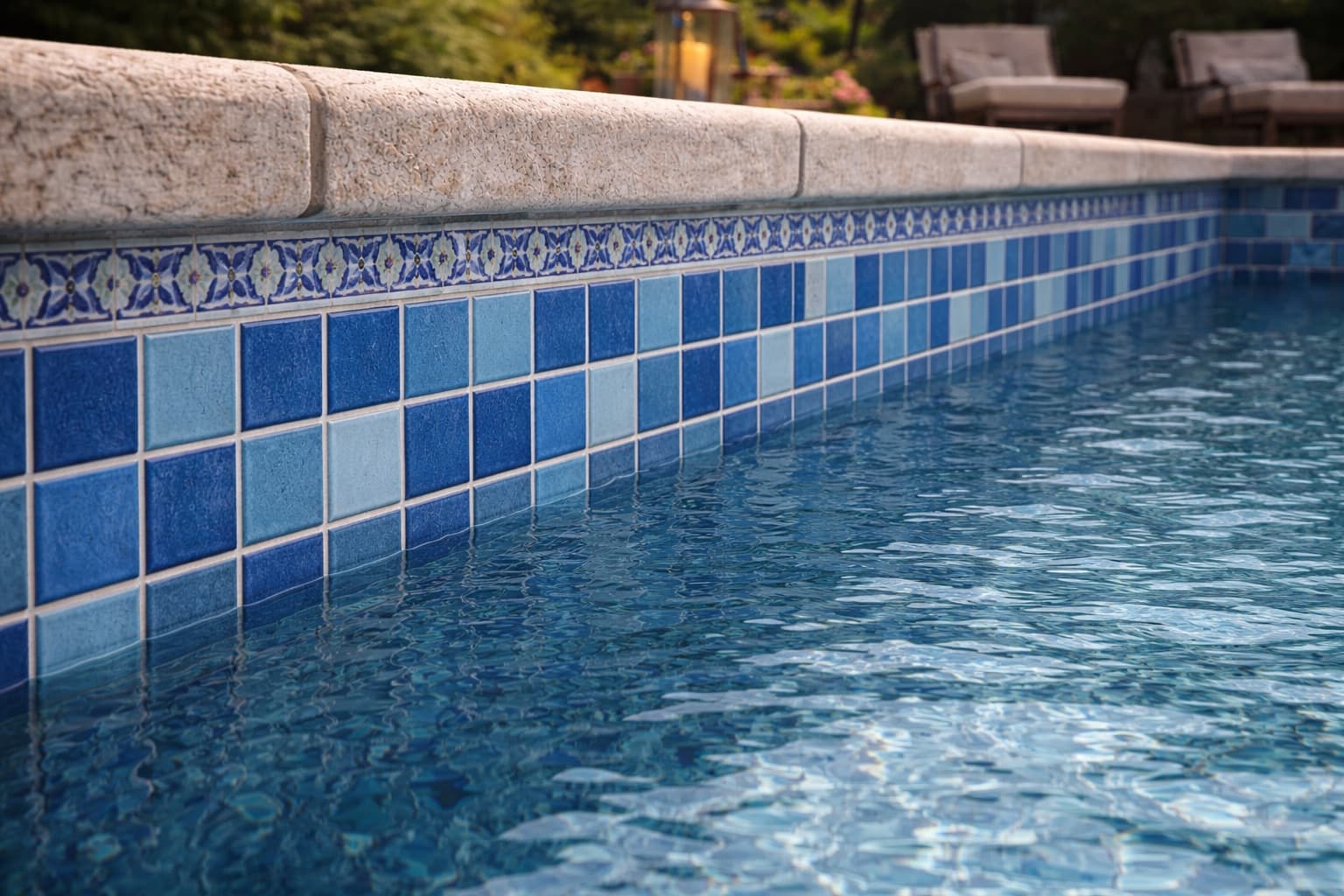
Ceramic tile is the most budget-friendly pool tile option. It comes in the widest variety of colors and patterns, and it's easy to work with from an installation standpoint. The tradeoff is durability — ceramic is more porous than porcelain or glass, which makes it more susceptible to staining and chemical wear over time. It's a reasonable choice for waterline bands on a tighter budget, with the understanding that it may need replacement sooner than porcelain or glass.
Natural Stone Tile
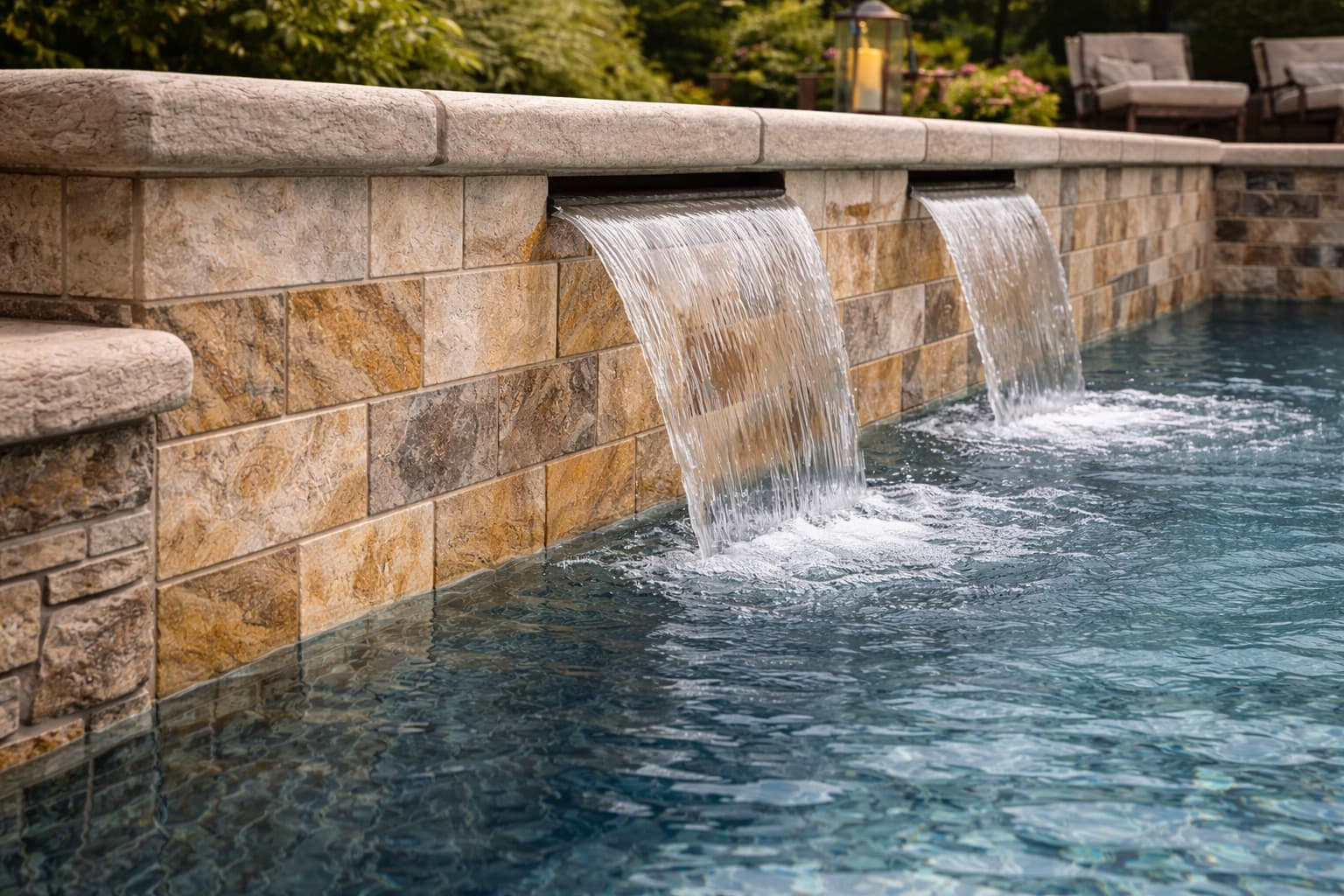
Natural stone tiles — travertine, limestone, slate — bring an organic texture and warmth that manufactured tiles can't fully replicate. They work especially well on raised walls, spillover features, and spa interiors where the natural variation in color and texture adds visual depth. Stone tile does require sealing and more attentive maintenance than glass or porcelain, and it's heavier, which affects substrate requirements. But for the right application, natural stone tile creates a level of richness that complements high-end coping and deck materials beautifully.
Tile Doesn't Forgive
Sloppy Work
Tile is the one pool surface where craftsmanship is fully visible. A pebble finish hides minor imperfections in the texture. Coping has grout joints that are forgiving from a few feet away. But tile — especially glass tile — puts every detail on display. Uneven spacing shows. Lippage between pieces shows.
That means full dry layouts before anything is bonded. It means hand-cutting every edge and corner piece rather than relying on factory sheets to cover transitions. It means checking level and spacing continuously rather than eyeballing it from the deck. And it means the person selecting your tile with you at the showroom is the same person setting it at the pool.
There's no handoff, no translation loss, no crew showing up who's never seen the plan. That's not how most pool renovations work. But it's the only way tile work should be done.
Common Questions About Tile
The most common signs are cracked or missing tiles, tiles that are loose or popping off the wall, heavy calcium buildup that won't clean off, and grout that's deteriorated or washed out. If you're seeing any of these — or if the tile is simply dated and dragging down the look of an otherwise well-maintained pool — it's time to evaluate a replacement.
Yes. Waterline tile can be replaced as a standalone project without draining the pool fully — the water level just needs to be lowered below the tile line. That said, if your surface is also nearing the end of its life, doing both at the same time during a full drain is more efficient and avoids paying for two separate mobilizations.
It starts with where the tile is going (waterline, floor, feature wall) and what look you're after. From there, we help narrow the options based on material performance, color coordination with your coping and surface finish, and budget. We'll walk you through samples and can show you how specific tiles look installed in actual pool settings — not just on a display board.
For most waterline and feature applications, yes. Glass is nonporous, meaning it resists staining and calcium deposits better than ceramic or porcelain. It reflects light beautifully underwater, and it holds its color permanently — it won't fade from sun or chemical exposure. The upfront cost is higher, but the longevity and visual impact make it the best long-term value for most pool tile applications.
A standard waterline tile replacement typically takes 2 to 3 days. Larger projects — full floor tile, feature walls, or custom mosaics — take longer depending on the scope and complexity. Mosaic work in particular is time-intensive due to the precision layout and hand-cutting involved. We'll give you a clear timeline during the planning phase based on exactly what's being done.
Sometimes — but it depends on the original tile. If the existing tile is still in production or a close match is available, a partial replacement is possible. In many cases, though, the color of the existing tile has shifted over years of chemical and sun exposure, and even an exact match from the manufacturer won't blend seamlessly with the aged original. We'll always be upfront about whether a partial replacement will look right or whether a full replacement is the better call.
Often Done Together
Tile work frequently overlaps with other pool renovation services — especially coping and resurfacing, which share the same perimeter and are most efficient to tackle during the same project. Here are the services our clients most commonly pair with tile installation:
Coping
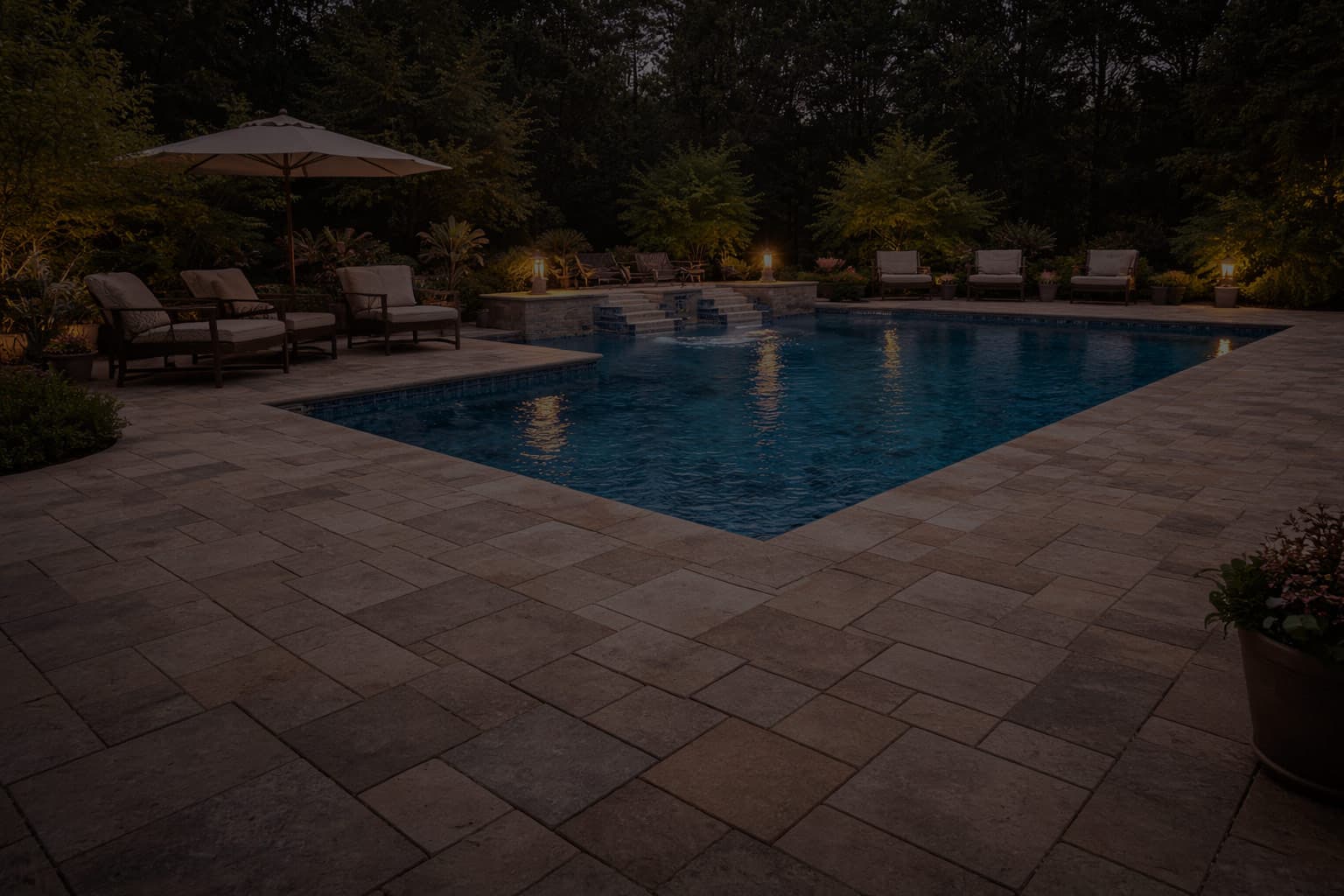
Coping is the cap stone that frames your pool and protects its structure. We cut, set, and finish every piece by hand — in travertine, natural stone, brick, pavers, and cantilevered concrete.
Pool Resurfacing
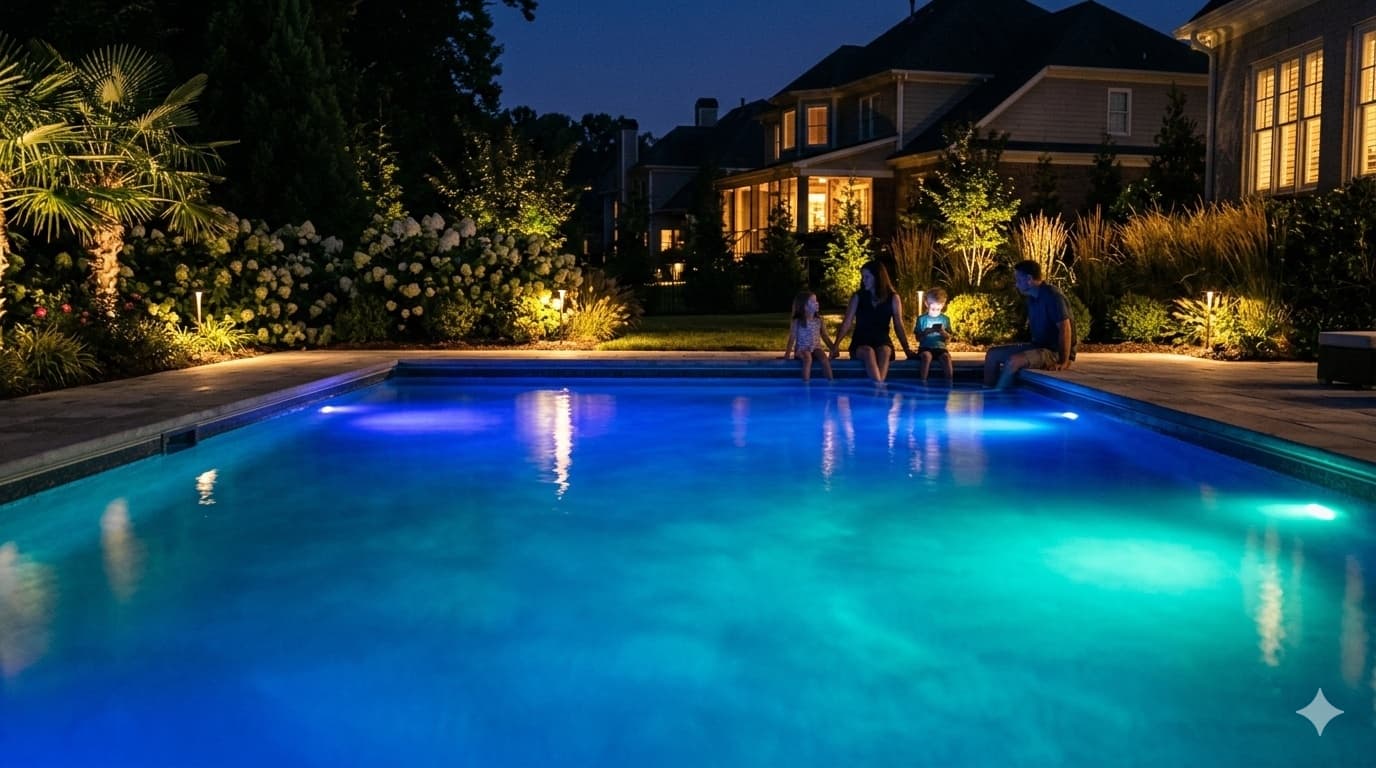
Your pool's interior surface determines how it looks, feels, and holds up over time. We manage the full resurfacing process — from drain and prep through finish application and startup — in plaster, pebble, and quartz.
Structural Modifications
Tanning ledges, spa additions, water features, bench seating, beach entries, and depth changes — we redesign how your pool works, not just how it looks.
Ready to Talk Tile?
Whether you're replacing a failing waterline band or planning something more ambitious, it starts with a conversation about what you're working with and where you want to take it. We'll look at your pool, talk through materials and applications, and give you an honest recommendation — no pressure, no obligation.