Every March and April, Metro Atlanta homeowners pull back the cover — or just walk out to the backyard for the first time since October — and realize the pool needs attention. Sometimes it's a green swamp that needs a thorough cleaning. Sometimes it's a surface that looked "fine" last summer but now looks rough and stained in the spring sunlight.
Here's a practical checklist for getting your pool summer-ready, including how to tell whether you're looking at a cleanup job or a renovation project.
The Basic Spring Startup
If your pool was properly winterized (or just sat idle through Atlanta's mild winters), the startup sequence is straightforward:
Clean the debris. Skim leaves, vacuum the bottom, and brush the walls and steps. Atlanta's tree canopy — especially in neighborhoods like Marietta and Kennesaw — means months of leaf accumulation. Get it all out before you start balancing chemistry.
Inspect the equipment. Turn on the pump and watch for leaks at the fittings. Check the filter pressure gauge — if it spikes immediately, the filter needs cleaning or a cartridge/grid replacement. Listen for unusual noise from the pump motor. Run the heater and verify it fires and holds temperature.
Test and balance the water. After the pool has circulated for 24 hours, test pH, alkalinity, calcium hardness, and chlorine levels. Spring startup chemistry usually needs significant adjustment — pH drifts high over winter, and chlorine drops to zero. Take a water sample to a local pool supply store if you want professional testing beyond your home kit.
Check water level. Evaporation and splash-out over winter often drop the water below the skimmer line. Fill to the middle of the skimmer opening before running the pump — running dry can damage the pump seal.
Inspect safety equipment. Check that the fence gate closes and latches properly, the pool alarm works (if you have one), and drain covers are intact and secure.
That's the maintenance side — and it's not what we do at Cornerstone. We're a renovation specialist, not a cleaning or maintenance service. But understanding the startup process matters because it's when most homeowners discover that their pool needs more than a spring cleaning.
When Spring Startup Reveals a Bigger Problem
Here's what to look for during your spring inspection that signals a renovation need rather than a maintenance task:
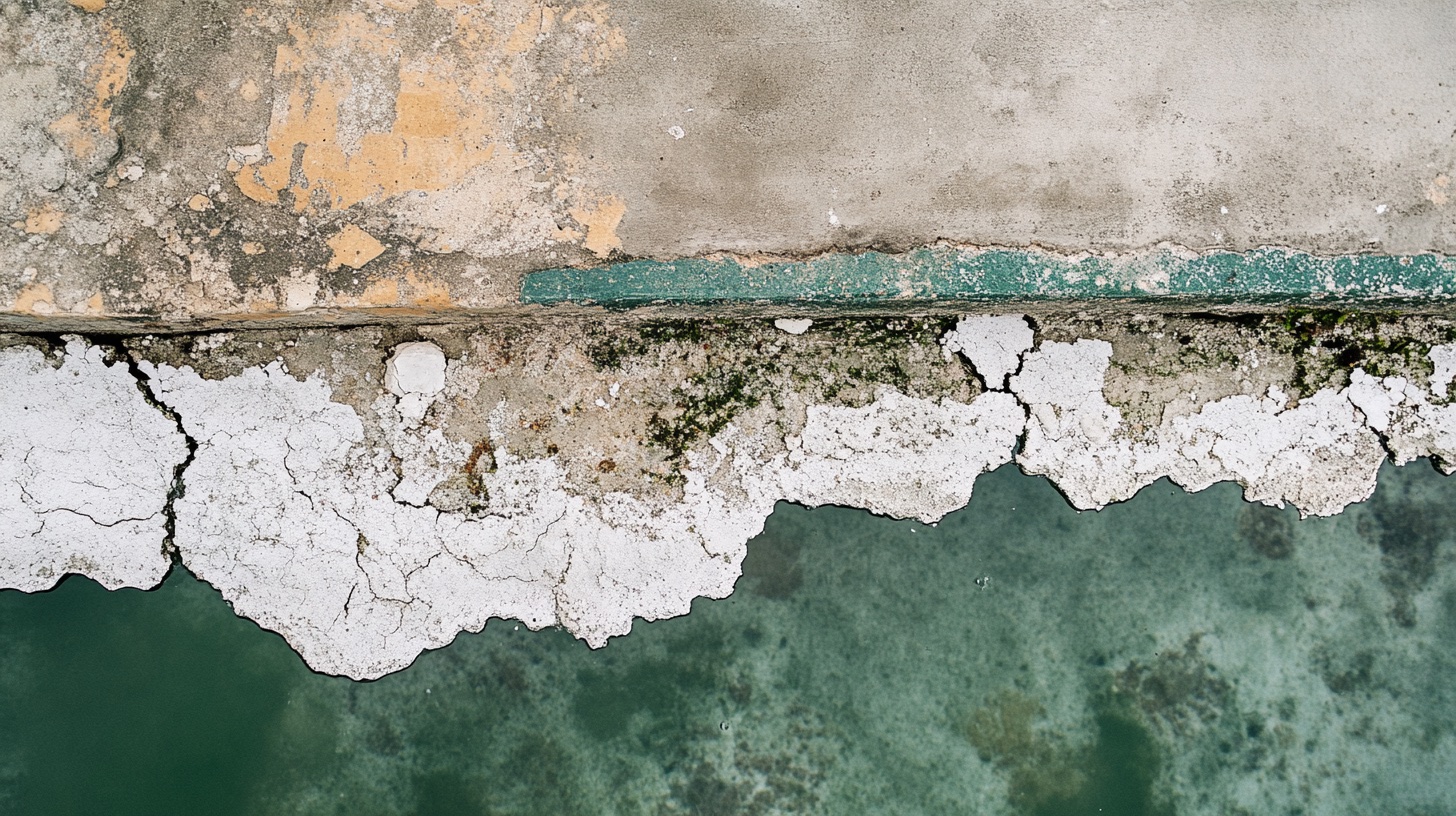
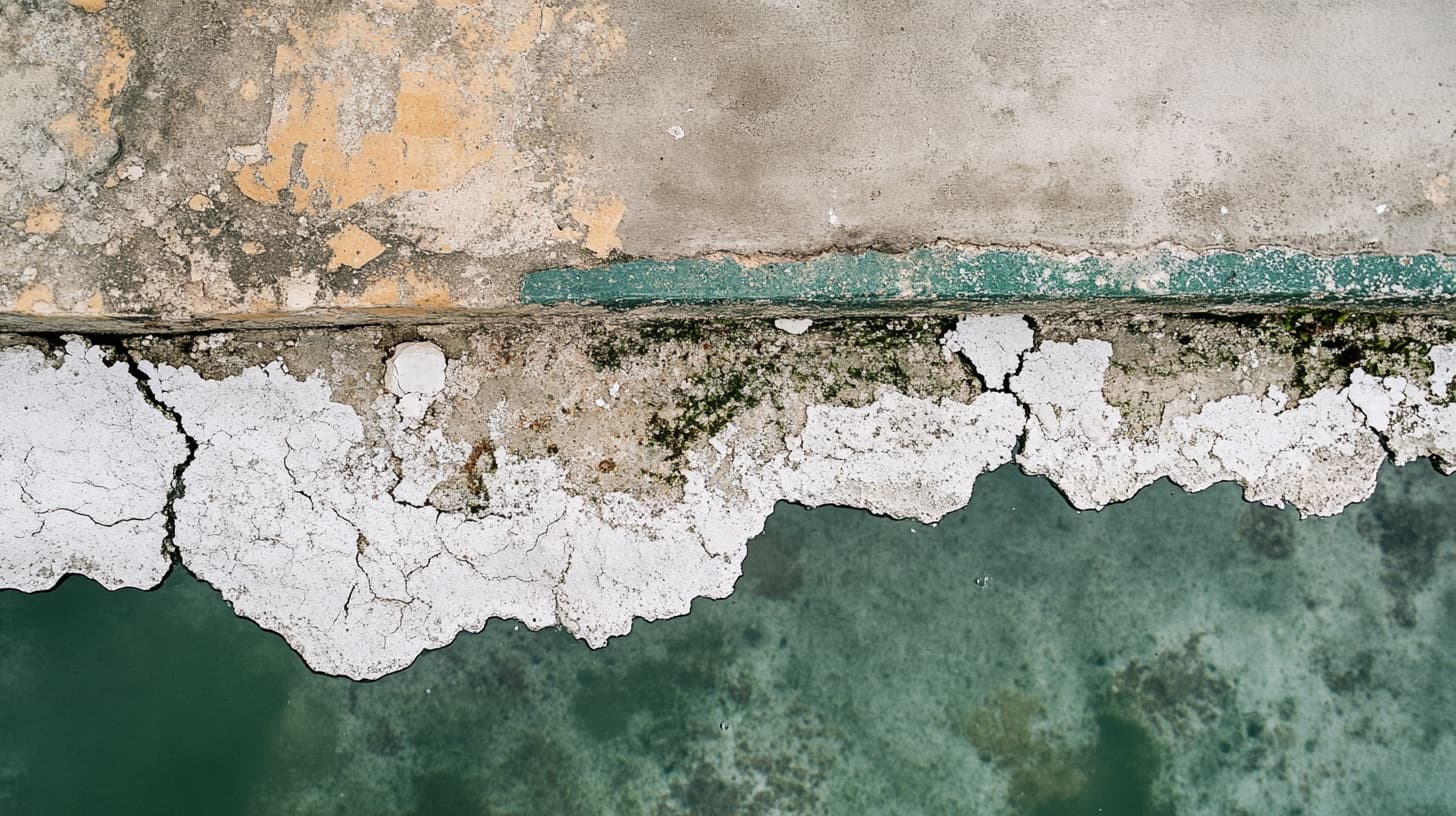
The surface is rough. Run your hand along the pool wall. If it feels like sandpaper, if it catches on bathing suits, or if you can see bare concrete showing through the plaster — that's a surface that's past its service life. No amount of chemical balancing fixes a deteriorated finish. See our guide on the signs your pool needs resurfacing.
Stains that don't come out. Mineral stains, metal stains, and organic stains that have penetrated through the surface layer won't respond to chemical treatment or acid washing. If the staining is widespread, resurfacing is the only real fix.
Coping that's cracked or separated. Walk the pool's edge and look at the cap stones. Cracks wider than hairline, stones that rock when you step on them, or visible gaps between the coping and the beam all indicate coping that needs replacement — not just re-grouting.
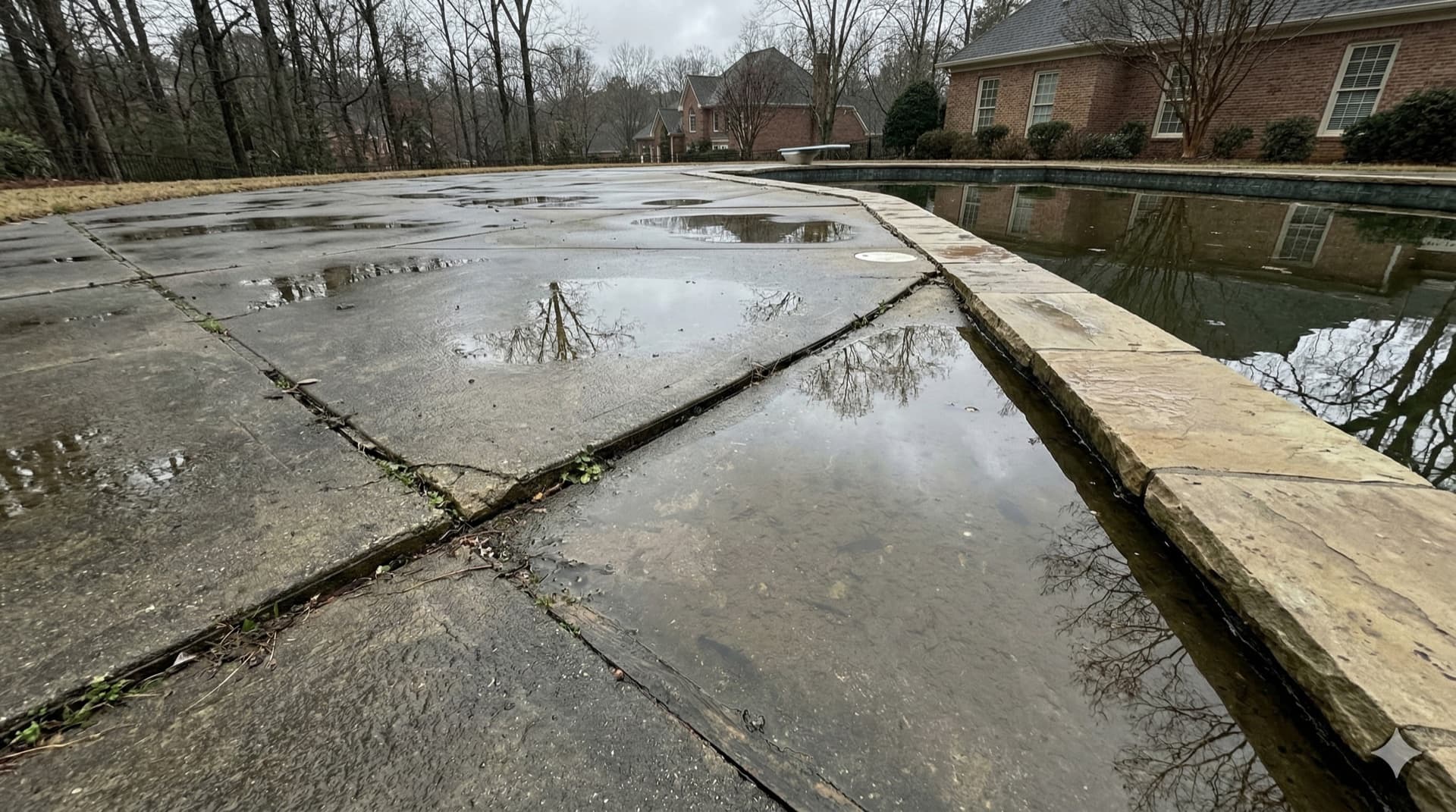
A deck that's heaving or settling. Georgia's clay soil expands and contracts through the wet/dry cycles. If your deck slabs have shifted, if there are trip hazards at joints, or if water puddles against the pool edge instead of draining away, you're looking at deck work.
Equipment that doesn't start. A pump motor that hums but doesn't turn, a heater that won't ignite, or a filter that leaks from the tank — these are replacement situations, not repairs. Spring is when dead equipment gets discovered.
If Your Pool Needs Renovation, Start Now
This is the timing piece that catches people off guard. A pool resurfacing takes 3 to 5 weeks from first call to swimming. A full renovation with coping, tile, and deck work takes 6 to 10 weeks.
If you want to swim by Memorial Day, and your pool needs renovation, the window to start is March through early April. Calling in May means you're swimming in July at the earliest — and that's if crews aren't already booked.
This is why the best time to renovate in Georgia is late winter through early spring. You get the project done during months you wouldn't be swimming anyway, and the pool is ready when the weather turns.
The Spring Upgrade Opportunity
Even if your pool doesn't need a full renovation, spring is a natural time to add upgrades you've been thinking about:
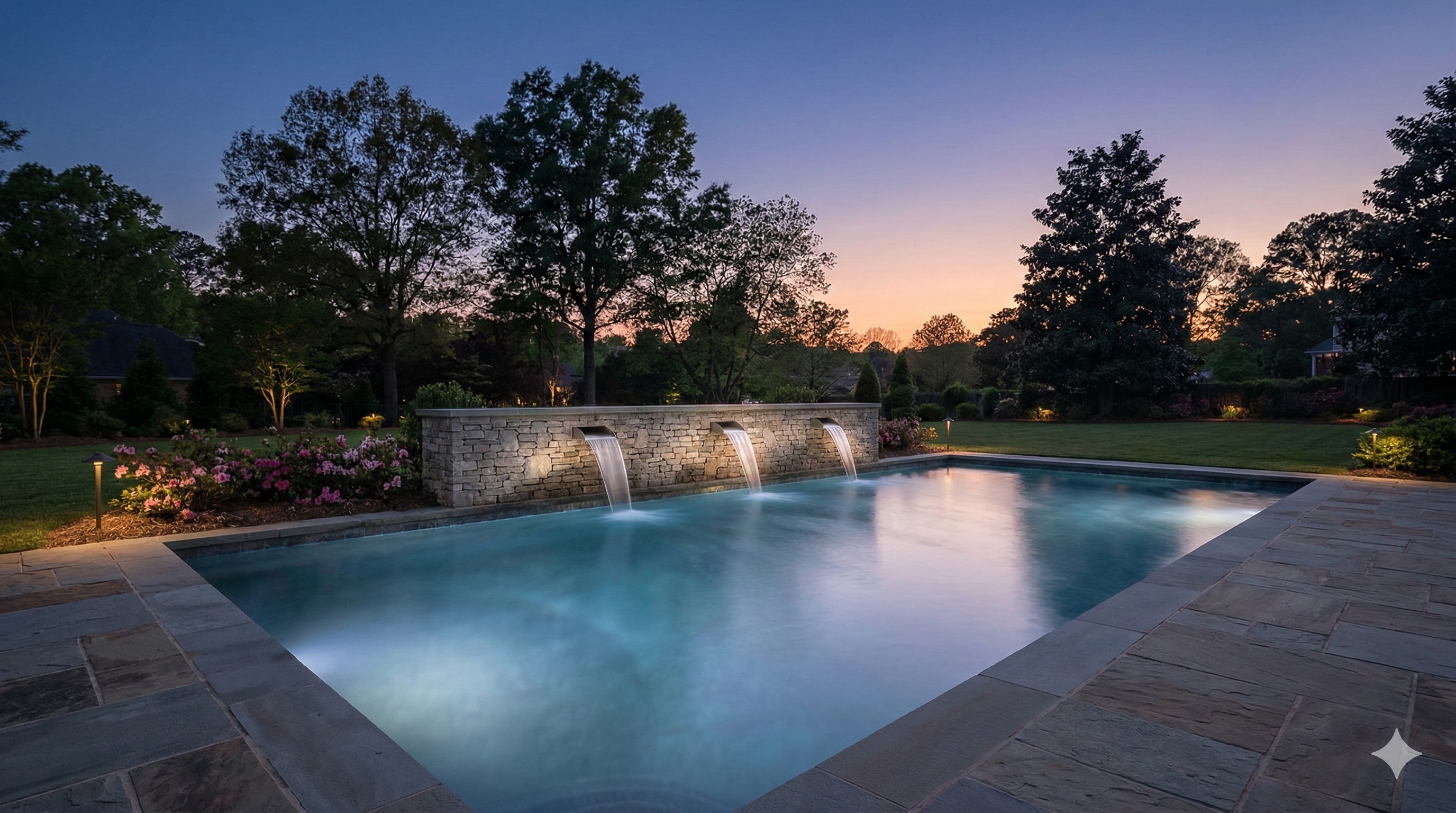
LED lighting. If you're still running incandescent pool lights (or the lights are dead), an LED upgrade takes a day or two and transforms the pool at night. The cost is modest and the visual impact is immediate.
Variable speed pump. If your single-speed pump is still working but you're tired of the noise and the electric bill, spring is a clean time to swap it. The new pump pays for itself in energy savings within 2 to 3 years.
Automation. If you're upgrading equipment anyway, adding an automation system while the equipment pad is open saves significant labor cost versus doing it later.
These aren't renovation-scale projects, but they're easier and cheaper to do before the season starts than in the middle of summer when you're using the pool daily.
A Realistic Spring Timeline
March: Inspect the pool during a warm week. Identify whether you need maintenance, equipment replacement, or renovation. If renovation is needed, schedule consultations now.
April: If renovating, work should be underway or scheduled. If doing maintenance-only startup, this is the month to get chemistry balanced and equipment running.
May: Pool should be swim-ready. If you started renovation in March, you're filling and balancing by late April or early May.
June onward: Swimming.
The homeowners who enjoy their pools most are the ones who deal with spring issues in March instead of June. The ones who call in June are swimming in August.
When "Spring Cleanup" Turned Into a Smart Renovation
A homeowner in Kennesaw reached out in late February thinking they needed a pool cleaning service. Their pool had been sitting since September — green water, debris buildup, the usual winter neglect. A walk-through revealed what the green water was hiding: the plaster surface had deteriorated to bare concrete in multiple spots, the coping had separated from the beam along the entire deep-end wall, and their 18-year-old single-speed pump was pulling 1,800 watts continuously.
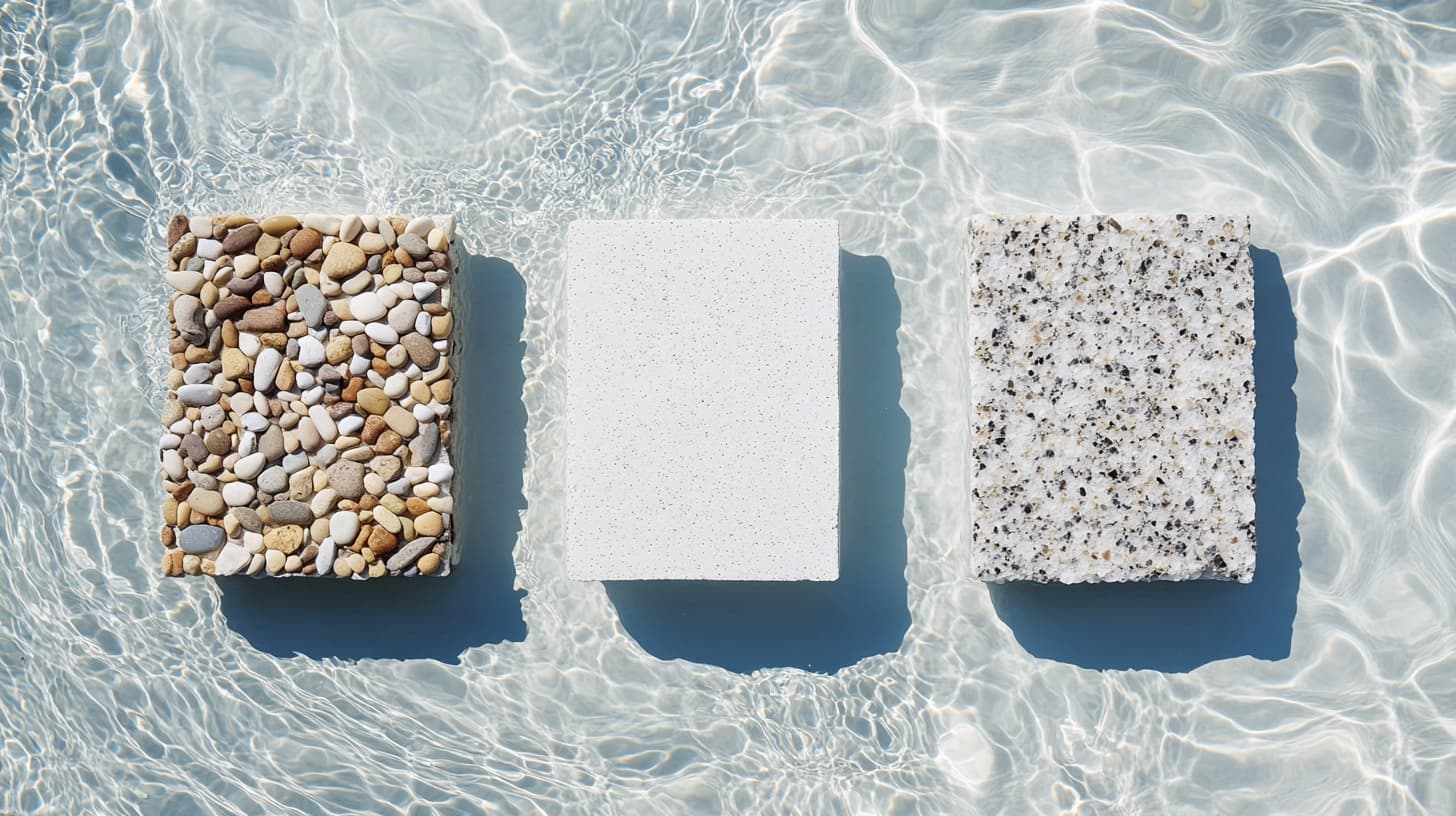
Because they reached out in February instead of May, the renovation was scheduled immediately and completed before swim season. The pool was resurfaced with StoneScapes Mini Pebble in Aqua Blue, the cracked coping was replaced with tumbled travertine, and the single-speed pump was swapped for a Pentair IntelliFlo. The project was completed in four weeks. They were swimming by April 12 — six weeks before homeowners who called in May even got on the schedule.
The CDC's Model Aquatic Health Code recommends that pool operators — including residential owners — conduct a full structural and equipment inspection before each swim season, noting that surface deterioration and inadequate drain covers are among the most commonly overlooked safety concerns during seasonal startups.
If your spring inspection raises questions — rough surface, cracked coping, failing equipment — We can walk the pool and tell you what actually needs attention and what can wait.
Fill out the contact form or call to set up a spring walkthrough — the earlier in the season, the more scheduling flexibility you'll have.
Ready to Talk About Your Pool?
Get a free, no-obligation consultation from Cornerstone Pool & Remodel.
Request a Free Quote