StoneScapes is the most popular pebble pool finish we install across Metro Atlanta — and it's not close. When homeowners decide to upgrade from basic plaster to a pebble finish, StoneScapes is the brand that comes up in almost every conversation.
That popularity is earned. But with over a dozen color blends to choose from, the selection process can be overwhelming. Here's what you need to know about StoneScapes — the product, the colors, the cost, and how to pick the right blend for your pool.
What StoneScapes Actually Is
StoneScapes is a pebble pool finish manufactured by NPP (National Plasterers & Pool). It's made from small, naturally colored pebbles mixed with white cement and applied to the pool shell as the interior surface.
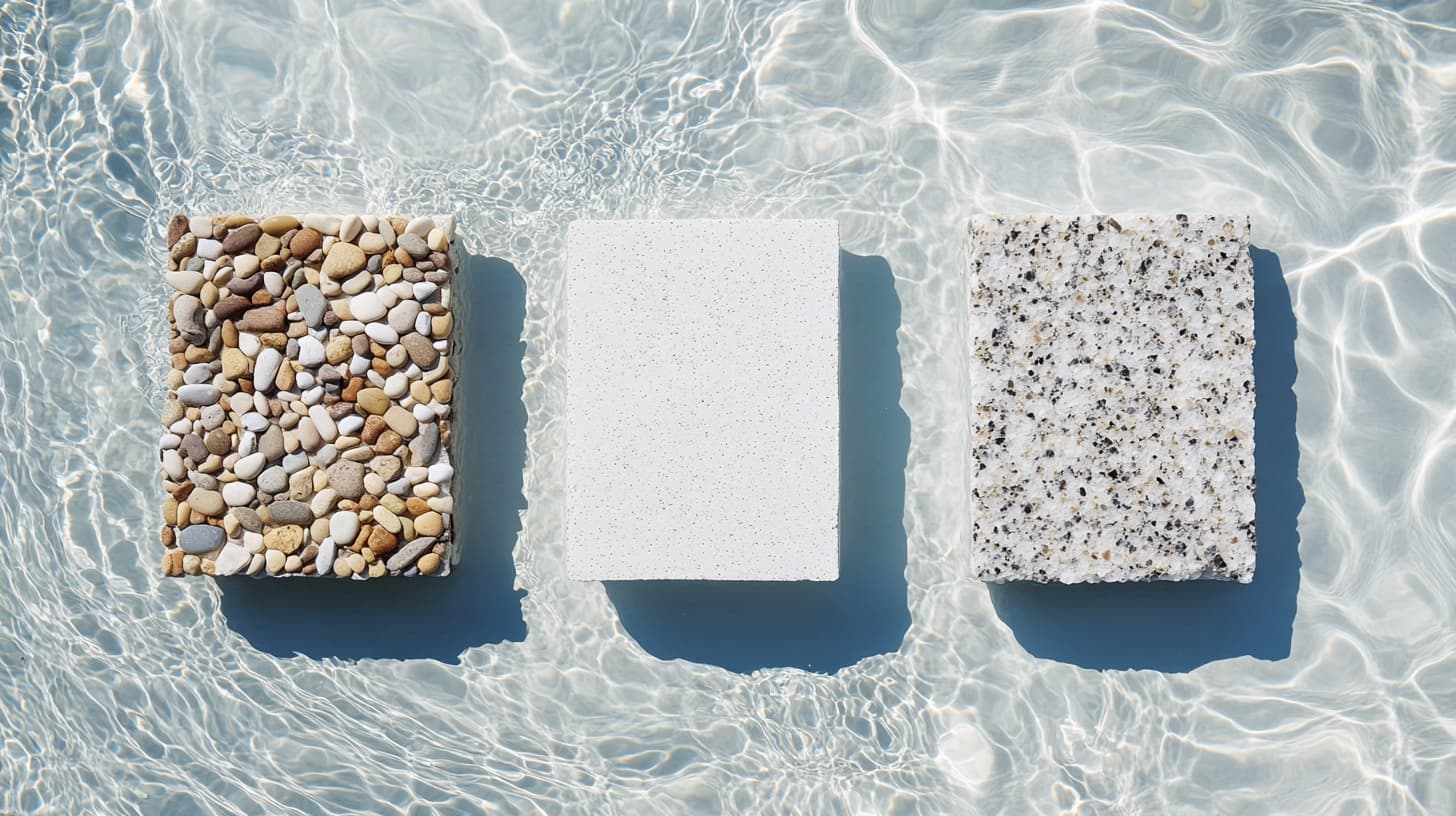
Unlike basic marcite plaster (which is a smooth white or tinted cement), StoneScapes has texture and depth. The pebble aggregate gives the surface better durability, longer lifespan, and a more complex visual appearance — the water interacts with the pebble texture in a way that creates richer, more dynamic color than a smooth surface.
StoneScapes comes in two lines:
StoneScapes Regular. Larger pebble aggregate with more pronounced texture. The "original" StoneScapes product. More textured underfoot — some homeowners love the feel, others prefer the smoother Mini Pebble.
StoneScapes Mini Pebble. Finer pebble aggregate, smoother feel. This is the product we install most across Metro Atlanta. It gives you the durability and color depth of pebble without the rougher texture of the regular aggregate. Most homeowners, especially those with kids, prefer Mini Pebble for comfort.
The Color Blends
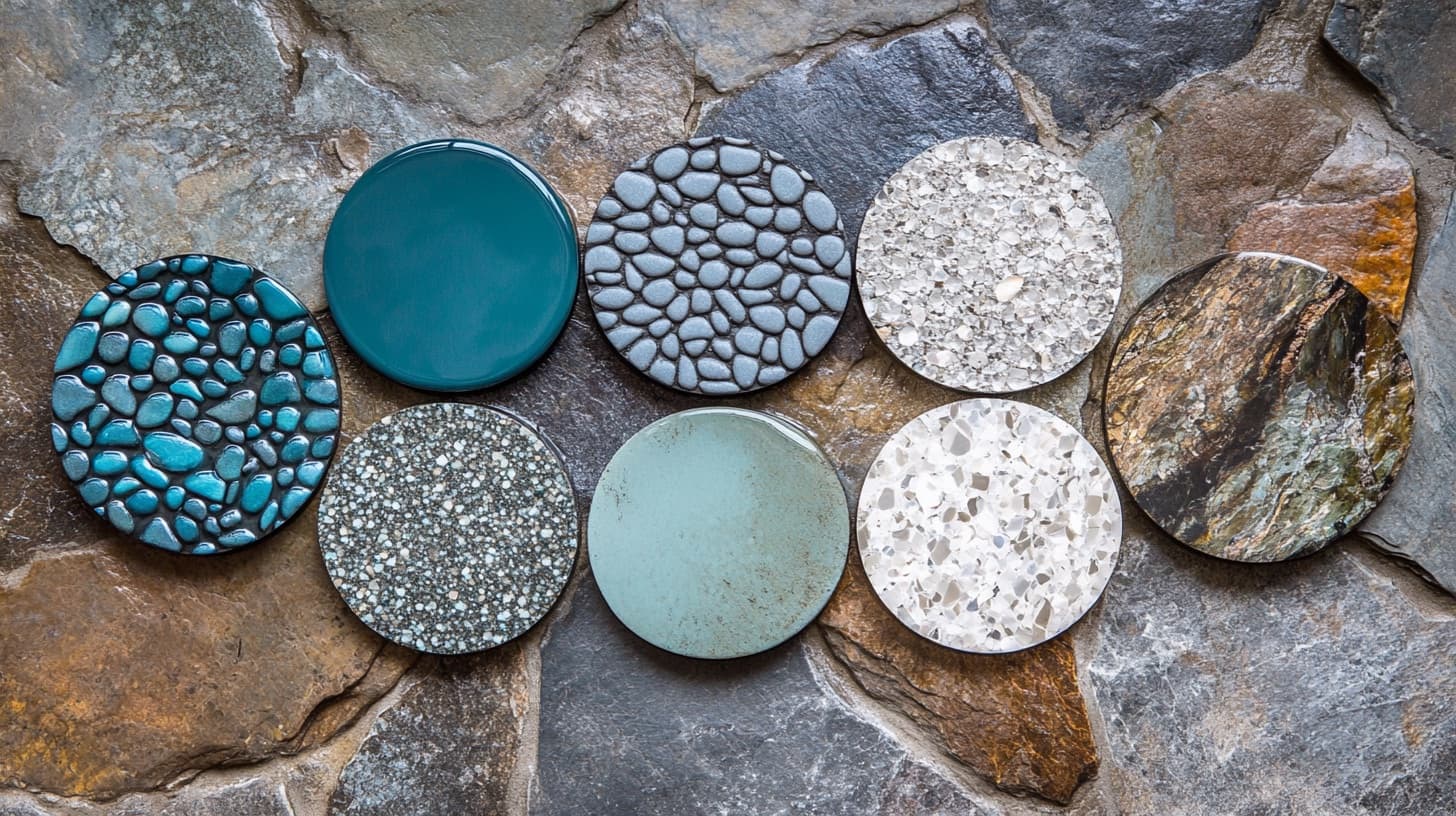
StoneScapes offers a range of blends that create different water colors depending on the pebble mix and your pool's depth, sun exposure, and surrounding landscape. Here are the blends we install most frequently in Atlanta:
Blues and Blue-Greens
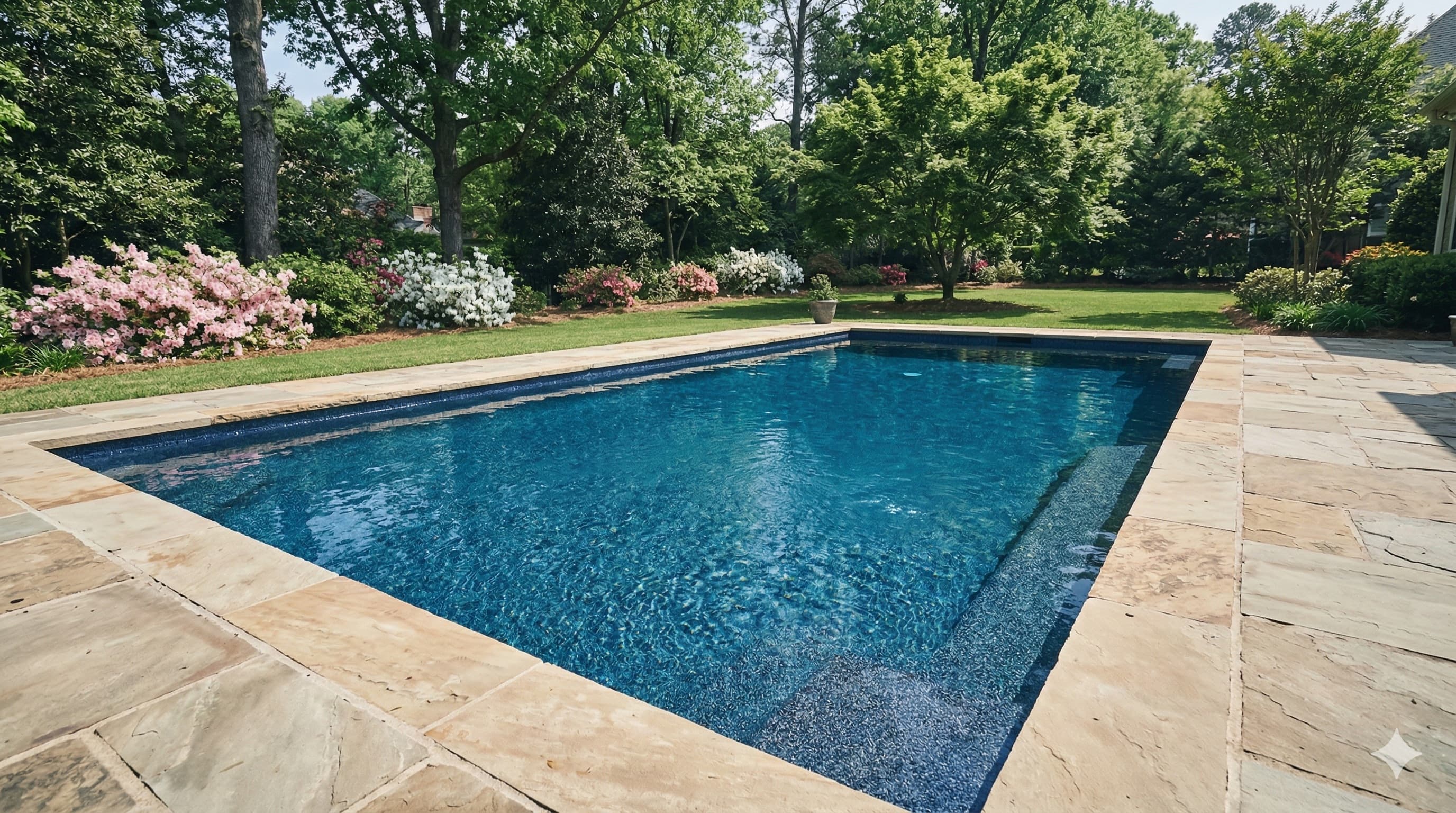
Tropics Blue (Mini Pebble). The single most popular blend we install. Creates a medium blue water color with depth variation — darker in deep areas, lighter on the steps and tanning ledges. Works with virtually any coping and deck combination.
Caribbean Blue (Mini Pebble). Slightly greener than Tropics Blue, giving a more tropical turquoise water color. Very popular in Vinings and Peachtree City where homeowners want a resort-style look.
Aqua Blue (Mini Pebble). A lighter, brighter blue that creates a clean, classic pool-blue water color. The go-to choice for homeowners who want the traditional blue pool look with pebble durability.
Neutral and Earth Tones
Aqua White (Mini Pebble). The lightest StoneScapes blend. Creates a bright, light blue-green water that makes the pool look clean and inviting. Excellent choice for smaller pools where you want the water to look as open and bright as possible.
Puerto Rico Blend (Regular). A warmer blend with tan and brown pebbles that creates a natural lagoon-style water color. Less common than the blue blends but striking in pools surrounded by natural stone and mature landscaping.
Grays and Dark Tones
French Gray (Mini Pebble). Creates a sophisticated gray-blue water color. Increasingly popular with homeowners doing modern or transitional-style outdoor spaces. Pairs well with darker coping and contemporary deck materials.
Midnight Blue (Regular). The darkest StoneScapes option. Creates dramatic, deep blue-black water that reflects the surrounding landscape like a mirror. Visually striking but not for every setting — it works best with clean, modern architecture.
How to Choose the Right Blend
The color you see in a dry sample is not the color you'll see in your pool. StoneScapes looks completely different dry versus wet, and the water color changes based on depth, sunlight angle, surrounding landscape, and pool size.
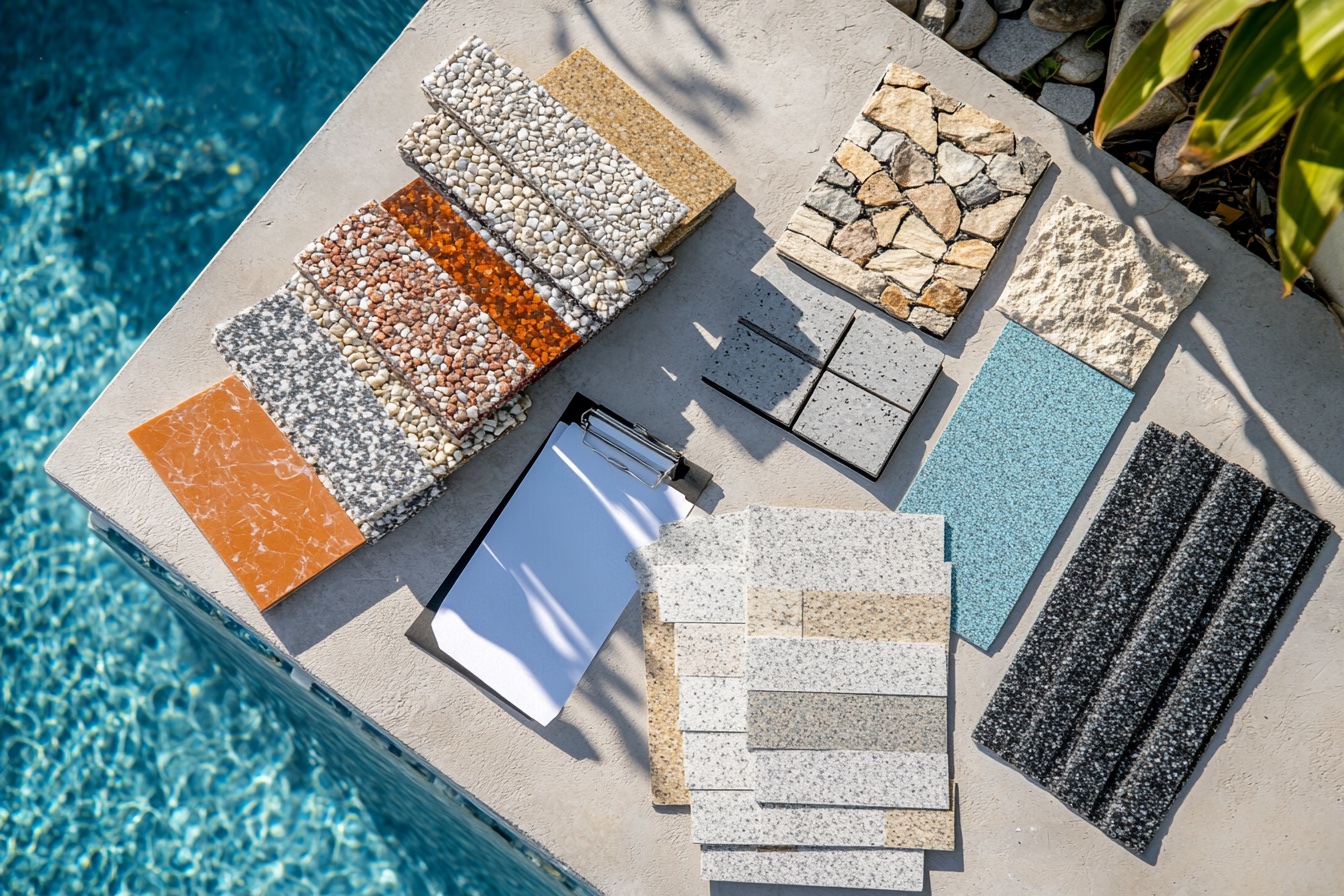
This is why the selection process matters. Here's how we approach it:
Start with the water color you want, not the pebble sample. Show us a photo of a pool with water that appeals to you, and we can work backward to the blend that creates that effect in your specific pool.
Consider your pool's exposure. A west-facing pool in full sun will look different from a shaded pool surrounded by trees. Sun intensifies the color; shade mutes it. In heavily wooded lots — common across Metro Atlanta — darker blends can look almost black in shaded areas.
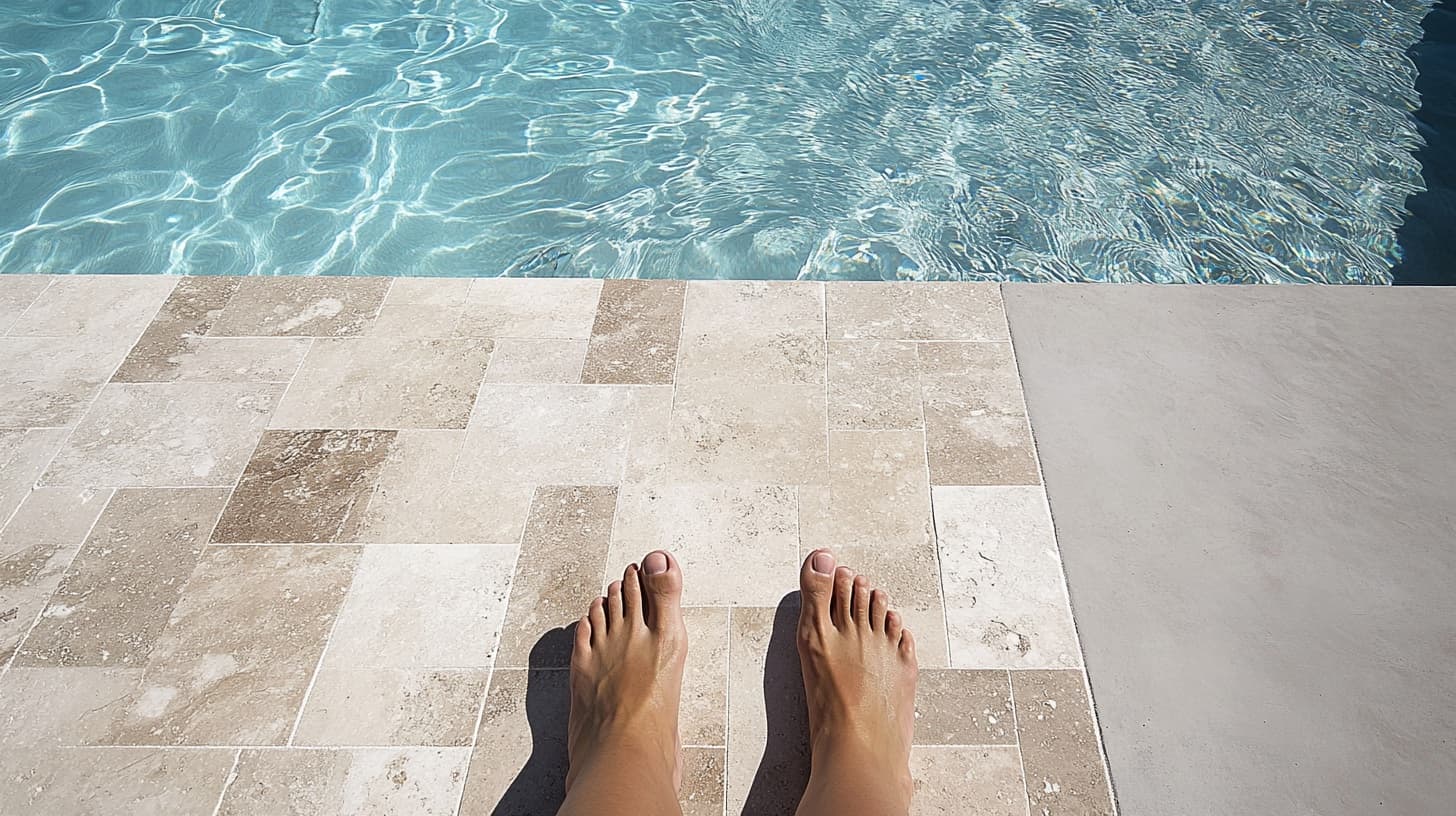
Look at the full picture. Your StoneScapes color interacts with your coping, tile, and deck. A Tropics Blue finish with travertine coping and glass waterline tile creates a different overall aesthetic than the same finish with precast coping and ceramic tile. The materials need to work together.
See full-pool examples. Dry samples on a swatch board tell you very little. We bring samples and show you photos of completed pools with each blend installed, so you can see the actual in-water result. When possible, we'll direct you to see completed pools in person — there's no substitute for standing next to a filled pool and seeing the color in real conditions.
What StoneScapes Costs in Atlanta
StoneScapes costs more than basic marcite plaster but less than premium quartz finishes. Here are typical installed costs for Metro Atlanta pools:
StoneScapes Mini Pebble: $7,000 to $12,000 for a standard residential pool (300 to 500 square feet of surface area). That breaks down to roughly $5.50 to $7.50 per square foot installed, including surface preparation, material, application, and startup.
StoneScapes Regular: $6,500 to $11,000 for the same pool size. Slightly less per square foot than Mini Pebble due to the larger aggregate being faster to apply.
For comparison:
Basic marcite plaster: $4,000 to $7,000 installed. Lasts 5 to 10 years with proper chemistry.
StoneScapes Mini Pebble: $7,000 to $12,000 installed. Lasts 15 to 20+ years with proper chemistry.
Quartz finish (Diamond Brite, Hydrazzo): $8,000 to $14,000 installed. Lasts 12 to 18 years.
The cost-per-year math favors StoneScapes over plaster in almost every scenario. You pay roughly 70% more upfront for a surface that lasts twice as long — and looks significantly better for the duration. For a detailed comparison of all finish types, see our pebble vs. quartz vs. plaster guide.
StoneScapes Durability in Georgia
Georgia's climate is actually well-suited to pebble finishes. The hot summers, intense UV, and chemical demands of a well-used pool are exactly the conditions where pebble finishes outperform plaster.
StoneScapes resists the staining and etching that plaster is prone to in Georgia's hard water. The pebble aggregate doesn't fade the way colored plaster can under UV exposure. And the surface stays functional long after basic plaster would need replacement.
The one maintenance requirement: water chemistry. StoneScapes — like all pool finishes — needs proper water balance. Low pH and low calcium levels etch pebble finishes just like they etch plaster, just more slowly. The 28-day startup process after a new StoneScapes application is critical for long-term durability. We provide detailed startup instructions and check in during the curing period to make sure everything is on track.
How StoneScapes Is Applied
The application process is part of why crew quality matters:
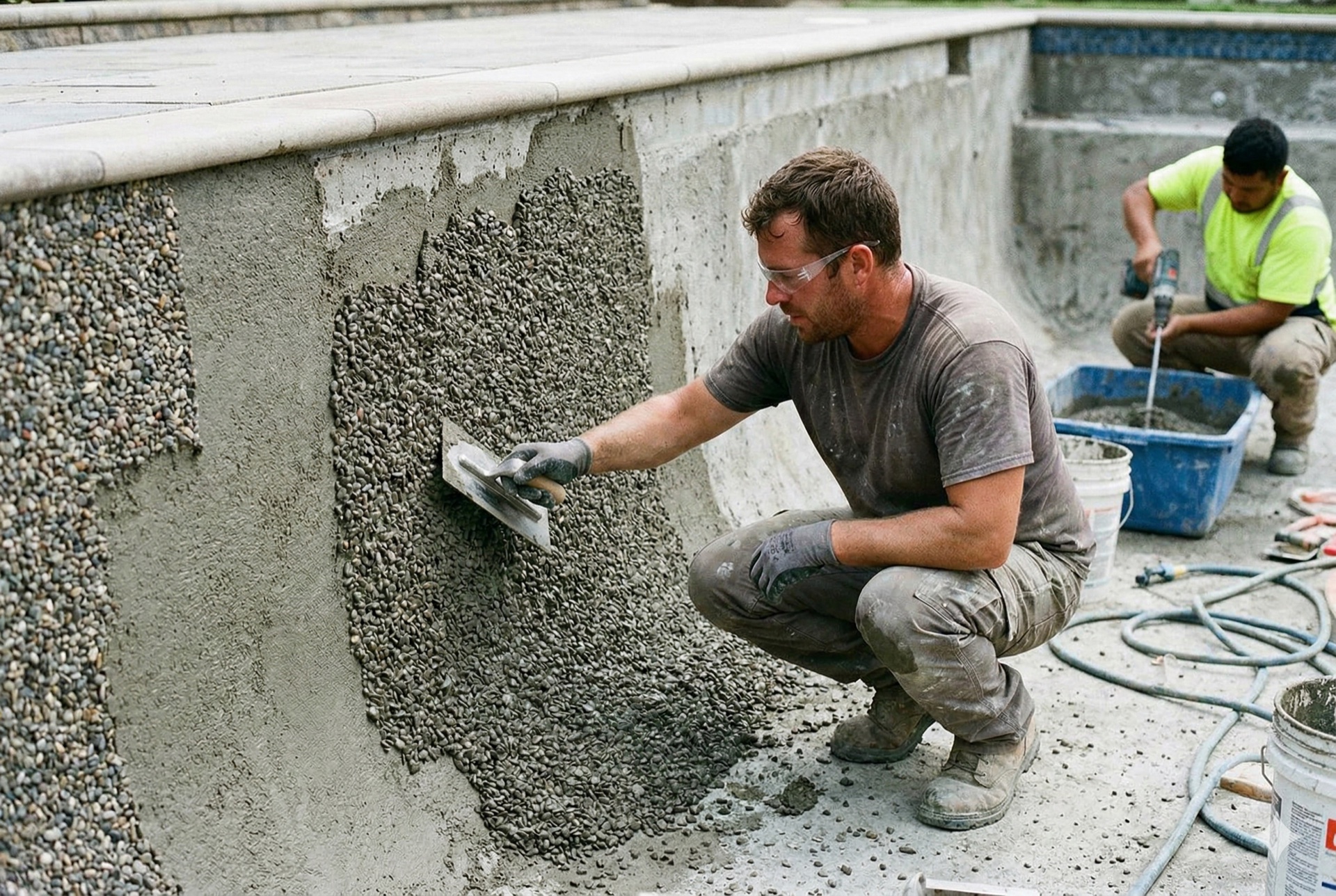
Surface preparation. The old finish is removed, the pool shell is cleaned and inspected, and the bond coat is applied. Any structural repairs happen before the new finish goes on.
Material mixing. StoneScapes is mixed on-site to precise water-to-cement ratios. Inconsistent mixing creates color variation and weak spots. This is where inexperienced crews run into problems — the mix has to be right every batch.
Application. The finish is applied by hand using pool trowels. The crew works in continuous sections to avoid cold joints (visible lines where one section dried before the adjacent section was applied). Speed and consistency matter — a skilled crew applies evenly and quickly. An inexperienced crew creates thickness variations that show as color differences once the pool fills.
Exposure. After application, the surface is washed with a mild acid solution to expose the pebble aggregate. The timing and technique of this wash determine the final texture and appearance. Too much wash exposes too much pebble and weakens the surface. Too little leaves a cement haze that dulls the color.
Startup. The pool is filled immediately after exposure. The 28-day startup chemistry process begins — specific pH, calcium, and alkalinity targets that protect the fresh surface while it cures.
How the Color Selection Actually Works
A homeowner in Vinings was resurfacing a 2001-era pool and came into the consultation set on Midnight Blue — they'd seen dramatic photos online and loved the dark, reflective look. During the material selection visit, dry samples and wet samples of Midnight Blue were compared alongside Tropics Blue, French Gray, and Caribbean Blue. Each was held next to the cream-colored travertine coping in the pool area, which was heavily shaded by mature hardwoods on the west side.
In the shaded areas, Midnight Blue looked almost black — not the dramatic deep blue they'd envisioned, but a dark void that absorbed light rather than reflecting it. The east side in direct sun looked spectacular, but the contrast between sun and shade was jarring.
French Gray was tested as a compromise — it created a sophisticated blue-gray water color that read consistently across both sun and shade zones. The homeowner still wanted more drama, so the final choice was Tropics Blue for the main pool (the most versatile blend for mixed-light conditions) with the darker treatment reserved for the waterline, where iridescent glass mosaic in deep sapphire provided the contrast they'd originally been chasing with the finish color. Total surface cost: $9,200 for the 420-square-foot pool. Two months later, the homeowner called it the best decision of the renovation — a friend had chosen Midnight Blue on a similarly shaded lot and wasn't happy with the result.
NPP (National Plasterers & Pool), the manufacturer of StoneScapes, recommends viewing finish samples both wet and dry in the actual pool environment, and notes that water depth, sun exposure, and surrounding hardscape materials all significantly alter the perceived water color — which is why in-home material selection produces better outcomes than showroom visits.
See It Before You Decide
The only way to confidently choose a StoneScapes blend is to see it in context. We bring finish samples, coping options, and tile selections to your home so you can evaluate them next to your pool, your house, and your landscape — not under fluorescent lights in a showroom.
If you're considering a resurface and want to explore StoneScapes options, reach out through the contact form or call to schedule a consultation — We'll walk the pool and show you what each blend actually looks like wet, in your light, next to your materials.
Ready to Talk About Your Pool?
Get a free, no-obligation consultation from Cornerstone Pool & Remodel.
Request a Free Quote