Pool automation lets you control your pump, heater, lights, salt system, and water features from your phone — or set schedules so the pool manages itself.
If that sounds like a luxury, we get it. Five years ago, automation was a premium add-on for high-end pools. Today, the systems have gotten better, the prices have come down, and the integration with variable speed pumps and LED lighting has made automation genuinely practical for most Metro Atlanta pools.
Here's what you need to know before deciding whether to add automation to your renovation.
What Pool Automation Actually Controls
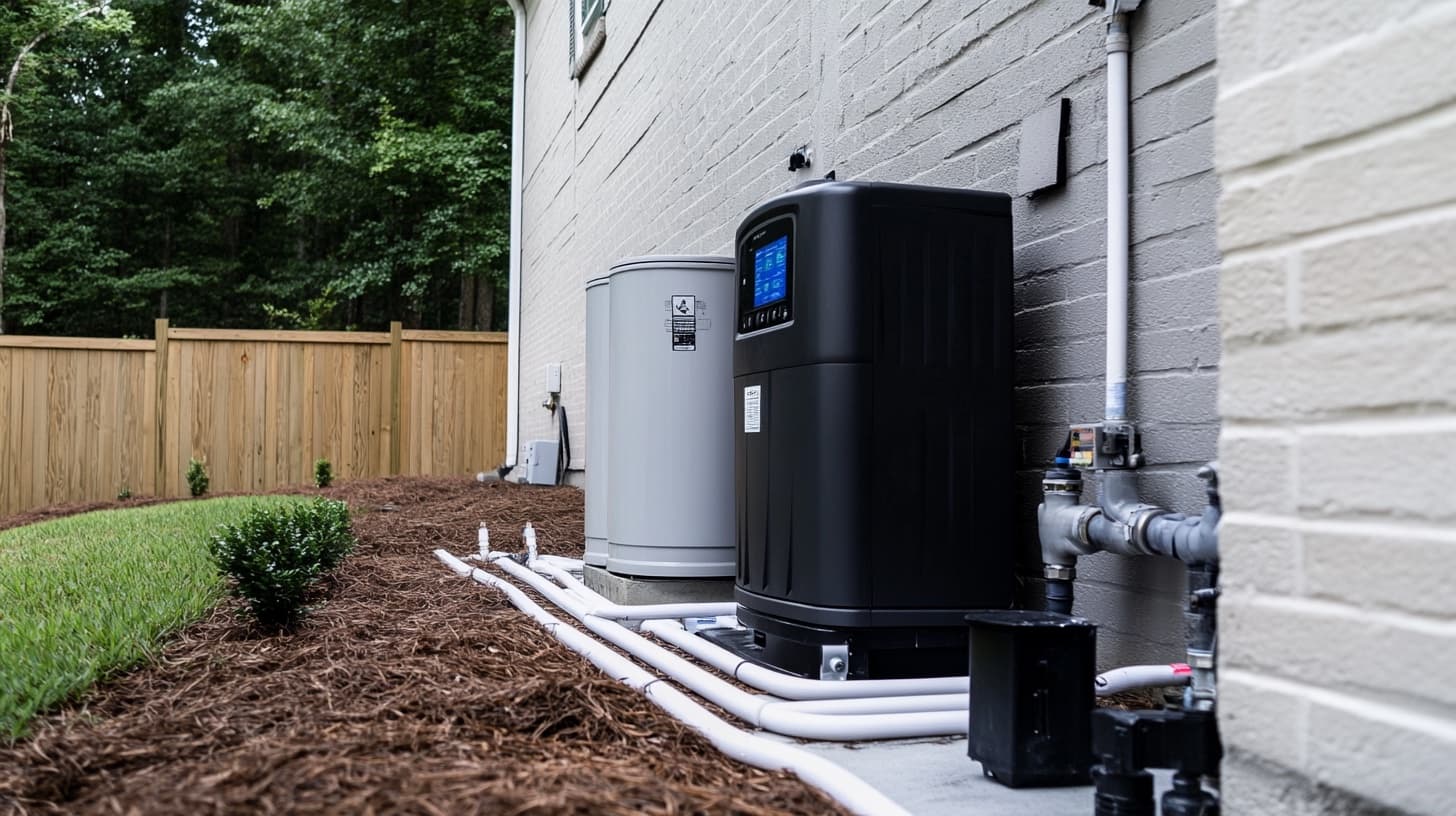
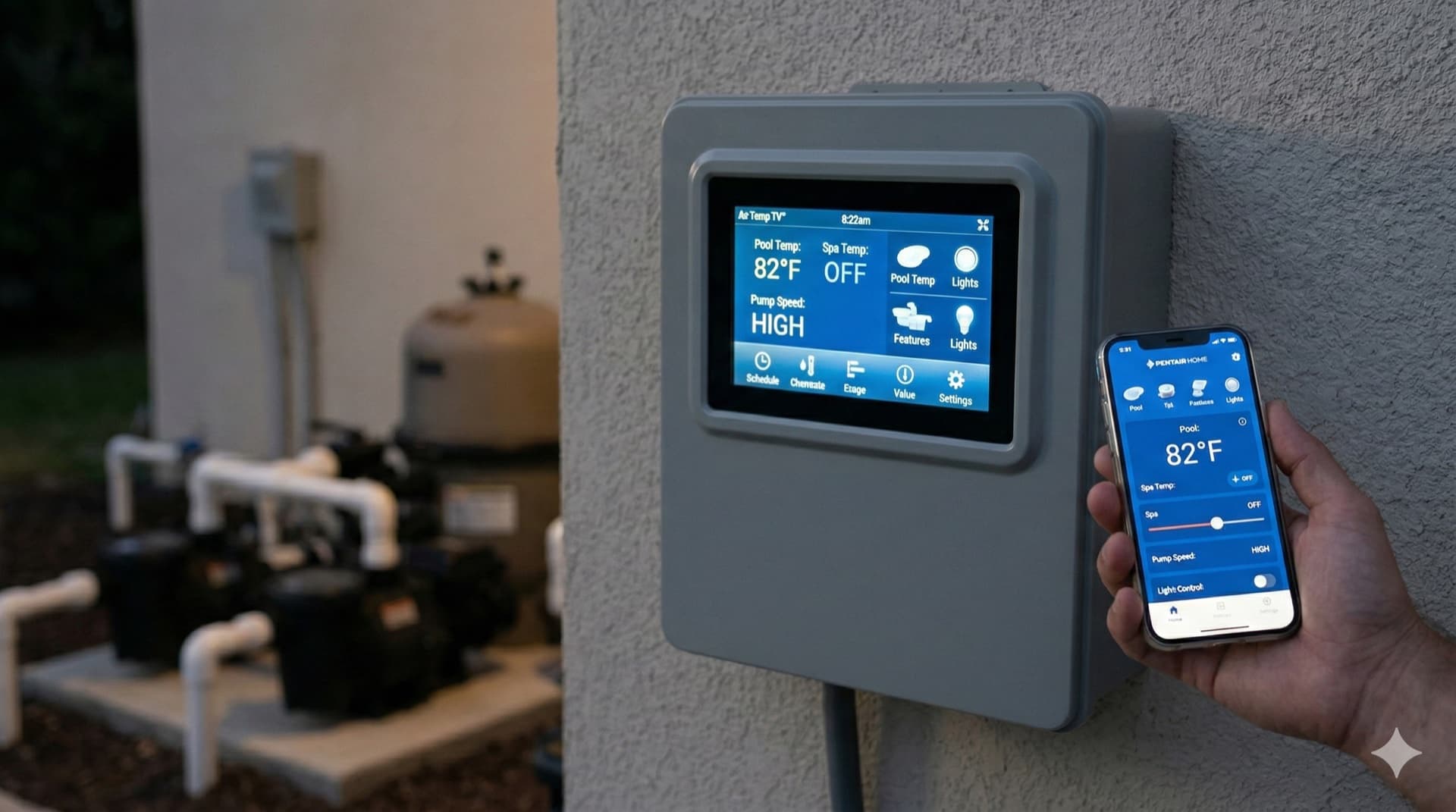
A pool automation system is a central controller — a small panel installed at your equipment pad — that connects to every piece of pool equipment and gives you a single interface to manage it all.
Pump control. Set pump speed schedules on a variable speed pump — low speed overnight, medium speed during the day, high speed for cleaning cycles. This is where the biggest energy savings come from.
Heater control. Turn the heater or heat pump on/off remotely and set target temperatures for the pool and spa independently. Heat the spa to 102°F from your phone before you even walk outside.
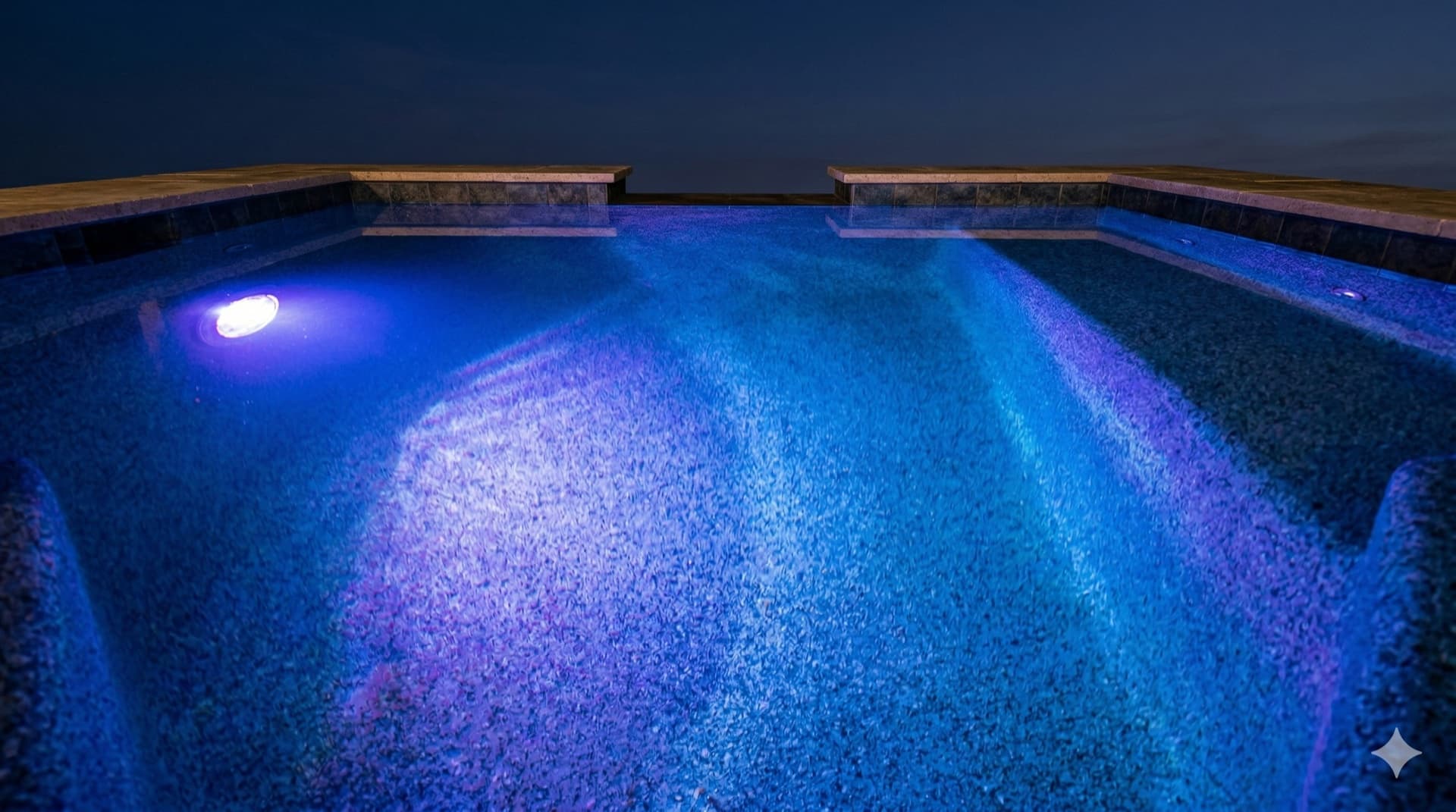
Lighting. Control LED pool lights — colors, shows, on/off schedules — from the app. Set lights to turn on automatically at sunset.
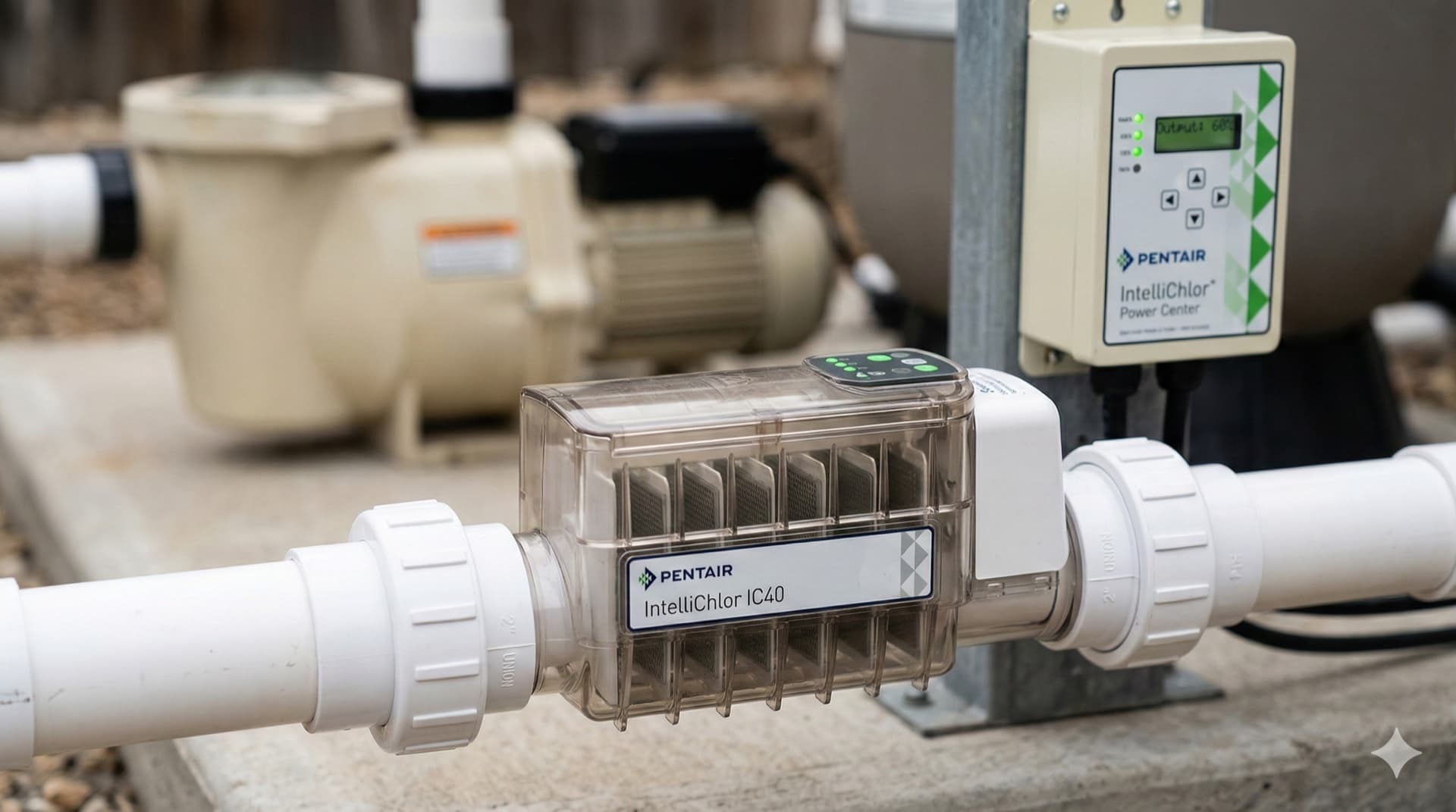
Salt chlorine generator. If you have a salt water system, automation controls chlorine output levels and provides monitoring alerts.
Water features. Spillover walls, fountains, deck jets, bubblers — all controllable from the app.
Valves. Automated actuator valves switch water flow between pool and spa without you touching a manual valve handle.
The bottom line: instead of walking out to the equipment pad and manually adjusting pumps, heaters, and valves, you do everything from a phone app or a wall-mounted touchscreen.
What It Costs
Pool automation pricing depends on how many features you're controlling and which brand ecosystem you choose:
Basic automation (pump + lights + heater control): $2,000 to $3,500 installed. This handles the core functions — scheduling, remote control, and integration between your main equipment. Suitable for pools with a pump, heater, and lights but no spa or water features.
Mid-range automation (above + salt system + valve actuators): $3,500 to $5,500 installed. Adds salt chlorine generator control and automated valves for pool/spa switching. This is the sweet spot for most Metro Atlanta pools with a spa.
Full automation (all equipment + water features + chemical monitoring): $5,500 to $8,000+ installed. Includes everything above plus water feature control, advanced chemical monitoring (pH and ORP sensors), and integration with landscape lighting systems.
These prices include the controller, actuator valves, wiring, and installation labor. They don't include the equipment being controlled — the pump, heater, lights, etc., are separate costs.
The Major Brands
Pentair IntelliCenter
The current leader in residential pool automation. IntelliCenter replaced the older EasyTouch and IntelliTouch systems with a modern interface and built-in Wi-Fi. The touchscreen panel at the equipment pad is intuitive, and the ScreenLogic app provides full remote control.
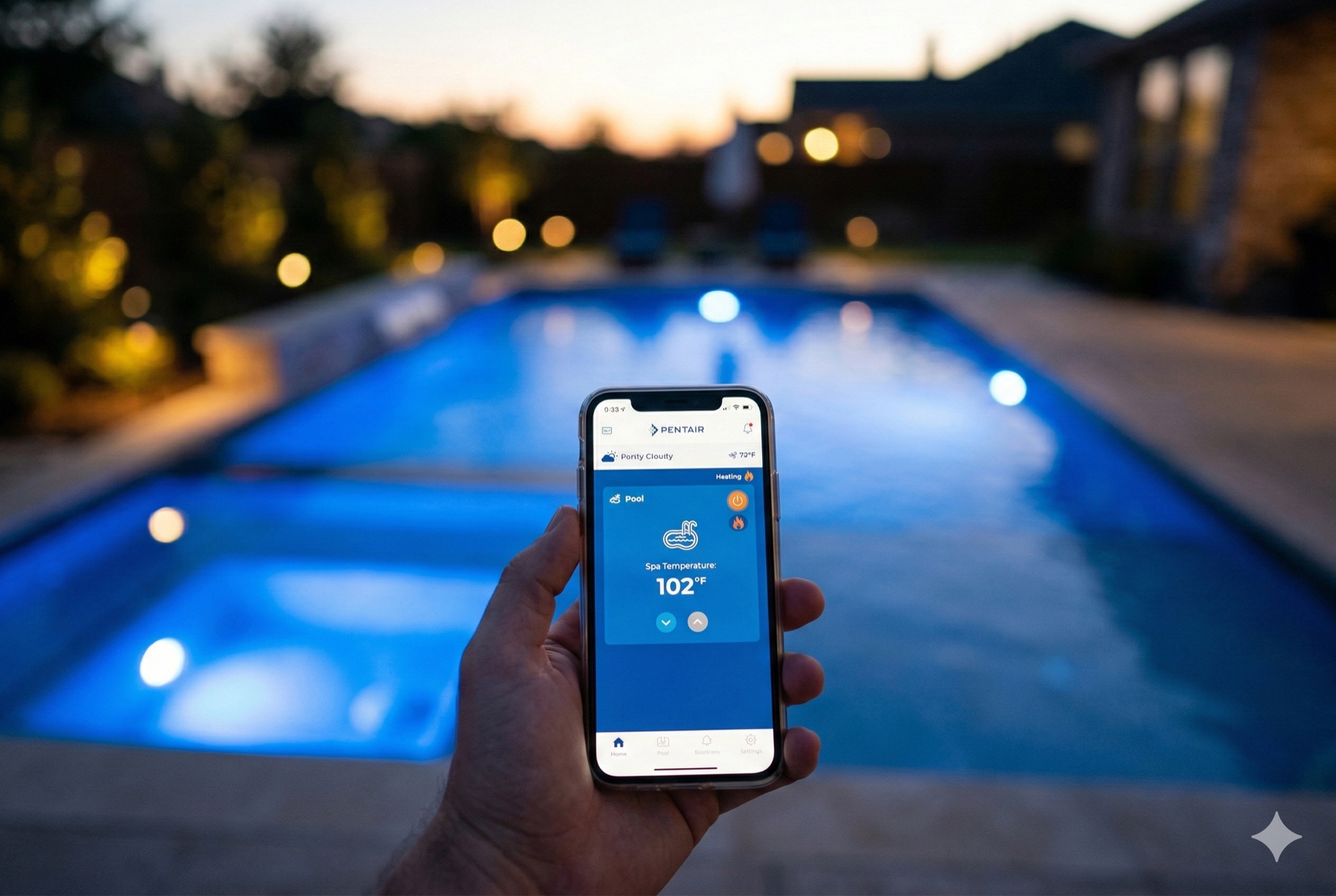
Strengths: Best integration with Pentair pumps (IntelliFlo), lights (IntelliBrite), and salt systems (IntelliChlor). Clean app interface. Reliable track record.
Best for: Pools with all-Pentair or mostly-Pentair equipment.
Jandy iAqualink
Jandy's automation platform with strong Wi-Fi connectivity and a well-designed app. The physical interface at the equipment pad is simpler than Pentair's but the app is comparable.
Strengths: Good value, excellent app, works well with mixed equipment (not just Jandy-branded). The iAqualink system has flexible relay and valve outputs that accommodate various configurations.
Best for: Pools with Jandy equipment or mixed-brand setups.
Hayward OmniLogic
Hayward's premium automation system. The most feature-rich option, with the most granular scheduling and the best chemical monitoring integration.
Strengths: Most advanced feature set. Best chemical monitoring (OmniChlor integration). Highly customizable schedules and scenes.
Best for: Larger pools with extensive features (spas, water features, landscape lighting) or homeowners who want maximum control granularity.
Which Brand?
If you're starting fresh, match your automation brand to your pump and heater brand. Pentair automation with a Pentair pump and heater. Jandy with Jandy. The integration is tighter, the warranty is cleaner, and troubleshooting is simpler when everything speaks the same language.
If you're adding automation to existing equipment from mixed brands, Jandy iAqualink is generally the most compatible with non-Jandy equipment.
When to Add Automation
During a pool renovation (ideal). If you're resurfacing, replacing equipment, or doing any significant pool work, adding automation during the project is dramatically more cost-effective than doing it later. The equipment pad is already being worked on. The electrician is already on site. Conduit and wiring can be run before the deck is closed up.
Installing automation during a renovation adds roughly $2,000 to $4,000 in labor on top of the equipment cost. Installing it as a standalone project after the renovation — when the deck is done, the equipment pad is buttoned up, and everything has to be re-opened — adds $1,000 to $2,000 in additional labor for the same result.
When your current timer/controller fails. If your existing mechanical timer or basic digital timer dies, the replacement cost for a modern timer is $200 to $500. The step up to a full automation system is $1,500 to $2,500 more — a reasonable premium for the dramatically expanded capability.
When you add a spa or salt system. Both features benefit significantly from automation. A spa that you can preheat remotely and a salt system that's monitored and adjusted automatically are qualitatively different experiences from manual management.
Do You Actually Need It?
No, you don't need automation. Pools worked fine for decades without it. You can walk out to the equipment pad, turn dials, flip switches, and manage your pool manually.
But here's what automation changes in practice:
You actually use your heater. Without automation, heating the spa means walking outside, turning on the heater, waiting 30 to 45 minutes, and hoping you remembered to turn it off later. With automation, you tap your phone 30 minutes before you want to use the spa, and it's ready when you are. In our experience, homeowners with automation use their spa 3 to 5 times more frequently than those without.
Your pump runs optimally. Automation lets you program variable speed schedules that maximize energy savings — something that's tedious to do manually on the pump controller and that most homeowners never optimize.
You catch problems earlier. Chemical monitoring alerts, pump error notifications, and heater fault codes push to your phone. Instead of finding out the heater failed when you jump in a cold pool, you get a notification that afternoon.
You stop worrying about it. The pool just runs. Pump schedules execute. The heater cycles as needed. Lights turn on at sunset. You think about the pool when you want to enjoy it, not when you need to manage it.
For homeowners in Alpharetta, Cumming, and similar areas where pools are a central part of outdoor living, automation is quickly moving from "nice to have" to "standard expectation."
The Integration Picture
Automation reaches its full potential when your equipment works as a coordinated system:
Variable speed pump + automation = optimized energy savings with programmable speed schedules.
LED lights + automation = color control, scheduling, and scenes from your phone.
Salt system + automation = monitored chlorine production and alerts.
Heater + automation = remote heating and scheduled warm-up cycles.
Spa valves + automation = one-tap pool-to-spa switching.
If you're doing a full renovation and upgrading equipment, building the automation in from the start means every piece of equipment is configured to work together. Adding automation later means retrofitting connections and potentially dealing with compatibility issues.
How Automation Changes How You Use the Pool
A homeowner in Alpharetta was doing a full renovation — StoneScapes Mini Pebble resurface, travertine coping, and new equipment including a Pentair IntelliFlo variable speed pump and IntelliChlor salt system. They had an attached spa they said they "never used" because the manual valve switching and heater startup were too much hassle for a 20-minute soak.
A Pentair IntelliCenter system was added during the equipment phase — $3,800 installed, since the electrician and plumber were already on site for the pump and salt system work. The incremental labor was about $600 beyond what the equipment install already required.
Six months later, the homeowner reported using the spa four to five times per week — up from roughly once a month before automation. They'd tap the app at dinner to start heating, and the spa was at 102°F by the time they cleaned up. The pump ran an optimized three-speed schedule that cut their energy bill by $85 per month compared to their old single-speed timer setup. The automation paid for its incremental cost in under a year through energy savings alone — and the spa went from an unused feature to the most-used part of the pool.
The Consumer Technology Association's 2024 connected home report found that pool automation adoption among renovating homeowners has increased 34% since 2020, driven primarily by integration with variable speed pumps and salt systems — the same equipment combination that delivers the strongest ROI in Metro Atlanta's extended swim season.
During a consultation, we'll assess your current equipment and show you where automation fits into your renovation scope — and what it realistically costs for your specific setup.
Use the contact form or call to schedule a walkthrough.
Ready to Talk About Your Pool?
Get a free, no-obligation consultation from Cornerstone Pool & Remodel.
Request a Free Quote