You've decided to renovate your pool. You've maybe read about what it costs, what finishes are available, and how long the process takes. Now you need to choose who does the work.
The consultation is your chance to evaluate the contractor — not just hear a sales pitch. Here are the questions that actually reveal whether a company is the right fit for your project.
About Their Work Model
"Will the same crew handle the entire project — surface, tile, coping, and deck?"
This is the most important question. Many companies in Metro Atlanta sell the job, then subcontract each trade to different crews. That means the person who prepped your surface isn't the person who applies the finish, and the tile installer has no coordination with the coping crew.
A single crew from start to finish means tighter quality control, simpler scheduling, and one person accountable for the result.
"Who does the tile installation specifically?"
Tile is where craftsmanship varies most. The answer you want is a specific person with specific experience — not "our tile subcontractor" or "whoever's available that week." Ask to see close-up photos of their tile work, particularly at corners, curves, and where tile meets coping.
"Do you handle the demolition and surface prep, or does a separate crew do that?"
Surface prep is the foundation of the entire renovation. The crew that preps should be the crew that applies — they understand what condition the substrate is in because they prepared it.
About Materials
"What specific finish products do you install, and what do you recommend for our pool?"

A good contractor names exact products — StoneScapes Mini Pebble in Caribbean Blue, NPP QuartzScapes in Ivory, or whatever fits your pool. Vague answers like "pebble finish" or "quartz surface" without brand or product specifics make it impossible to compare quotes or verify quality.
"Can we see the actual materials before committing — at our pool, not in a showroom?"
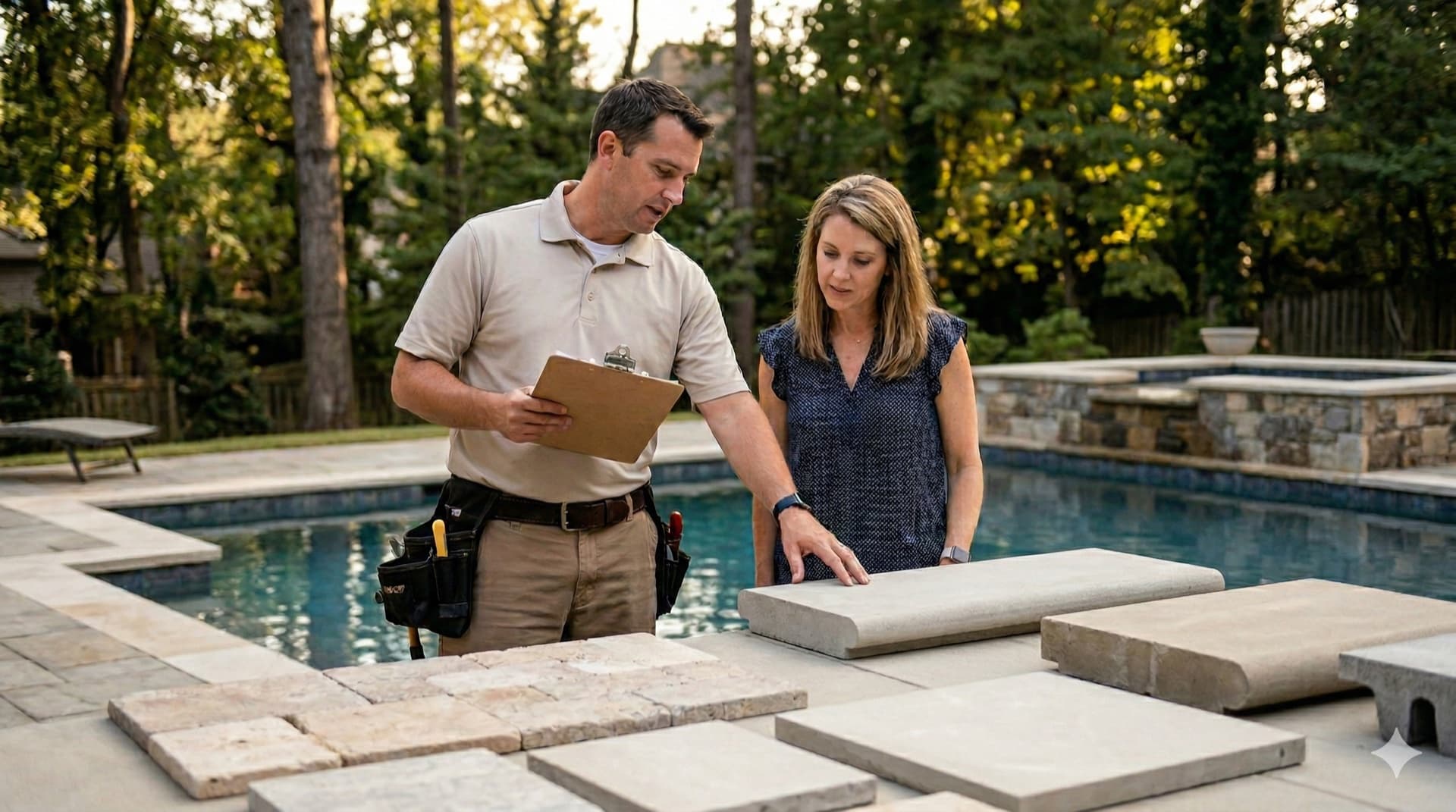
Material samples look different in a showroom than they do next to your home exterior, your deck, and your landscaping. A contractor who brings samples to your property and helps you evaluate them in context is thinking about how the finished product will actually look, not just closing the sale.
"What coping options work with the finish we're choosing?"
Coping, tile, and surface finish need to work together as a composition. The contractor should have opinions about what combinations work and what clashes — not just ask "what do you want?".
About the Process
"What does your surface preparation process involve?"
This question separates experienced renovators from less experienced ones. The answer should include specifics: chipping or grinding the old surface, inspecting the bond beam, repairing cracks, applying bond coat where needed. If the answer is vague — "we prep the surface" — push for details.
"What happens if you find structural issues once the pool is drained?"
Every experienced renovation contractor has found surprises in a drained pool — deteriorated bond beams, cracked shells, plumbing problems. The answer should describe a process: how they assess, how they quote the repair, and how it affects the timeline. If they say "that won't happen," they haven't done enough renovations.
"How do you handle the cure process?"
Curing is where shortcuts do the most damage. The answer should describe a controlled cure — slow fill, moisture management, temperature awareness. If they rush the fill to "get you swimming faster," your finish will pay the price.
About Pricing and Documentation
"Will your quote have line-item pricing?"
You should see separate line items for surface material, coping, tile, deck work, equipment, and labor. A single lump-sum number makes it impossible to compare quotes from different contractors or to adjust scope without starting the quote process over.
"What's included in the price and what isn't?"
Specifically ask about: draining and refilling, chemical startup, equipment disconnection and reconnection, debris hauling, permit fees (if applicable), and bond beam repair. The difference between two seemingly similar quotes often lives in what one includes and the other adds later.
"What's your payment schedule?"
Industry standard for pool renovation in Metro Atlanta is a deposit at contract signing, with the balance due at completion or in scheduled progress payments. Be cautious of any contractor asking for full payment upfront — that's a significant risk with no leverage if work quality falls short.
"Do we get a written contract with scope, materials, timeline, and warranty?"
Everything should be in writing. The contract should specify exact materials by brand and product name, project timeline, payment schedule, warranty terms, and what happens if the scope changes due to unexpected conditions.
About Their Track Record
"Can we see photos of completed renovations similar to mine?"
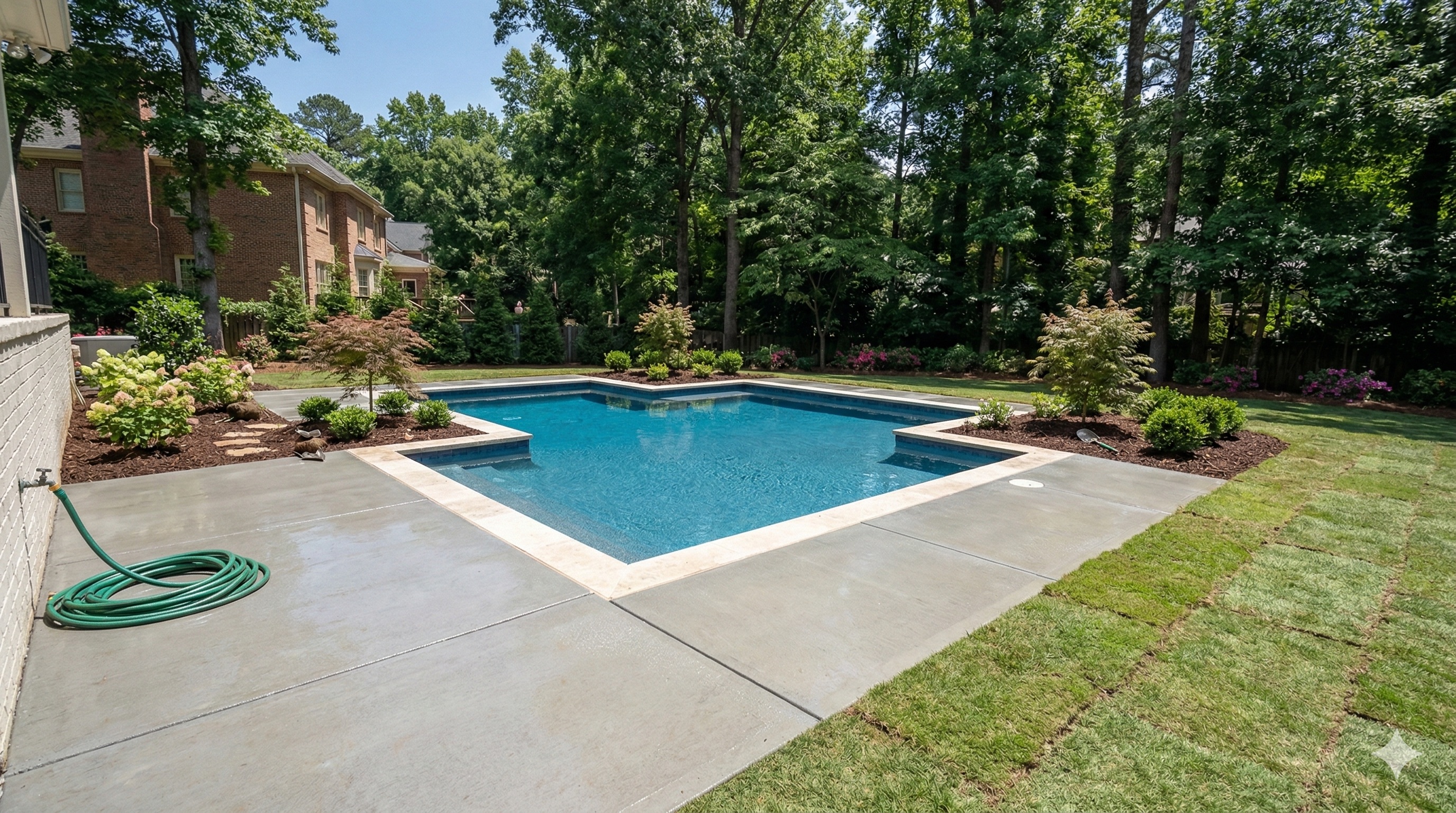
Not just the glamour shots — ask to see the tile work up close, the coping joints, the surface consistency across the full pool. A contractor proud of their detail work is happy to show it.
"Can we speak with a recent client?"
Recent matters. A reference from three years ago doesn't tell you about their current crew, current quality, or current responsiveness. Ask for someone whose project was completed in the last 6 months.
"How long have you been doing renovation specifically — not just pool work in general?"
Pool building and pool renovation require different skills and different experience. A company with 20 years building new pools may have limited experience with the specific challenges of renovation: working with existing structures, handling surprises in 25-year-old pools, and matching new materials to old.
About Warranty and Follow-Up
"What does your warranty cover, and for how long?"
Surface finish warranties vary. Manufacturer warranties cover material defects. Contractor warranties should cover workmanship — application consistency, delamination from poor prep, tile adhesion, coping mortar integrity. Get both warranty terms in writing.
"What's the process if something doesn't look right after completion?"
This question tells you a lot about a contractor's confidence in their work and their commitment to follow-through. The answer should be simple: you call, they come back and address it. Not a phone tree, not a service department — the people who did the work.
The Questions You Don't Need to Ask
Some questions waste both your time and the contractor's:
"Can you beat this other quote?" Price shopping invites corners being cut. If a contractor's quote is higher, ask what's included that the cheaper quote isn't. That's a more useful conversation.
"Can you start next week?" Good contractors are booked. If someone can start immediately with no lead time, ask why. Availability is great; desperation is a warning sign.
"Do you offer financing?" Pool renovation contractors are craftsmen, not banks. If you need financing, arrange it separately and come to the consultation with a clear budget.
How to Use These Questions
Don't treat this list as an interrogation. Bring three or four of the most relevant questions to your consultation and let the conversation develop naturally. A good contractor answers most of these through the normal course of explaining their process — if they don't, that tells you something too.
The consultations themselves are revealing. The contractor who walks your pool carefully, points out issues you hadn't noticed, and explains their process clearly is showing you how they work — not just selling a number.
What a Consultation Actually Reveals
A homeowner in Johns Creek scheduled consultations with three pool renovation companies. The first two contractors had visited, measured the pool, and sent quotes within 48 hours — without ever getting in the pool or examining the surface up close. Both quoted basic plaster resurfacing at roughly the same price.
The third consultation went differently. A close hands-on inspection at the shallow-end steps revealed the plaster was delaminating — lifting away from the substrate in patches that weren't visible from the deck but were immediately obvious by touch. That meant the old surface needed full removal, not just roughing up and applying a new coat over it. Pulling back the coping at two corners revealed the bond beam had been patched previously with the wrong material — a repair that would fail again under new coping if not addressed.
The thorough quote came in higher than the lowest bid. But it included full surface removal (not a skim coat), bond beam correction at the compromised sections, and a pebble finish that would last 15+ years on a properly prepared substrate. The homeowner later noted that the other two contractors had never mentioned the delamination or the beam issue — because they'd never looked closely enough to find them.
The Pool & Hot Tub Alliance (PHTA) recommends that homeowners verify their contractor holds current Certified Pool/Spa Inspector or Certified Building Professional credentials, and that any renovation quote includes a detailed substrate assessment — not just surface material pricing.
We handle every consultation personally — We'll walk your pool, point out what we find, and provide a detailed quote with line-item pricing and material specifications.
Use the contact form or call to schedule a walkthrough.
Ready to Talk About Your Pool?
Get a free, no-obligation consultation from Cornerstone Pool & Remodel.
Request a Free Quote